


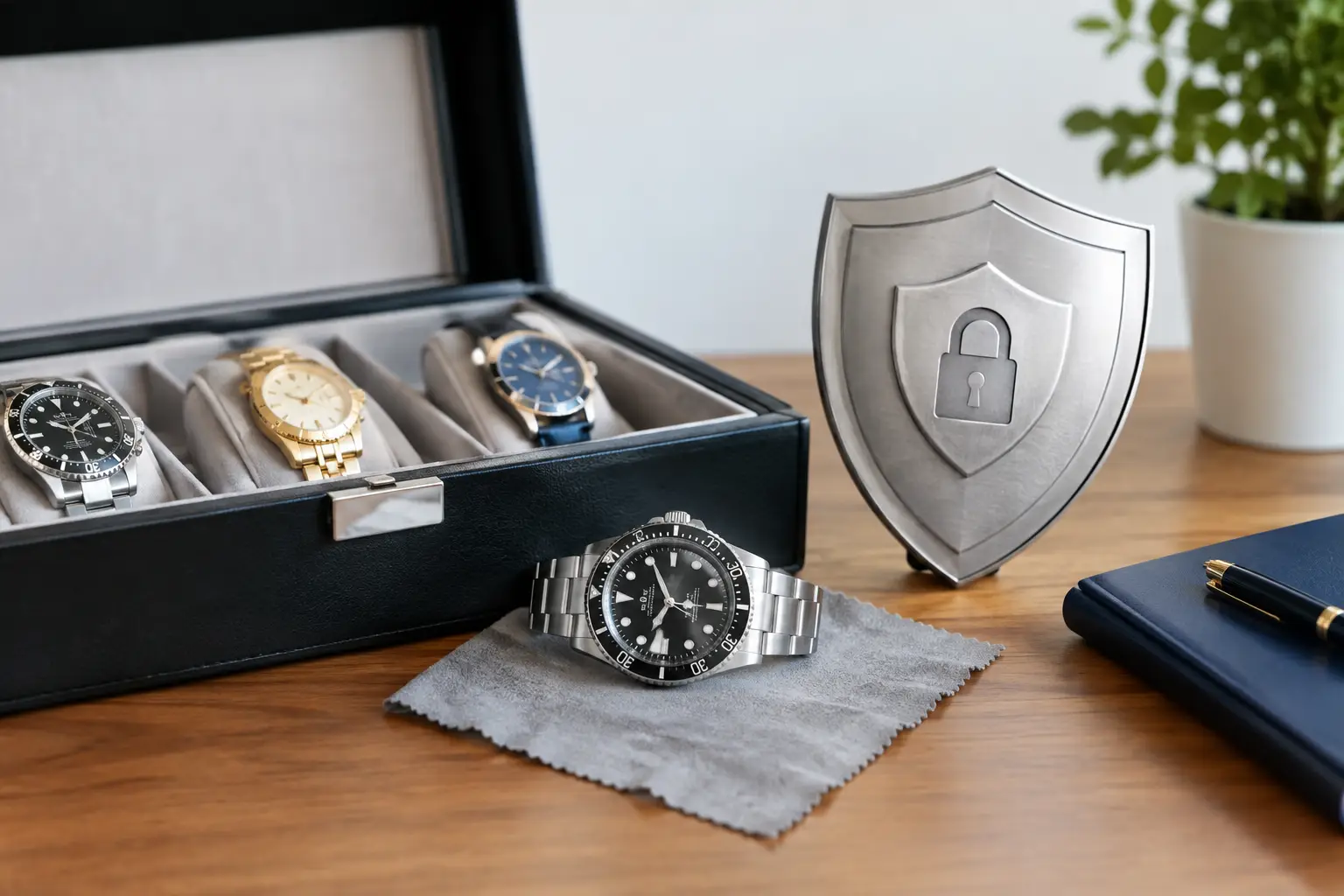
Can Watches Be Insured? What Collectors Need
A Patek Philippe, Rolex, or Audemars Piguet should not rely on a standard household policy by assumption alone. Can watches be insured? Yes. But meaningful protection depends on the policy type, the value assigned to the watch, the documentation behind it, and the circumstances in which a loss occurs.
For a luxury watch owner, insurance is not merely an administrative detail. A well-chosen policy can protect a significant purchase against theft, accidental damage, disappearance, and certain travel-related losses. A poorly understood policy may leave a collector facing a payout cap that bears little resemblance to the current value of the piece.
Can Watches Be Insured Under Homeowners Coverage?
Many homeowners, condo, and renters policies provide some coverage for personal property, including watches. That is a starting point, not necessarily a complete solution. Jewelry and watch losses caused by theft are commonly subject to a special sublimit, often far below the value of a luxury timepiece.
A watch valued at $15,000, $30,000, or more can easily exceed that limit. Standard policies may also exclude accidental damage, loss outside the home, or unexplained disappearance. If a watch is dropped on stone flooring, misplaced while traveling, or stolen from a hotel room, the outcome can vary considerably by policy wording.
For that reason, owners of high-value watches often choose one of two stronger options: a scheduled personal-property endorsement added to an existing home policy, or a standalone collectibles or jewelry policy. Both can provide broader protection than basic contents coverage, but the details matter more than the label.
Scheduled Coverage for Individual Watches
Scheduling means listing a specific watch on the policy, generally with its make, model, reference number, serial number, and insured value. It is a natural fit for an identifiable piece such as an Omega Speedmaster, Cartier Santos, Panerai Luminor, or Rolex Submariner.
Scheduled coverage may protect against a wider set of risks, sometimes described as all-risk or worldwide coverage. Depending on the insurer, that can include theft, accidental damage, and loss, with fewer restrictions than an unscheduled homeowners claim. Deductibles may also be reduced or eliminated.
The trade-off is precision. The insurer will expect reliable records and may require an appraisal or purchase documentation before approving the scheduled value. As values rise, it may also ask where and how the watch is stored.
Standalone Luxury Watch Insurance
A standalone policy can be particularly attractive for collectors with several watches, frequent travelers, or owners who prefer to keep a claim separate from their homeowners insurance history. These policies may be designed specifically for jewelry, fine art, and collectibles, which can make coverage terms more aligned with the realities of valuable personal property.
However, standalone does not automatically mean superior. Compare the covered causes of loss, deductible, territorial limits, claim process, valuation method, exclusions, and whether the policy covers a watch worn regularly rather than kept solely in a safe. Ask how a claim would be handled if the original reference is no longer available at retail.
The Valuation Clause Matters as Much as Coverage
Luxury watches do not behave like ordinary consumer goods. A discontinued Rolex, limited-production Richard Mille, or highly sought-after Patek Philippe Nautilus may have a market value that differs sharply from its original retail price. Insurance should reflect the value you would realistically need to replace the watch, not only the amount printed on an older sales receipt.
There are three valuation approaches owners may encounter. Actual cash value generally accounts for depreciation and is rarely ideal for collectible watches. Replacement cost is intended to fund a comparable replacement, though the exact definition of comparable deserves careful review. Agreed value sets the payout amount in advance, subject to policy terms, and can offer greater certainty for a specific high-value piece.
No method is universally best. For a current-production watch readily available through authorized channels, replacement cost may be sufficient. For a rare reference with a substantial secondary-market premium, agreed value can be more appropriate. The essential question is simple: if the watch were lost tomorrow, would the policy allow you to acquire a comparable example in the real market?
Review values regularly. The right interval depends on the collection, but annual reviews are sensible, especially after a period of major price movement, a new acquisition, servicing that improves condition, or a rise in collector demand. Underinsuring a watch can be nearly as costly as having no dedicated coverage at all.
What Documentation Does an Insurer Need?
Documentation strengthens both the application process and a future claim. Keep the original purchase invoice, certificate of authenticity where applicable, warranty card, box, papers, service records, and detailed photographs. Photograph the dial, caseback, clasp, bracelet, and serial number. Store copies digitally in a secure location separate from the watch.
An independent appraisal can be valuable, particularly for vintage, rare, or market-sensitive pieces. It should identify the watch clearly, state its condition, explain the valuation basis, and be recent enough to represent the present market. An appraisal prepared years ago may not support a current replacement value.
For pre-owned luxury watches, clean provenance also matters. A documented purchase from a trusted specialist such as Lux-Watch, along with authentication records and condition details, creates a clearer ownership trail. That record supports insurance while also helping preserve confidence if you later sell or trade the watch.
Do not overlook the serial number. It is one of the most useful identifiers in a theft report, police report, insurance claim, and recovery effort. For security, avoid sharing a full serial number publicly in listings or social media posts.
Know the Exclusions Before You Wear the Watch
The most frustrating insurance disputes usually begin with an assumption. Owners assume a policy covers every event; insurers point to an exclusion, condition, or limit. Read the policy language before a loss, not afterward.
Common exclusions or limitations can involve intentional acts, war, government seizure, wear and tear, mechanical breakdown, gradual deterioration, manufacturing defects, and losses connected to commercial activity. A policy may cover theft but not a scratched crystal, or cover accidental loss but exclude damage caused during repair or shipment.
Water damage deserves special attention. A water-resistant luxury watch can still suffer damage if its seals have aged, the crown was not secured, or it was used beyond its rated purpose. Insurance may distinguish between sudden accidental damage and maintenance-related failure. Keeping up with manufacturer-recommended service and pressure testing is prudent for both the watch and a potential claim.
If you travel with your watch, confirm that coverage is worldwide and ask whether unattended-property rules apply. Leaving a watch in checked luggage, an unlocked hotel room, or a vehicle may create coverage problems. A travel-friendly policy should still be paired with sensible habits: wear the watch, use a hotel safe when appropriate, and avoid displaying packaging or purchase paperwork in public.
How to Insure a Luxury Watch With Confidence
Begin by creating a complete inventory of every watch you want protected. Record the brand, model, reference, serial number, purchase date, purchase price, current estimated value, and location of supporting documents. Then request quotes based on the watches’ current values, not outdated retail prices.
When comparing policies, focus on five practical questions: Is accidental loss covered? Is coverage valid worldwide? What valuation method applies at claim time? Is there a deductible? Does filing a claim affect your homeowners policy or renewal terms? A lower premium may not be worthwhile if the policy leaves major gaps around the way you actually wear and store your collection.
Be candid about ownership and use. Tell the insurer if a watch is regularly worn, kept in a bank vault, carried internationally, loaned to family members, or used in connection with a business. Incorrect or incomplete information can complicate a claim when clarity matters most.
Finally, keep the policy current. Update it promptly after buying a new piece, selling one, receiving an expensive gift, or discovering that a watch’s market value has materially changed. Insurance is most effective when it follows the collection rather than trailing behind it.
A fine watch is designed to be worn, admired, and passed on, not hidden away because its protection was never addressed. The right coverage lets you enjoy the confidence of ownership while preserving the value and provenance that made the piece worth choosing.


Comments are closed