


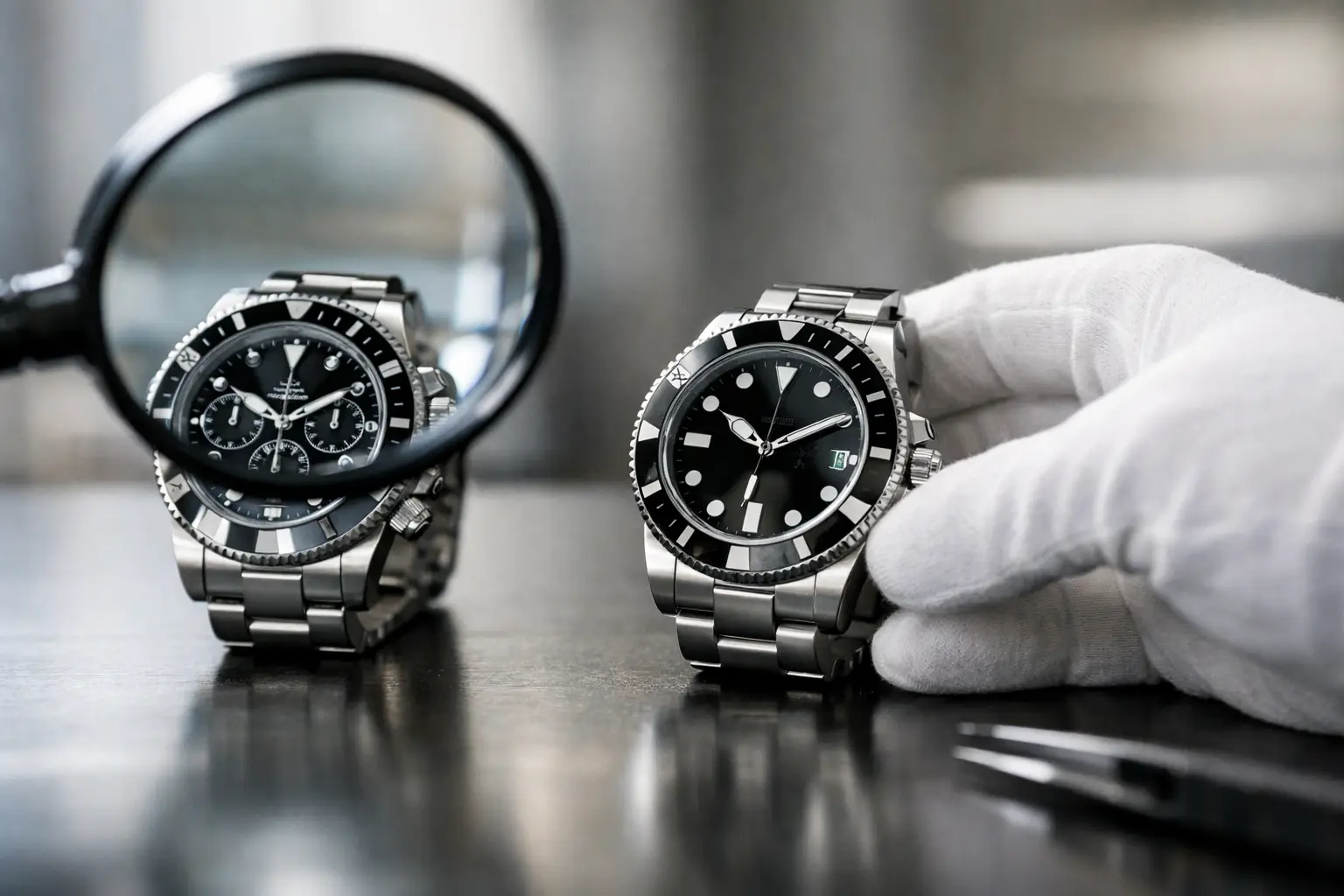
How to Spot Fake Luxury Watches
A luxury watch can look convincing in a few filtered photos. That is exactly why knowing how to spot fake luxury watches matters before money changes hands. In the secondary market, the biggest risk is rarely an obvious knockoff. It is the watch that appears right at first glance, is priced just low enough to feel like a win, and only reveals problems after the return window is gone.
For serious buyers, authenticity is not a small detail. It affects value, serviceability, resale potential, and peace of mind. A counterfeit Rolex, Omega, Cartier, or Patek Philippe is not simply a bad purchase. It is often a watch with no clean history, no reliable warranty path, and no long-term place in a real collection.
How to spot fake luxury watches before you buy
The first rule is simple: never judge authenticity by one detail alone. Counterfeiters have become better at copying obvious tells like logos, dial text, and packaging. Real verification comes from looking at the full picture – the watch itself, its paperwork, its movement, and the credibility of the seller.
Price is usually the first clue. If a sought-after model is offered far below normal market value, caution is warranted. There are legitimate reasons a watch may be priced aggressively, including cosmetic wear or incomplete accessories, but major discounts on high-demand references are rarely random. A Royal Oak Offshore, Nautilus, or Daytona offered at an unusually low number should prompt deeper questions, not faster payment.
Seller behavior is just as important as the watch. A trustworthy dealer is clear about condition, service history, included box and papers, warranty terms, and return options. Vague answers, rushed communication, or resistance to close-up photos are warning signs. So is a listing that relies on prestige language but avoids specifics.
Start with the details you can see
A fake watch often fails in execution. The dial may be the fastest place to notice it, especially on brands known for precision finishing. Luxury watch dials are crisp. Lettering should be clean, evenly spaced, and aligned. Applied markers should sit straight. Date windows should be centered and properly proportioned. If anything looks slightly off, there is usually a reason.
The case and bracelet deserve the same scrutiny. Sharp edges where there should be refinement, loose links, uneven polishing, or a clasp that feels light and flimsy are common issues. Authentic luxury watches are engineered with a level of consistency that is difficult to copy at a high level. Even sport models with more rugged designs should still feel deliberate and substantial.
Weight helps, but only to a point. Many counterfeit watches feel too light because lower-grade materials are used. Still, weight alone is not enough. Some modern replicas mimic mass surprisingly well, and certain authentic models are lighter than buyers expect because of titanium, ceramic, or composite construction. Weight should support other observations, not replace them.
If the seller provides video, listen carefully. A loud, erratic ticking sound on a watch that should use a refined automatic movement can be a problem. That said, not every quiet watch is real and not every audible watch is fake. This is one of those areas where context matters.
The movement tells the truth
If there is one place a counterfeit is most likely to fail, it is inside the case. The movement is where real craftsmanship separates itself from imitation. Luxury manufacturers invest heavily in movement architecture, finishing, regulation, and reliability. Counterfeiters focus first on what sells the watch visually.
A display caseback can make this easier. Compare what you see against the correct movement style for that reference. Rotor shape, engraving quality, bridges, screws, and finishing should all make sense for the brand and model. A watch claiming to be high horology but showing a crude or generic movement is an immediate concern.
Closed casebacks are more complicated. Many iconic models do not show the movement at all, which means buyers must rely on seller transparency and professional inspection. This is where authenticated dealers create real value. A proper inspection should go beyond whether the watch runs. It should confirm that the movement is correct for the model and that no critical components raise concerns.
Serial numbers, reference numbers, and paperwork
Counterfeiters know buyers ask for serial numbers, so the presence of a number means very little by itself. What matters is whether the serial and reference are correctly placed, properly engraved, and consistent with the watch offered. Misaligned engraving, shallow etching, or fonts that do not match brand standards should not be ignored.
The numbers must also make sense together. A reference should correspond to the exact model, material, dial configuration, and bracelet style. If a seller presents a steel watch with numbers tied to a different variant, that is a serious issue. In some cases, parts may be mixed from different watches, creating what appears to be an authentic piece but is not correct as assembled.
Box and papers can help, but they do not prove authenticity on their own. Counterfeit packaging has improved, and documents can be forged, altered, or paired with the wrong watch. Papers should be treated as supporting evidence, not final proof. They matter most when they match the watch precisely and come from a seller willing to stand behind them.
Brand-specific red flags buyers miss
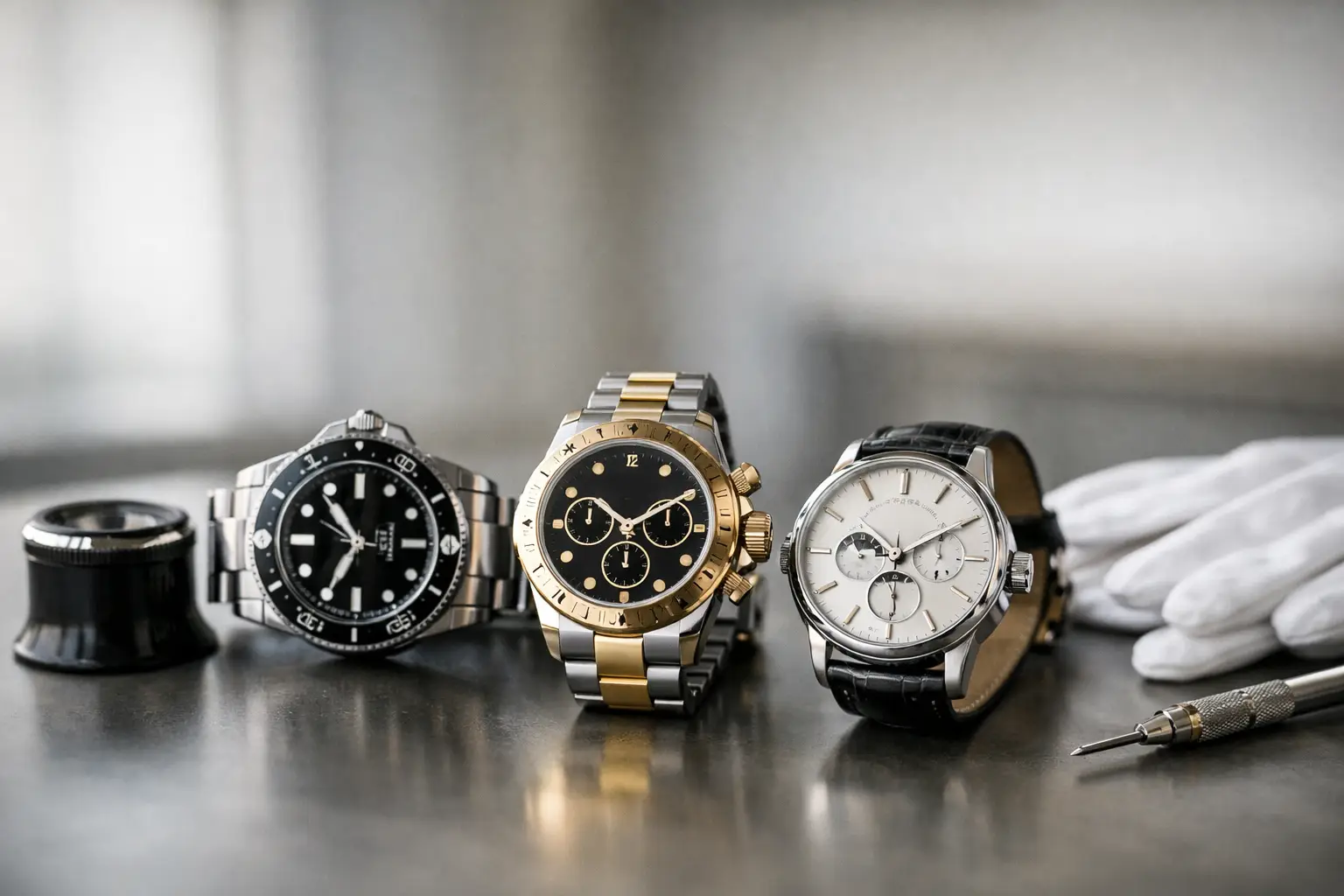
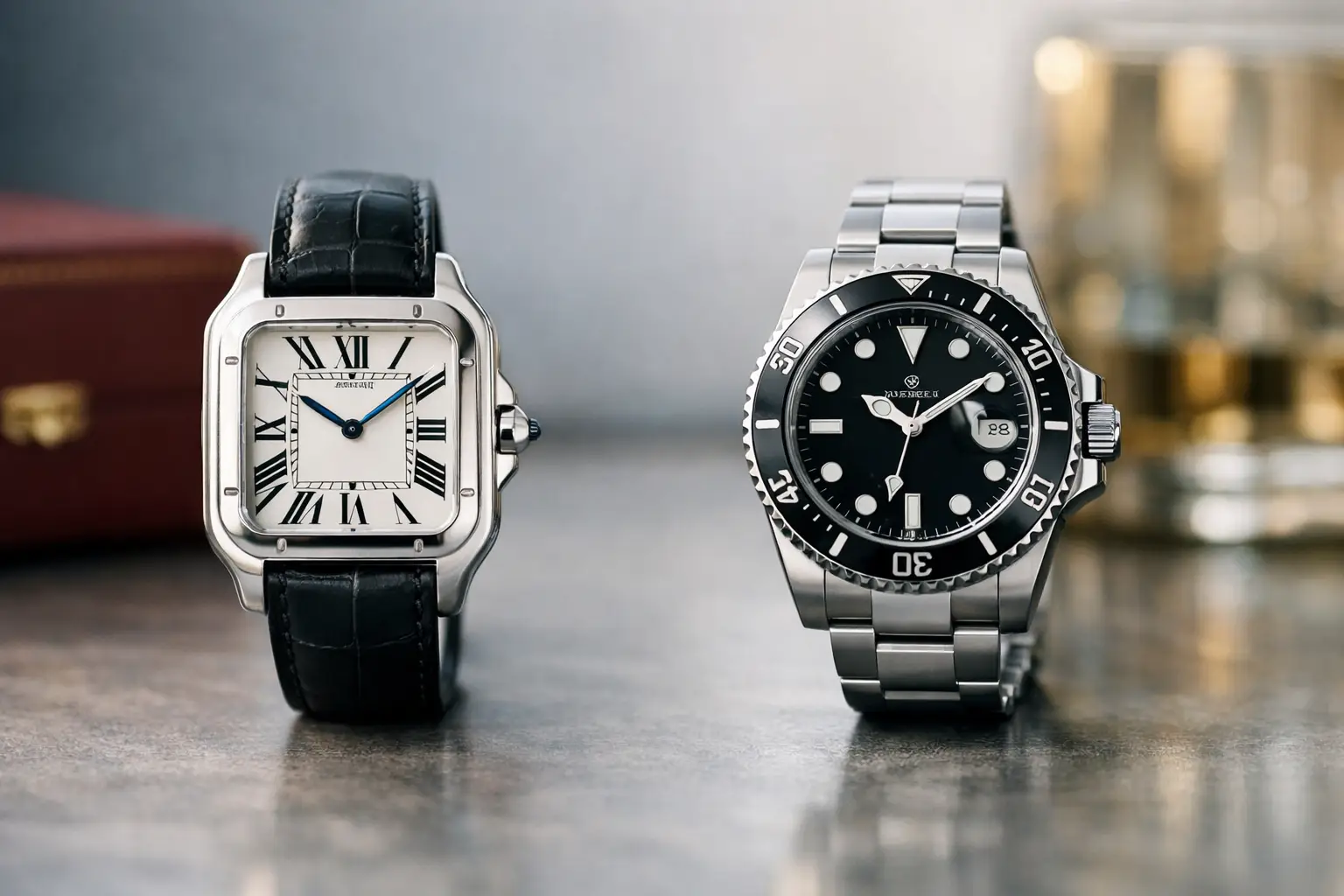
Different brands fail in different ways when copied. Rolex counterfeits often reveal themselves through poor date magnification, inconsistent cyclops alignment, rough bracelet finishing, or case proportions that feel slightly wrong. Omega fakes may get the broad shape right but miss dial texture, subdial spacing, or bezel execution. Cartier replicas often struggle with print quality, cabochon details, and the elegance of the case finishing.
High-end names like Audemars Piguet, Patek Philippe, Richard Mille, and Hublot bring another challenge. Buyers sometimes assume that a more expensive watch must be easier to identify as fake. In reality, many shoppers are less familiar with the finer details of these models, which makes them vulnerable to sophisticated copies. The more complex and prestigious the watch, the more expensive the mistake.
There is also the issue of Franken watches – pieces assembled from a mix of authentic and non-authentic or incorrect parts. These can be harder to detect than outright counterfeits because some elements are genuine. A replaced dial, aftermarket bezel, incorrect hands, or swapped bracelet can materially affect both value and originality.
Why the seller matters as much as the watch
Buyers often focus on the object and overlook the transaction. That is a mistake. When you purchase a high-value watch, you are not only buying metal and movement. You are buying the seller’s process, standards, and willingness to stand behind the watch after delivery.
A reputable luxury watch retailer should inspect for accuracy, condition, and signs of tampering. Water resistance testing matters on models designed for sport use. Warranty support matters if something goes wrong. A clean ownership history matters because authenticity is only one layer of a trustworthy purchase.
This is where experienced buyers tend to think differently from first-time shoppers. They know that a lower upfront price can become the most expensive option if the watch fails authentication later, needs major service, or cannot be resold with confidence. Paying for assurance is not overcautious. In this market, it is rational.
How to protect yourself when buying online
If you are buying remotely, ask for sharp, current images of the dial, case sides, caseback, clasp, bracelet, and paperwork. Request timegrapher results if available, and ask whether the watch has been opened or serviced. A serious seller should be comfortable discussing these points plainly.
Review the return policy before purchase, not after. Confirm whether the watch is covered by a seller warranty and what that warranty includes. If the listing leans heavily on phrases like rare, investment-grade, or impossible to find but says little about inspection standards, authenticity procedures, or condition grading, step back.
For many buyers, the safest route is straightforward: purchase from a specialist whose business depends on authenticated inventory and long-term trust. That standard matters far more than a polished product page or attractive price. At this level, confidence should be built into the purchase.
A luxury watch should feel like an acquisition, not a gamble. The right piece carries craftsmanship, pedigree, and lasting value. If anything about the watch, the paperwork, or the seller feels unclear, trust that instinct and keep looking. The best purchases are the ones you never have to second-guess.

Comments are closed