


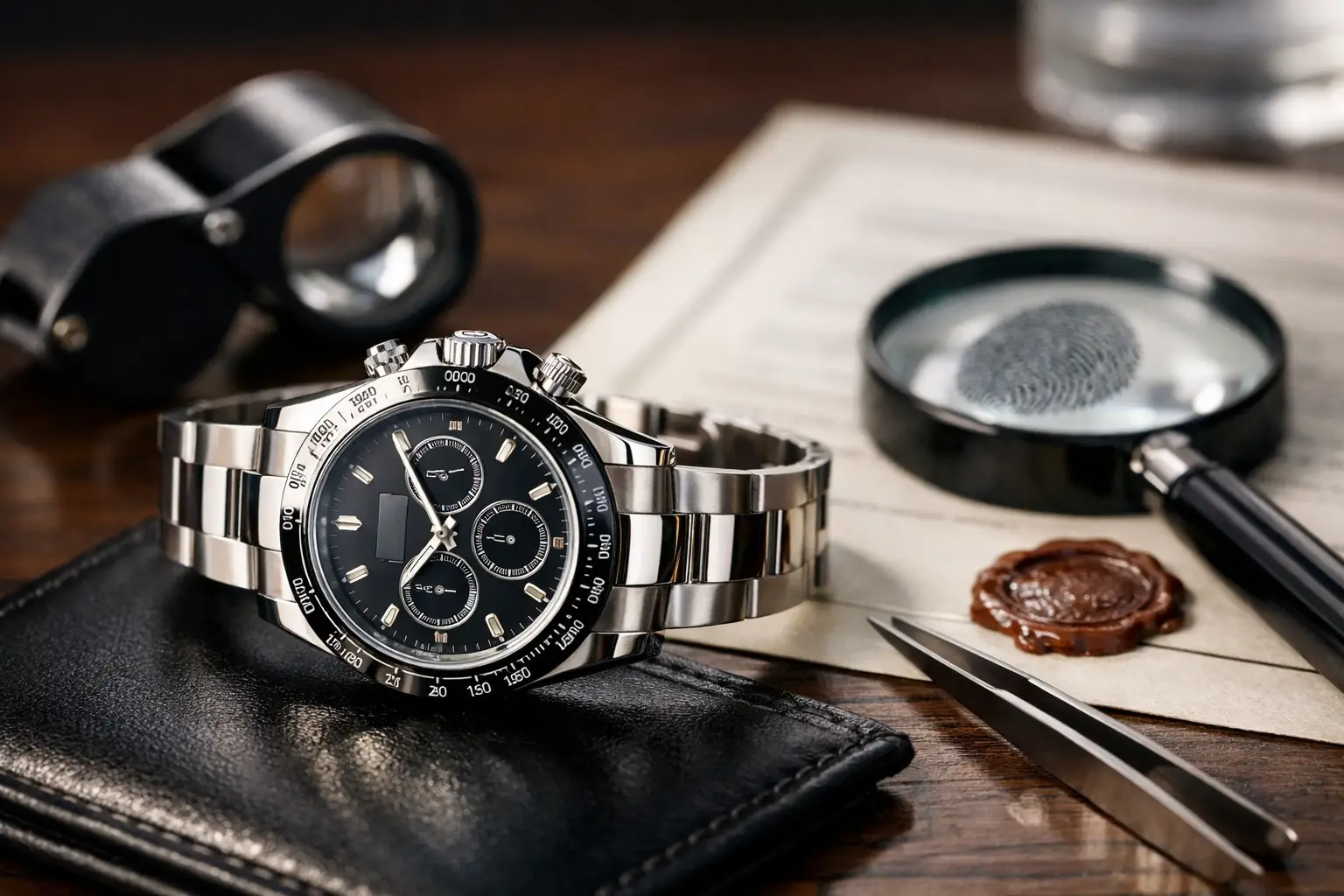
Luxury Watch Authenticity Guarantee Explained
A six-figure watch should never come with unanswered questions. When a buyer asks about a luxury watch authenticity guarantee, they are not looking for vague reassurance. They want to know exactly how authenticity is verified, what risks are removed, and what standards stand behind the sale.
That question matters because the secondary luxury watch market rewards expertise and punishes assumptions. A watch can look correct at first glance and still carry replacement parts, an unclear service history, or signs of prior damage that affect value. For collectors, professionals, and gift buyers alike, authenticity is not just about whether the name on the dial is real. It is about whether the entire watch is represented honestly.
What a luxury watch authenticity guarantee should actually cover
A true luxury watch authenticity guarantee goes beyond a simple statement that a watch is genuine. It should reflect a process. That process typically includes inspection of the case, dial, hands, movement, bracelet or strap, clasp, engravings, reference details, and serial information where available. The goal is to confirm that the watch matches the manufacturer, the model, and the condition being presented.
For high-value brands such as Rolex, Patek Philippe, Audemars Piguet, Omega, Cartier, and Breitling, that level of scrutiny is not optional. Buyers in this category understand that value can change quickly when components are altered or originality is compromised. A polished case may be acceptable if disclosed. A replaced bezel insert may or may not matter depending on the model. An aftermarket diamond dial on a watch represented as factory-original is a different issue entirely.
That is why the word guarantee only has meaning when it is tied to verifiable standards. If a retailer cannot explain how authentication is performed, what condition checks are included, and what buyer protection follows the sale, the promise is incomplete.
Authenticity is only one part of buyer confidence
The strongest sellers in the luxury space know that trust is layered. A watch may be authentic and still fail to meet the standards a serious buyer expects. Accuracy, water resistance, cosmetic condition, completeness, and history all matter because they influence both ownership experience and resale strength.
This is where many buyers make an expensive mistake. They hear authentic and assume problem-free. Those are not the same thing. A genuine watch can still need service. It can still have worn seals, excessive stretch in the bracelet, over-polishing, or damage that was not obvious in photos.
A meaningful guarantee addresses those issues directly. It should tell the buyer whether the watch has been inspected for timekeeping, whether water resistance was evaluated, whether the condition is accurately described, and whether there are concerns around provenance or reported loss history. For online luxury retail, that clarity is not a bonus. It is the baseline.
How professionals verify a luxury watch authenticity guarantee
The authentication process is part technical review and part brand-specific judgment. Experienced specialists compare every visible and internal detail against the expected characteristics of the reference. That includes movement architecture, finishing patterns, fonts, hallmarks, case geometry, weight, bracelet construction, clasp action, and luminous details.
With modern counterfeits, surface-level checks are no longer enough. Some replicas imitate engravings, packaging, and even movement appearance with surprising accuracy. That is why a serious authentication standard relies on trained inspection, not assumptions based on paperwork alone.
Original box and papers can strengthen confidence, but they do not replace expertise. Papers can be missing on a legitimate watch, especially with older pieces. They can also be forged, mismatched, or separated from the original watch. A complete set is valuable, but it should support authentication, not stand in for it.
For sought-after references such as a Patek Philippe Nautilus, an Audemars Piguet Royal Oak Offshore, an Omega Speedmaster, or a Panerai Luminor, the margin for error is especially narrow. Buyers are not only paying for brand prestige. They are paying for originality, configuration, and market credibility.
What buyers should ask before relying on any guarantee
The right retailer should be comfortable answering direct questions. Ask who performs the inspection. Ask whether the movement is checked. Ask whether replacement parts, refinishing, or service history are disclosed when known. Ask what happens if a watch is later found to have been misrepresented.
The answers should be specific and calm, not evasive. In this market, confidence comes from transparency. A seller that provides clear condition reporting, warranty protection, and inspection standards is telling you something important about how they operate.
It also helps to understand what a guarantee does not always mean. It may not mean the watch is unpolished. It may not mean every component is factory-original on a vintage piece. It may not mean the manufacturer warranty is still active. Those details depend on the watch, the age, and the listing terms.
That is not a weakness if it is explained properly. In luxury watches, context matters. A vintage model with period-correct service hands may still be highly desirable. A modern sport model with professional refinishing may still present beautifully and perform exactly as expected. The issue is not whether every watch is untouched. The issue is whether the watch is represented honestly, priced accordingly, and supported after purchase.
Why warranty protection matters alongside authenticity
An authenticity guarantee protects against misrepresentation. A warranty protects against mechanical disappointment. The strongest buying experience includes both.
This matters because even exceptional watches are machines. A chronograph can develop reset issues. An automatic movement can show amplitude loss. A screw-down crown can feel correct and still need attention. If you are investing in a premium timepiece, especially online, warranty coverage adds a second layer of confidence that supports the purchase long after delivery.
For many buyers, this is the point where hesitation turns into action. The watch is authenticated, the condition is disclosed, the packaging is original, and the sale is backed by warranty protection. That combination reduces the uncertainty that often stops serious buyers from moving forward.
The role of packaging, history, and condition in a trustworthy sale
Original packaging is not the same as authenticity, but it matters. It reinforces completeness, supports presentation, and often improves gift value and collector appeal. The same is true of a clean history. A watch free from theft concerns or undisclosed complications carries a different level of confidence than one with unresolved questions.
Condition reporting deserves equal attention. Fine scratches, bracelet wear, edge softness, and crystal marks are normal considerations in this category. The key is disclosure. Premium buyers do not expect every pre-owned watch to be perfect. They expect the condition to match the price and the description.
That is where a trust-first retailer separates itself. Instead of forcing the buyer to decode risk, the seller clarifies it upfront. If a watch has been pressure tested, say so. If it has minor wear, show it and describe it. If the set includes box and papers, confirm it. If not, be direct. Precision creates trust.
Luxury watch authenticity guarantee and the online buying decision
Online luxury retail works when confidence is built before checkout. Buyers cannot hold the watch, inspect the bracelet, or examine the movement in person. The retailer has to close that gap through standards, presentation, and service.
A strong luxury watch authenticity guarantee does exactly that. It replaces uncertainty with a clear promise backed by process. For the buyer, that means less time second-guessing and more time focusing on what actually matters – the model, the fit, the occasion, and the long-term value of the piece.
This is especially important for buyers entering prestige watch ownership for the first time. They may know the names Rolex, Cartier, or Hublot, but not yet understand how to judge originality, condition, and market risk. A retailer that combines authenticated inventory with inspection standards and warranty support makes luxury acquisition feel secure rather than intimidating.
For experienced collectors, the appeal is different but just as practical. They already know what can go wrong. They value efficient access to desirable references, but only when the transaction is credible. Trust is not a marketing phrase at this level. It is part of the product.
A premium watch should feel exceptional from the first glance to the first wear. The right guarantee makes that possible by protecting more than the purchase itself. It protects the confidence behind it.



Comments are closed