


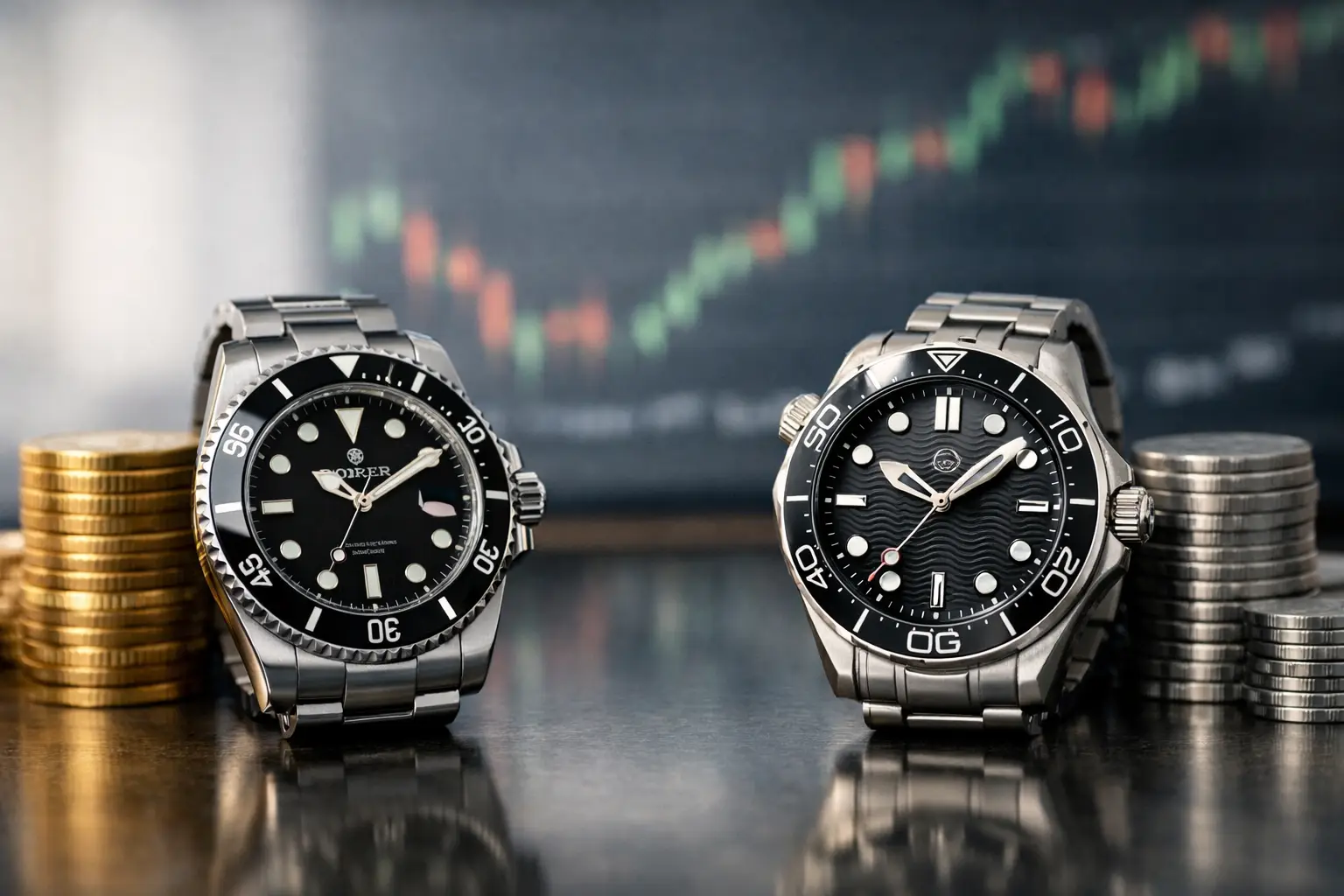
Rolex vs Omega Investment: Which Wins?
A buyer comparing a Rolex Submariner and an Omega Speedmaster is not just choosing between two respected Swiss names. In a Rolex vs Omega investment decision, the real question is how each brand behaves once the watch leaves the showcase – and what that means for resale strength, long-term demand, and downside protection.
For most buyers, Rolex leads on pure investment performance. Omega offers excellent watchmaking, deep heritage, and selective models with real staying power, but Rolex has the stronger track record for value retention and broader market liquidity. That said, the best investment is rarely the brand alone. It is the right reference, the right condition, the right set, and the right purchase source.
Rolex vs Omega investment at a glance
If your priority is preserving capital, Rolex typically has the clearer edge. The brand benefits from unusually strong global recognition, durable demand across both collectors and first-time luxury buyers, and a secondary market that remains active across many sports references. Models such as the Submariner, GMT-Master II, Daytona, and certain Datejust configurations tend to attract consistent attention because buyers know exactly what they are and what they represent.
Omega sits in a different position. It is a prestigious and historically important brand, with icons like the Speedmaster and Seamaster carrying real collector appeal. But Omega is generally more accessible at retail and on the secondary market, which can reduce the scarcity premium that often supports Rolex pricing. For a buyer focused strictly on appreciation, Omega usually requires more selectivity.
Why Rolex tends to outperform
Rolex has built something few luxury brands can match – immediate market confidence. Even outside watch collecting circles, the name signals prestige, permanence, and resale value. That broad recognition matters because it supports demand well beyond dedicated enthusiasts. A watch with more potential buyers is usually easier to sell and easier to price.
Scarcity also plays a role, whether intentional or structural. Many of Rolex’s most desirable steel sports models have spent years with demand well ahead of supply. That imbalance has helped support values on the secondary market, even during periods when pricing across the watch market softened.
There is also a practical point investors often overlook: Rolex references are easier for the market to understand. A Submariner, Daytona, or Pepsi GMT has a strong identity and a large pool of comparable sales. That makes pricing more transparent and buyer confidence stronger. In investment terms, clarity helps liquidity.
Where Omega makes a strong case
Omega should not be dismissed as a weak investment. It is better described as a more selective one. The brand has a powerful history, exceptional technical credibility, and a few models with lasting collector demand. The Speedmaster Professional Moonwatch is the clearest example. Its NASA connection, stable design language, and enduring popularity give it more resilience than many buyers expect.
Certain Seamaster models, limited editions, and discontinued references can also perform well, especially when they appeal to established collectors rather than casual buyers. Omega often offers a lower entry point than Rolex, which can reduce initial capital exposure. For some buyers, that matters as much as upside.
The trade-off is that Omega’s catalog is broader and less uniformly investment-oriented. Many references are purchased for enjoyment first and resale second. That does not make them poor buys. It simply means the buyer needs a sharper eye.
The model matters more than the logo
The biggest mistake in a Rolex vs Omega investment comparison is treating each brand as a single market. The gap between a desirable Rolex sports model and a less sought-after Rolex configuration can be significant. The same is true for Omega, where a classic Moonwatch and a standard production model can behave very differently over time.
For Rolex, steel sports references generally receive the most attention, especially models with long-standing collector demand and recognizable design codes. Condition, bracelet type, dial variation, year, and completeness all affect value, but the reference itself usually drives the conversation.
For Omega, the strongest investment candidates often come from historically important lines. The Speedmaster remains central, especially examples with strong provenance, clean condition, and desirable sets. Some vintage Seamasters and limited-production releases also draw collector interest, but this is a narrower and more reference-specific market than Rolex.
Condition, provenance, and completeness
A luxury watch is never just a watch when investment is part of the equation. Condition can change value dramatically. Over-polished cases, replacement parts, heavily worn bracelets, damaged dials, or questionable service history all introduce friction when it is time to sell.
Original box and papers also matter, especially in the high-end secondary market where buyer confidence is closely tied to completeness. A full set can improve desirability and, in many cases, resale performance. That is true for both brands, but it often matters even more when the buyer is comparing multiple similar examples online.
Authenticity is the non-negotiable factor. A strong investment thesis means very little if the watch has unresolved history, non-original components, or uncertain ownership records. This is where a trusted seller becomes part of the investment decision itself. Buyers at this level are not just paying for a watch. They are paying for confidence in what they own.
Short-term flips vs long-term holding
Not every buyer means the same thing by investment. Some want a watch that can be sold quickly with minimal loss. Others are willing to hold for years and let market cycles play out. Rolex usually serves both groups better because the buyer pool is larger and more active.
Omega can still work well for long-term buyers, particularly those who choose historically significant references and buy at sensible market levels. But Omega is less forgiving if you overpay or buy a model with weaker collector traction. The margin for error is smaller.
This is why timing matters. Buying into hype can hurt returns, even with a strong brand. Luxury watch prices move with broader demand, economic sentiment, and collector trends. The safest buyers are often the ones who focus less on headlines and more on proven references in excellent condition.
Which brand is better for first-time investors?
If the goal is simplicity, Rolex is usually the easier answer. It offers stronger recognition, easier resale, and more predictable market behavior across its best-known references. For a buyer entering the luxury watch market with investment in mind, that combination is hard to ignore.
Omega can be a smart first purchase if the buyer values substance, heritage, and a lower entry price while still wanting a watch with collector credibility. It may not deliver the same broad resale strength as Rolex, but it can offer better personal value if you want to wear the watch regularly and still maintain a reasonable degree of capital preservation.
That distinction matters. A watch that performs slightly less well on paper can still be the better real-world purchase if you enjoy it more, wear it more often, and bought it well.
The safest way to approach Rolex vs Omega investment
A disciplined buyer should treat this market the way any serious collector does. Start with demand. Look for references with a consistent resale history, not brief spikes. Prioritize condition and originality. Favor complete examples when possible. And buy from a source that stands behind authenticity, inspection standards, and watch history.
This is especially important in the secondary market, where two watches with the same reference number can carry very different risk profiles. A properly authenticated watch with original packaging, warranty support, and verified condition is simply easier to own and easier to sell. For buyers who want security as well as prestige, that assurance is part of the value.
Lux-Watch understands that dynamic well because serious buyers are not just shopping for brand names. They are looking for confidence at every stage of the purchase.
So, which wins? If you want the stronger all-around investment profile, Rolex is the more reliable choice. If you want selective opportunities, lower entry points, and the satisfaction of owning one of Swiss watchmaking’s most respected names, Omega still deserves a place in the conversation. The smartest purchase is the one that combines demand, condition, authenticity, and a watch you would be proud to keep even if the market takes its time.



Comments are closed