


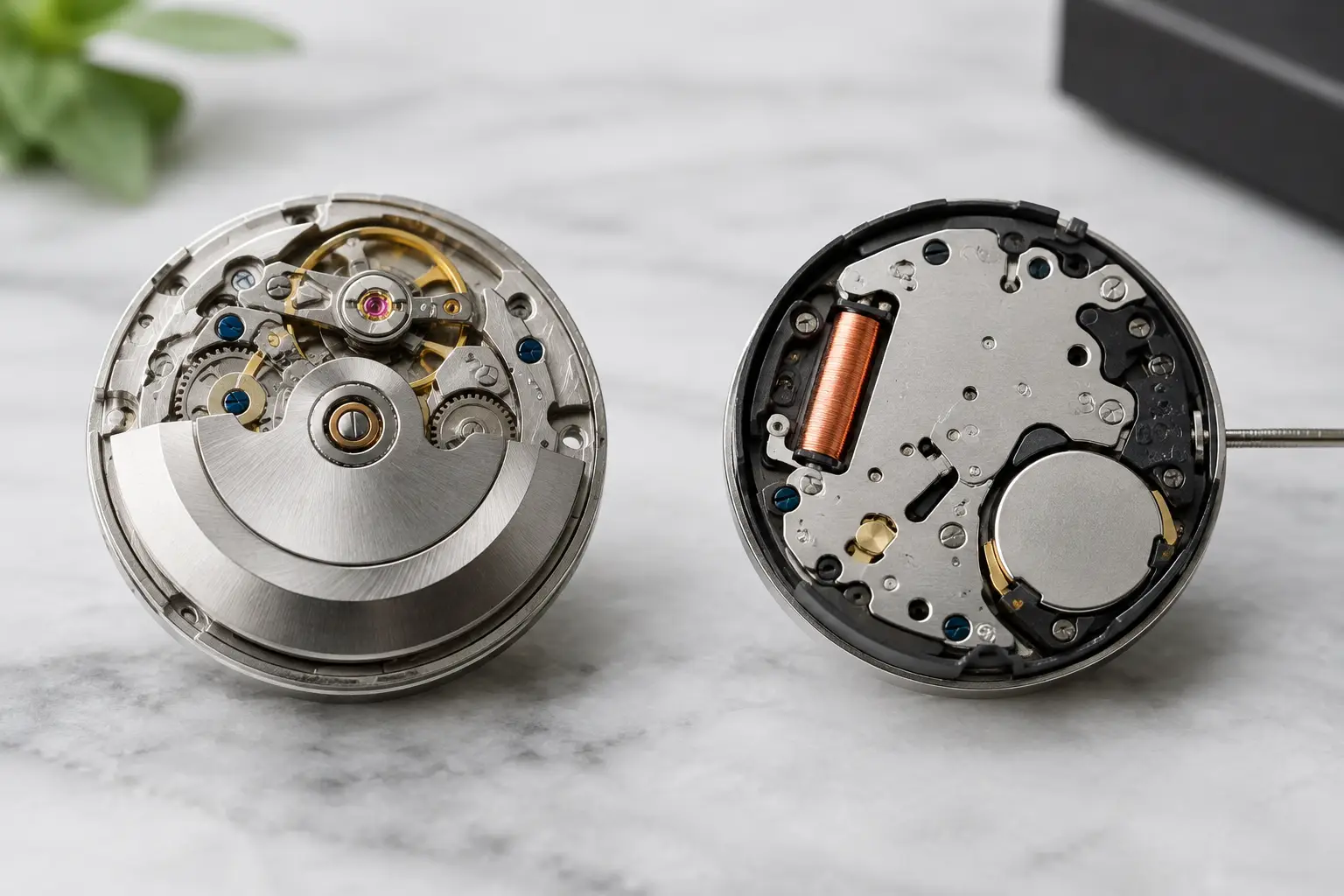
Automatic Versus Quartz Movements Compared
A Rolex Submariner ticking on the wrist, an Omega Speedmaster prepared for a weekend away, or a Cartier Tank selected as a milestone gift all raise the same practical question: automatic versus quartz movements, which belongs in your collection? The answer is not simply about which is better. It is about what you expect from a luxury watch after the box is opened.
For many collectors, a mechanical movement is part of the ownership experience. For others, the appeal is clear precision, low maintenance, and the confidence of a watch that is ready whenever it is needed. Both deserve a place in fine watchmaking, provided the movement suits the wearer, the model, and the reason for buying.
What Separates Automatic and Quartz Movements?
An automatic movement is mechanical. It uses a mainspring to store energy and a rotor that winds the movement as the wearer moves. Its gears, balance wheel, and escapement work together to measure time without a battery. Most automatic watches can also be wound by hand through the crown, and typically offer a power reserve of roughly 40 to 72 hours, although some high-end calibers run much longer.
A quartz movement uses a battery to send an electrical current through a quartz crystal. The crystal vibrates at a highly consistent frequency, and the movement converts those vibrations into timekeeping. It is an elegant piece of engineering in its own right, but it does not offer the same visible mechanical theater as an automatic caliber.
The distinction affects nearly every ownership consideration: accuracy, servicing, profile, price, heritage, and long-term collecting appeal.
Automatic Versus Quartz Movements: Accuracy
If accuracy is the only measure, quartz wins decisively. A standard quartz watch commonly varies by about 15 seconds per month. An automatic watch can gain or lose several seconds per day, depending on its regulation, position, temperature, magnetic exposure, and the wearer’s activity.
That does not make an automatic movement unreliable. A properly regulated Swiss automatic movement is entirely capable of dependable daily timekeeping. Chronometer-certified examples are held to tighter standards, while leading brands continue to improve resistance to magnetism and positional variation. Still, mechanical accuracy is measured in seconds per day, not seconds per month.
For a buyer who travels frequently, relies on precise time, or rotates among several watches, quartz offers undeniable convenience. Set it once, wear it occasionally, and it remains close to the correct time. An automatic watch may need resetting after its power reserve runs out, unless it is stored on a suitable winder or worn regularly.
Why Collectors Choose Automatic Movements
Luxury watch collecting is rarely a spreadsheet exercise. The automatic movement remains the emotional center of many iconic watches because it represents centuries of horological development in a compact, wearable form.
Through a sapphire caseback, a fine caliber reveals bridges, gears, decorated rotors, Geneva stripes, polished bevels, and engraving. Even when the movement is hidden behind a solid caseback, the knowledge that a self-winding mechanical engine is working beneath the dial changes the relationship with the watch. The sweep of a mechanical seconds hand, while not perfectly continuous, also carries a character that many enthusiasts immediately recognize.
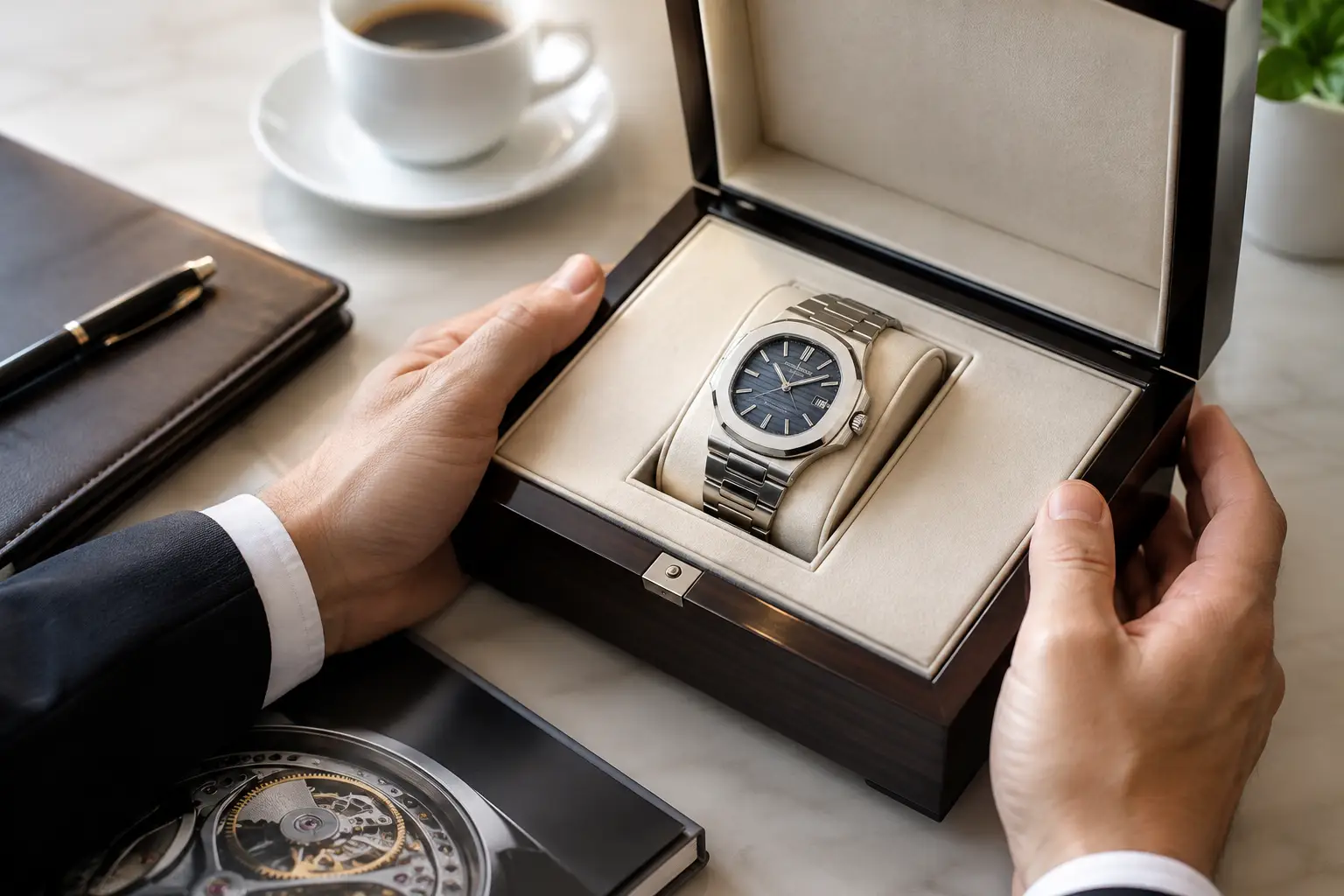
Automatic movements are especially natural in sport and prestige references with deep mechanical heritage. The Rolex Datejust, Omega Seamaster, Patek Philippe Nautilus, Audemars Piguet Royal Oak, Panerai Luminor, and Breitling’s mechanical collections are valued not only for design but for the caliber inside. In these categories, the movement is part of the watch’s identity and often part of its market appeal.
There is also a sense of permanence. A quality mechanical watch can be serviced, repaired, and passed down for generations. Components may wear and require replacement, but the underlying movement is designed to be maintained rather than discarded. For buyers selecting a future heirloom, that serviceable nature carries real weight.
The Case for Quartz in Luxury Watches
Quartz should not be treated as a lesser choice by default. It is often the smarter choice for a particular watch and wearer.
A quartz movement allows a slimmer case because it requires fewer moving components. That is particularly valuable in elegant dress watches, where a thin profile can make the difference between a watch that sits neatly under a cuff and one that feels too substantial. Cartier has long demonstrated how well quartz can serve refined, design-led references, including certain Tank and Santos models.
Quartz is also exceptionally practical. Battery changes are generally straightforward, servicing needs are less frequent, and the watch remains accurate through long periods in a safe or drawer. For a gift buyer, this can be ideal. The recipient can begin wearing the watch immediately without learning winding habits, power-reserve limits, or setting procedures.
There is a value argument as well. In many collections, a quartz version of a respected luxury model can provide the same distinctive design, prestige, and quality at a more accessible entry point than its automatic equivalent. That can leave room in a budget for a second watch, a sought-after strap, or a more significant future acquisition.
Maintenance, Service, and Daily Ownership
Automatic watches need periodic professional service. The interval varies by brand, movement, age, and use, but a mechanical caliber should be inspected and serviced according to the manufacturer’s guidance. Service may include cleaning, lubrication, regulation, gasket replacement, and pressure testing. For a water-resistant luxury watch, gasket condition and water-resistance testing deserve particular attention.
Quartz watches also require care, even though they are less demanding. Batteries must be changed before they leak or fail for extended periods. During a battery replacement, seals should be checked and the case should be pressure tested when water resistance matters. Higher-end quartz movements can still require specialist attention, especially in complicated or vintage references.
Neither option should be exposed casually to strong magnets, major impacts, or water beyond its rated capability. An automatic movement has more delicate moving parts, while a quartz watch has electronics that can be affected by moisture or a poorly performed battery service. The quality of maintenance matters as much as the movement type.
Value Retention Depends on More Than the Movement
It is tempting to say automatic watches hold value better. In broad terms, mechanical movements command stronger collector interest, particularly in Rolex, Patek Philippe, Audemars Piguet, and limited-production sports watches. Yet resale performance depends on far more than automatic versus quartz movements.
Brand, reference, case condition, dial originality, production numbers, service history, market demand, and the presence of original box and papers all influence value. A desirable quartz Cartier can be more compelling than an ordinary automatic watch from a less respected line. Likewise, a rare or historically important quartz reference may appeal strongly to knowledgeable collectors.
Buy the movement for the experience you want first. Treat potential value retention as a consideration, not a promise. The strongest acquisitions are usually watches you would be pleased to wear even if the market shifts.
How to Choose the Right Movement
Choose an automatic watch when craftsmanship, mechanical heritage, and the ritual of ownership matter most. It is the natural selection for the enthusiast who appreciates a caliber as much as the dial, plans to wear the watch often, and sees the purchase as a long-term part of a collection.
Choose quartz when precision and convenience take priority. It works beautifully for a slim dress watch, an occasional-wear piece, a first luxury purchase, or a gift intended to be immediately effortless. It can also be an intelligent way to access an iconic design without paying a premium for a mechanical movement you may not fully use or value.
Before purchasing either, verify the exact reference rather than relying on a collection name alone. Many prestige lines have been offered with different movement types over time. Confirm the watch’s condition, service record, included accessories, and water-resistance status. For a high-value purchase, authenticated provenance and warranty protection provide the confidence that should accompany the watch itself.
A watch earns its place by being worn. Whether that means the quiet precision of quartz or the living mechanics of an automatic caliber, choose the movement that makes you reach for the watch again tomorrow.


Comments are closed