


A Counterfeit Watch Investigation for Buyers
A counterfeit watch investigation should begin before money changes hands, not after a watch arrives. At the highest end of the market, a convincing replica can borrow the right silhouette, logo placement, and even a familiar serial format. What it cannot consistently reproduce is the complete, verifiable story behind a genuine timepiece.
For buyers considering Rolex, Patek Philippe, Audemars Piguet, Omega, Cartier, or another prestige brand, authenticity is not a detail. It is the foundation of value, warranty eligibility, collectibility, and long-term confidence. A proper investigation combines visual assessment with documentation, mechanical inspection, and a clear review of the seller.
What a Counterfeit Watch Investigation Actually Examines
The strongest counterfeit watches are rarely exposed by one obvious mistake. Modern replicas may have convincing dials, sapphire crystals, and substantial bracelets. Some use movements designed to resemble the architecture of a genuine caliber at a glance. That is why a serious review looks at evidence in layers.
First comes identity. The watch’s reference number, serial number, configuration, dial, bezel, bracelet, and clasp should correspond to a real factory-issued model. A serial number alone is not proof. Counterfeiters can copy valid numbers from legitimate watches, while altered or stolen watches can carry genuine components with an unclear history.
Next comes construction. Case dimensions, metal finishing, engraving depth, dial printing, luminous material, date alignment, and bracelet tolerances all help build a picture. On a genuine luxury watch, the details work together with a level of precision that is difficult to replicate across the entire piece.
Finally, there is the movement. The caliber is often the most decisive evidence, but it should be assessed by a qualified professional. An exterior that appears correct can conceal an incorrect, modified, or low-grade movement. Opening a watch without the right tools also risks damaging the caseback, gaskets, and water resistance, so this is not a step for a buyer to attempt at home.
The Documents That Matter, and Their Limits
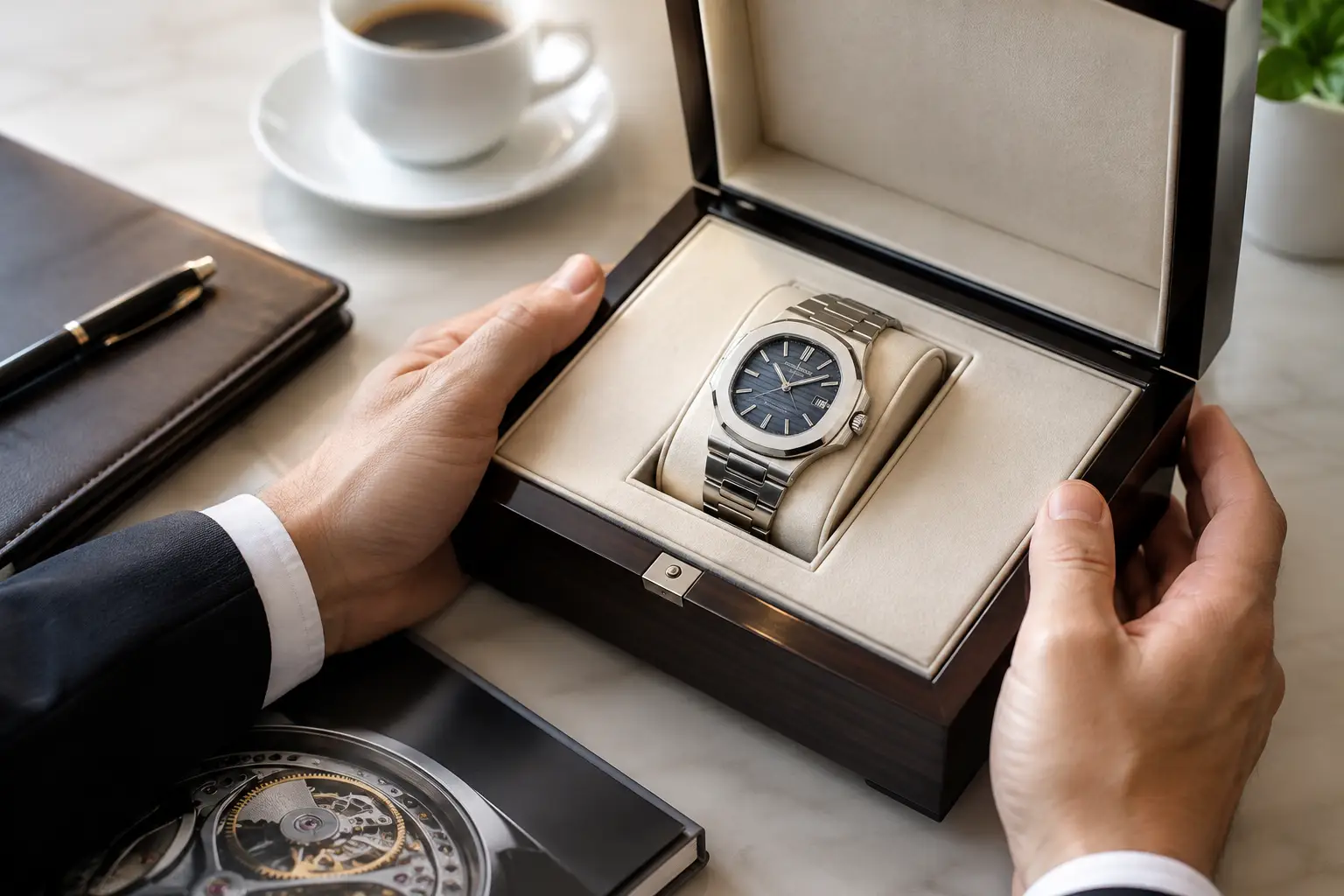
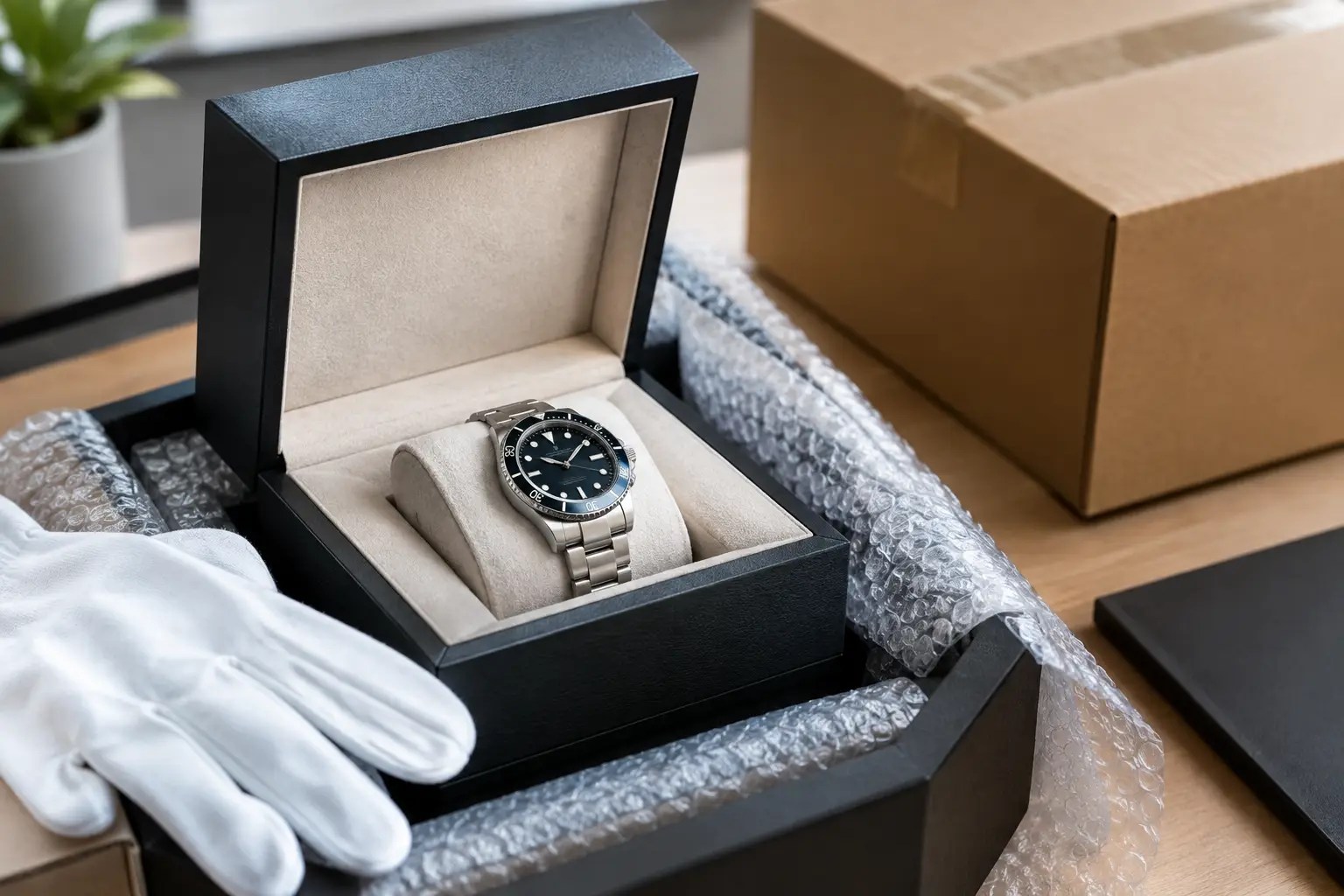
Original box, papers, manuals, receipts, and service records can strengthen a watch’s provenance. For collectors, a complete set may also improve desirability and resale value. But documents should support the watch, not replace a close inspection of it.
Counterfeit cards and copied invoices are widely available. A card that matches a serial number is useful only when the watch itself, the documentation, and the selling history align. Watch for inconsistent fonts, incorrect dealer information, dates that do not suit the production period, or paperwork that looks unusually new compared with an older watch.
Service documentation can be particularly valuable because it may show a traceable maintenance history. Even then, confirm what the record actually establishes. A service receipt may verify that a watch was examined at a particular time, but it does not automatically explain every ownership transfer or guarantee that all components remain original.
For rare references, limited editions, and highly collectible vintage pieces, originality requires added care. A genuine watch can have later replacement hands, a refinished dial, replacement bezel insert, or non-original bracelet. These details do not necessarily make the watch counterfeit, but they affect value and should be disclosed clearly.
Where Replicas Often Reveal Themselves
A buyer should be cautious of any single visual claim such as “the crown looks right” or “the weight feels correct.” Those observations can be useful, but they are not enough. The better question is whether every relevant detail agrees with the known specifications for that exact reference and production period.
Dial printing is a common starting point. On authentic examples, lettering is typically crisp, consistently spaced, and correctly positioned. Poorly defined text, uneven luminous plots, imprecise minute tracks, or a date window that sits off-center can indicate a problem. Yet genuine vintage watches may show age-related variation, so context matters.
Engravings deserve the same measured approach. Reference and serial markings should have the appropriate location, style, and quality for the model. Overly shallow, overly aggressive, or fuzzy engravings are concerning. So are markings that appear newly cut into a case with extensive wear elsewhere.
Bracelets and clasps provide another useful checkpoint. Genuine luxury bracelets tend to have precise fit, secure closure, consistent finishing, and correct hallmarks. A loose clasp, sharp edges, incorrect screw heads, or a mismatch between bracelet code and watch production era may warrant further review. It may signal a counterfeit, an aftermarket replacement, or simply a component that has been changed over time.
Price Is a Clue, Not a Bargain
A price far below prevailing market value should prompt questions, especially for difficult-to-source models such as a Rolex sports watch, Patek Philippe Nautilus, or Audemars Piguet Royal Oak Offshore. Limited supply and sustained demand create a market where authentic examples retain meaningful value. A dramatic discount is rarely explained by a seller simply being unaware of what they own.
That does not mean every fairly priced watch is authentic or every lower-priced watch is fraudulent. A watch may be priced below market because it has condition issues, incomplete accessories, non-original parts, or an urgent seller. The point is to require evidence equal to the risk. The more unusual the price, the more complete the authentication and ownership record should be.
Be equally careful with pressure. Requests for immediate payment, private payment methods with no buyer protection, reluctance to provide additional photographs, or resistance to third-party verification are all reasons to pause. Prestige purchases should allow for due diligence.
A Sensible Investigation Before You Buy
Before committing to a high-value watch, establish exactly what is being offered. Ask for the reference number, clear current photographs, condition details, full-set status, service history, and any known replacement components. Compare these details with trustworthy model knowledge, but do not rely on internet images alone. Counterfeit listings often use photographs of genuine watches.
Then assess the seller’s accountability. A professional luxury retailer should state its authenticity standards, provide accurate condition descriptions, stand behind its inventory, and offer transparent support if questions arise. Clear warranty coverage and a documented inspection process are meaningful signs that the business has a long-term reputation to protect.
For private transactions, consider an independent watchmaker or established authentication service before funds are released. The cost of an expert inspection is small compared with the potential loss attached to a counterfeit or materially altered watch. If the seller objects to a reasonable verification process, treat that response as information.
At Lux-Watch, the standard is built around buyer confidence: each timepiece is inspected for authenticity, accuracy, water resistance, condition, and clean history before it is offered for sale. That level of care matters because luxury ownership should begin with certainty, not suspicion.
When the Watch Is Genuine but the Deal Still Is Not Right
Authenticity is essential, but it is not the only question. A genuine watch may still be a poor fit if its condition has been overstated, its polish has softened important case lines, its bracelet has significant stretch, or its service needs have been deferred. For a collectible piece, an incorrect replacement dial or bezel may materially change its appeal and price.
This is where a clear condition report matters. Ask what has been polished, replaced, or repaired. Ask whether the watch has passed water-resistance testing and whether timing performance has been checked. A transparent seller will distinguish between normal wear, service-related replacement parts, and modifications that influence collector value.
The right purchase is not merely a watch that passes an authenticity check. It is a watch whose identity, condition, provenance, and price are all understood before it becomes part of your collection.
A luxury watch is meant to mark time with distinction. Give the purchase the same care: choose evidence over assumptions, a seller with accountability, and a timepiece you can wear with complete confidence.


Comments are closed