


Rolex Datejust Buyer Review for First-Time Owners
A Rolex Datejust rarely needs an introduction across the room. The fluted bezel catches the light, the Cyclops lens makes the date unmistakable, and the name on the dial carries more than seven decades of recognition. But a Rolex Datejust buyer review should go beyond that familiar profile. For a purchase at this level, the details that determine satisfaction are size, configuration, condition, provenance, and whether the watch genuinely suits the life you will wear it in.
The Datejust is one of the most versatile watches Rolex has made. It can sit beneath a tailored cuff, work with a polo shirt, and still feel appropriate at a formal dinner. That versatility is its greatest strength, although it also means buyers have more choices to make than the simple, iconic design suggests.
Rolex Datejust Buyer Review: What You Are Buying
The Datejust was introduced in 1945 and became the first self-winding wristwatch to display the date in a window that changed automatically at midnight. Its visual language has remained remarkably consistent: Oyster case, date aperture at 3 o’clock, and, on most modern examples, the magnifying Cyclops lens.
A current or recent-production Datejust typically features Rolex’s reliable automatic movement, a scratch-resistant sapphire crystal, and a waterproof Oyster case. The exact caliber depends on the reference and production era. Modern 36 mm and 41 mm models are commonly equipped with the caliber 3235, offering approximately 70 hours of power reserve, while prior generations may use the caliber 3135 or related movements. All are proven Rolex designs, but reference-specific knowledge matters when comparing price, service history, and long-term ownership expectations.
The appeal is not mechanical novelty. The Datejust is valued because it is composed, recognizable, and exceptionally easy to wear. It delivers Rolex presence without the overt sport-watch identity of a Submariner, GMT-Master II, or Daytona.
Size Is the First Decision
The Datejust is available in several sizes, but the 36 mm and 41 mm versions define the modern market. Neither is automatically the better choice.
The Datejust 36 is the classic proportion. It has substantial wrist presence without appearing oversized, and it works particularly well for buyers who appreciate traditional Rolex design. It is also an excellent unisex choice. On a smaller or average wrist, it often looks more balanced than the larger alternative, especially with a fluted bezel and Jubilee bracelet.
The Datejust 41 offers a more contemporary footprint. Despite its name, the case does not wear like a dramatically large 41 mm sports watch. Its proportions remain refined, but the larger dial creates more visual impact. Buyers who prefer a modern, assertive look or regularly wear larger watches may find it more satisfying.
Try not to choose based on trend alone. A Datejust is frequently purchased as a long-term watch, and proportion ages better than fashion. If you are uncertain, the 36 mm remains one of the safest and most enduring choices in luxury watchmaking.
Dial, Bezel, and Bracelet Change the Entire Watch
A silver, black, blue, green, slate, or champagne dial can make the same Datejust reference feel completely different. Bright dials tend to read cleaner and more formal. Darker dials create contrast and a slightly sportier character. Motif dials, diamond-set options, and distinctive finishes can add personality, though they may appeal to a narrower future market than classic configurations.
The bezel makes an equally meaningful difference. A smooth bezel is discreet and contemporary, especially in Oystersteel. A fluted bezel is the signature choice, delivering the bright, textured look many buyers associate immediately with the Datejust. On certain references, the fluted bezel is made from white gold, even when the rest of the watch appears to be steel. It is a subtle expression of Rolex’s materials expertise and a factor reflected in price.
Then there is the bracelet. The Oyster bracelet is sporty, clean, and highly adaptable. The Jubilee bracelet is dressier, more intricate, and closely linked to Datejust heritage. It also tends to drape comfortably around the wrist. Neither is superior in every circumstance. The Oyster can suit a buyer who wants a single everyday Rolex; the Jubilee is often the stronger choice for someone seeking the full classic Datejust experience.
The Value Question: Is the Datejust Worth the Price?
For many buyers, yes, provided the purchase is made with the right expectations. The Datejust is not usually bought for extreme scarcity or rapid speculative upside. It is bought because it has enduring design value, broad recognition, excellent build quality, and strong demand across generations.
Certain configurations can command notable premiums. Steel models with desirable dials, fluted bezels, Jubilee bracelets, and current-generation movements are often especially sought after. Two-tone Rolesor models offer a warmer, more traditional luxury profile and may provide compelling value relative to steel demand. Solid gold Datejust models occupy a different category entirely, emphasizing precious-metal presence over restraint.
Resale performance depends on reference, market conditions, condition, set completeness, and original configuration. A watch with its original dial, bracelet, box, papers, and documented service history is generally easier to evaluate and more attractive to future buyers. That does not mean a watch without every accessory is automatically a poor purchase. It simply should be priced appropriately and inspected more carefully.
The strongest reason to buy a Datejust is that you want to wear it. Its value is most convincing when the watch earns time on your wrist rather than remaining in a safe because you are waiting for a market move.
What to Inspect Before You Buy
The Datejust is among the most copied luxury watches in the world. Authentication is not an optional detail. It is the foundation of a confident purchase.
Start with the reference and serial information, then confirm that the case, dial, hands, bezel, bracelet, clasp, and movement are consistent with that reference and production period. Rolex has made countless legitimate Datejust variations, so a detail that looks unusual is not necessarily wrong. Still, mismatched parts, incorrect dial printing, poor date magnification, uneven finishing, and a bracelet that does not align with the watch’s era deserve close attention.
Condition deserves equal scrutiny. Review the case edges and lugs for signs of excessive polishing, inspect the bracelet for stretch or damage on older examples, and ask whether the watch has been serviced. A professional service can be a positive, but replacement parts should be disclosed. For collectors, originality can matter greatly. For a buyer seeking reliable daily wear, a properly serviced watch with documented work may be the more practical choice.
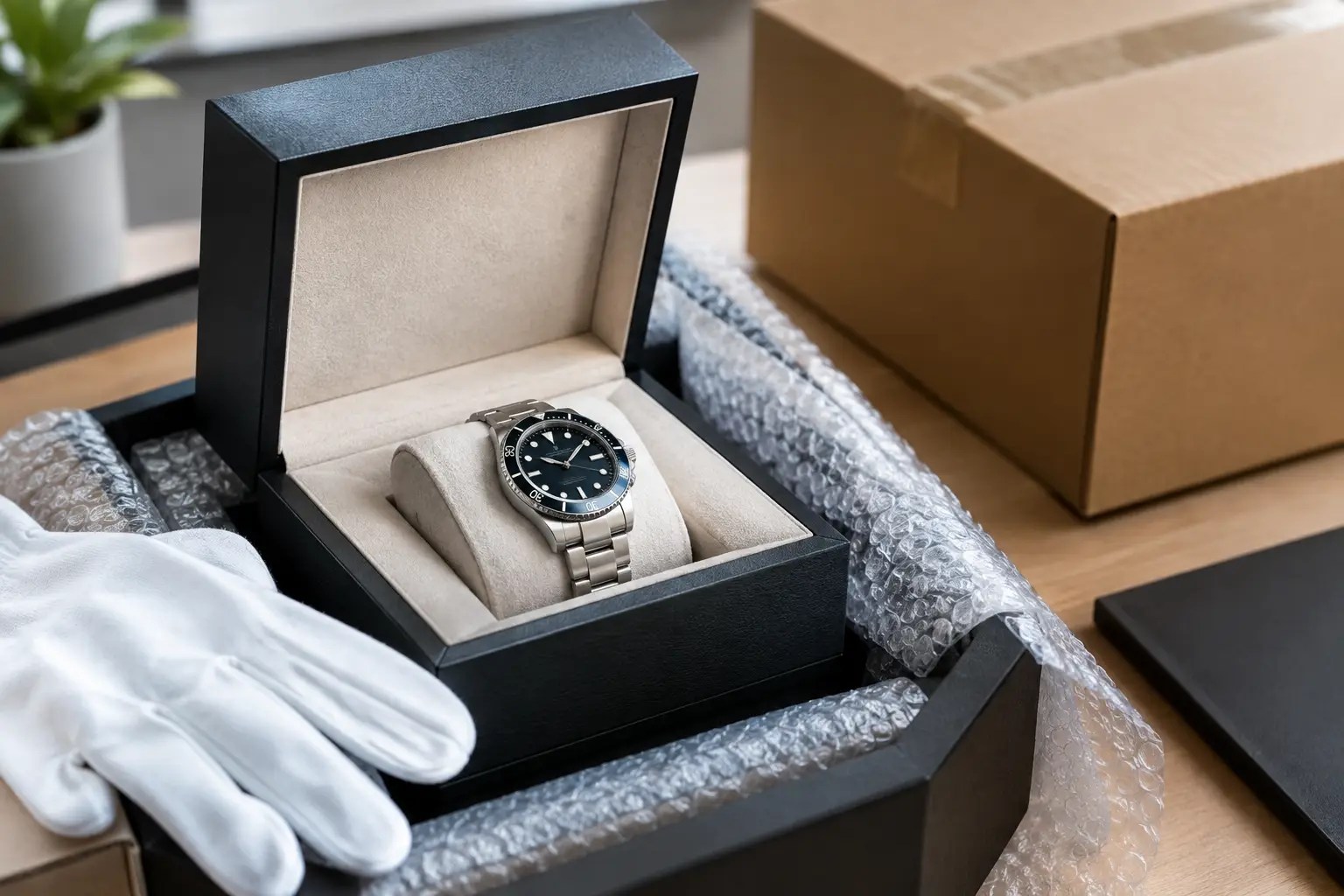
Water resistance should never be assumed based on appearance alone. Even a Rolex with an Oyster case should be pressure-tested when its service status is unknown, particularly before swimming or traveling. Accuracy testing, water-resistance testing, and a clean history provide meaningful protection against expensive surprises after delivery.
This is where a specialist retailer changes the experience. At Lux-Watch, the confidence comes from buying a watch that has been authenticated and inspected for condition, accuracy, water resistance, and history, with original packaging and warranty protection where offered. For a high-value Rolex, that assurance is part of the product.
New, Pre-Owned, or Vintage?
A newer Datejust offers modern movement technology, a fresh bracelet, and current design details. It is often the simplest route for buyers who want a dependable daily watch with minimal ownership unknowns. Pre-owned models can offer access to discontinued dials, earlier proportions, and attractive pricing, particularly when purchased in excellent condition from a trusted source.
Vintage Datejust models bring charm that current production cannot replicate: acrylic crystals, pie-pan dials, linen textures, and a lighter, more understated feel. They also require more patience. Parts originality, moisture damage, dial restoration, bracelet wear, and service availability all matter. A vintage Datejust can be deeply rewarding, but it is better approached as a collector’s purchase than as a casual first watch unless the seller can clearly document its condition.
Who Should Buy the Rolex Datejust?
The Datejust suits the buyer who wants one watch capable of handling nearly every setting. It is an especially strong first Rolex because its design is immediately recognizable without being limited to a single lifestyle. It also works for established collectors who want a refined counterpoint to larger sports watches.
It may not be the ideal choice for someone seeking a dedicated tool watch, a highly casual weekend piece, or the boldest possible statement. A Submariner, GMT-Master II, Day-Date, or a more unconventional brand may better match those priorities. The Datejust succeeds through balance, not extremes.
Choose the Datejust configuration that you will reach for without thinking: the size that sits naturally on your wrist, the bracelet that matches your wardrobe, and the condition level that supports how you intend to own it. When those decisions are supported by verified authenticity and careful inspection, the Datejust becomes more than a recognizable luxury purchase. It becomes a watch you can wear with complete confidence.


Comments are closed