


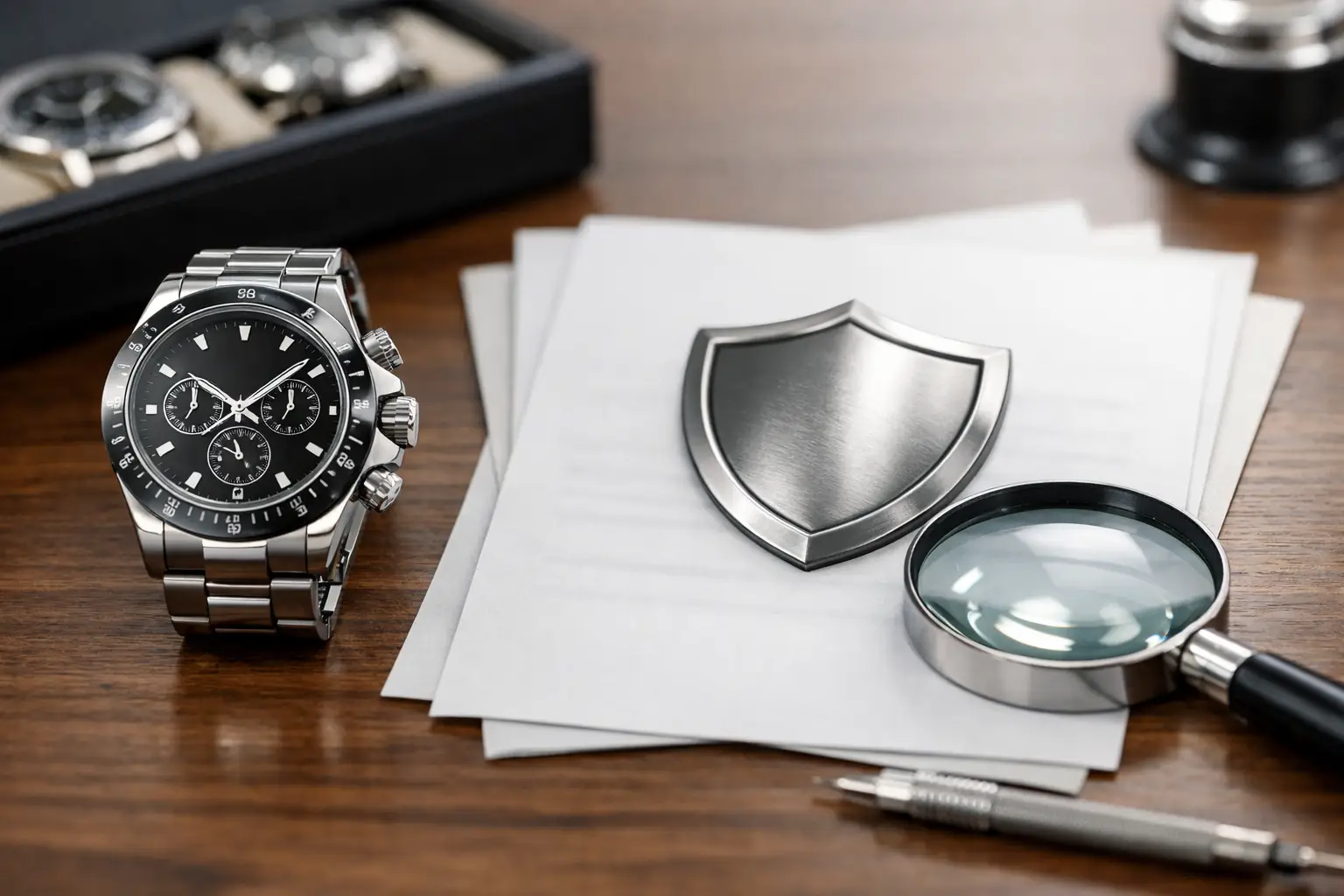
Guide to Watch Warranty Coverage for Buyers
A luxury watch warranty is not a decorative line on a product page. On a Rolex, Patek Philippe, Omega, or Audemars Piguet, it is part of the confidence behind a significant purchase. This guide to watch warranty coverage explains what protection can realistically do, where its limits begin, and which details deserve attention before you buy.
For collectors and first-time buyers alike, the central question is simple: if something goes wrong, who stands behind the watch? The answer depends on the age of the piece, whether it is new or pre-owned, the type of warranty offered, and the condition documented at the point of sale.
What a Luxury Watch Warranty Usually Covers
A warranty is designed to address defects in materials or workmanship. In practical terms, that may include a movement that stops unexpectedly, fails to keep reasonable time, or develops a mechanical issue under normal use. It can also cover a faulty crown, winding mechanism, date function, or other component that fails because of an underlying manufacturing or service-related defect.
Coverage is strongest when the issue is mechanical and clearly unrelated to wear, impact, moisture exposure, or unauthorized work. A watch that loses power reserve well before specification, for example, may warrant inspection. A chronograph pusher that fails during ordinary operation may also be eligible for repair.
The exact standard differs by brand and seller. Manufacturer warranties generally apply to watches sold through authorized channels and are governed by the brand’s own terms. Retailer warranties are separate promises, often especially relevant in the pre-owned luxury market, where an original factory warranty may have expired or may no longer transfer.
Manufacturer Warranty vs. Retailer Warranty
Understanding the source of coverage matters as much as understanding its length.
Manufacturer warranty
A manufacturer warranty is issued by the watch brand. It typically applies to a new watch sold by an authorized dealer with the correct warranty card and purchase documentation. Its duration varies by brand and model, and the brand usually requires service through an authorized service center.
This can be valuable because factory technicians have brand-specific training, approved parts, and access to the correct service procedures. However, it is not automatic protection for every watch carrying a famous name. A pre-owned watch may be outside its original coverage period, may lack properly dated documentation, or may have had work performed outside the authorized network.
Retailer warranty
A retailer warranty is provided by the selling company and is particularly meaningful when purchasing a pre-owned or discontinued reference. It addresses the retailer’s assessment of the watch’s function at sale and provides a defined path if a covered mechanical issue appears during the stated term.
A retailer warranty does not need to mirror a factory warranty to be valuable. Its purpose is different: it gives the buyer a direct, accountable point of contact after delivery. For a sought-after Nautilus, Royal Oak Offshore, Speedmaster, or Panerai Luminor, that reassurance can be decisive when availability and condition vary from one example to another.
What Watch Warranty Coverage Commonly Excludes
Luxury watches are precision instruments, but they are not indestructible. Most warranties exclude damage caused by an event rather than a defect. This is where buyers should set realistic expectations.
Common exclusions include accidental drops, impact damage, scratches, dents, broken crystals, bracelet wear, stolen watches, and loss. Cosmetic changes to polished surfaces, bezels, straps, and clasps are generally considered normal use rather than warranty issues.
Water damage also requires close attention. A watch may be rated for water resistance, yet warranties commonly exclude moisture damage caused by an improperly secured crown, worn seals, misuse beyond the stated rating, or a failure to maintain the watch. Water resistance is a tested condition, not a permanent entitlement. Gaskets age, seals can be compromised, and a watch that has been opened should be pressure-tested before it returns to water.
Problems resulting from unauthorized repairs, non-genuine replacement parts, modifications, or polishing that alters the case may also void coverage. This matters for collectors because originality can affect both warranty eligibility and long-term value. An aftermarket diamond bezel or a replacement dial may change the character of a watch substantially, even if the modification is expertly done.
The Fine Print Worth Reading Before You Buy
The warranty period is the obvious detail, but it should not be the only one. Read how coverage begins, what evidence is required, and what the remedy looks like. Some policies begin on the purchase date, while others may be tied to delivery. Keep your invoice, warranty card, condition report, and any service correspondence together from day one.
Ask whether the warranty covers parts and labor, whether shipping is included, and whether you must obtain approval before sending the watch for inspection. Also confirm who determines whether an issue is covered. A clear process is more valuable than vague language promising protection without explaining how a claim works.
For a pre-owned watch, inspect the description of condition alongside the warranty. A transparent seller should distinguish between normal signs of prior ownership and a mechanical concern. Light wear on a bracelet is not the same as a compromised clasp. A small mark on a bezel is not the same as a timing issue. Condition disclosure and warranty coverage work together to give you a complete picture.
How to Protect Your Warranty After Purchase
A warranty can support a purchase, but careful ownership helps preserve both the watch and your ability to make a claim. Set the time and date according to the model’s instructions, especially on calendar watches. Avoid operating pushers or adjusting the crown in water. If the watch has a screw-down crown, make sure it is properly secured before exposure to moisture.
Use qualified service professionals and retain every service record. A documented service history can be valuable when you later insure, sell, or trade the watch. It also helps establish that the movement has been maintained appropriately.
Do not wait for a minor issue to become a major one. Unusual condensation, a loose crown, a rattling rotor, a sudden change in timekeeping, or a chronograph function that no longer resets precisely deserves timely attention. Continuing to wear a watch with a suspected mechanical fault can increase the scope of repair and complicate the question of what caused the damage.
If you travel frequently or wear the watch daily, consider insurance separately from warranty protection. Insurance is designed for risks a warranty usually does not cover, such as theft, accidental damage, or loss. The two serve different purposes, and high-value owners often benefit from having both.
A Smart Warranty Checklist for Pre-Owned Watches
Before completing a purchase, confirm the warranty term and the name of the party providing it. Verify whether the original manufacturer warranty remains active and whether supporting documents are included. Review the stated exclusions, especially for water damage and third-party work.
You should also ask how the watch was inspected. A serious luxury seller should be able to speak clearly about authentication, movement performance, condition, and water resistance where applicable. At Lux-Watch, the focus on authentication, inspection, original presentation, and warranty protection is designed to address the concerns that matter most when purchasing prestige timepieces online.
Finally, consider the watch you are buying rather than treating every warranty as identical. A vintage dress watch, a modern dive watch, and a complicated perpetual calendar face different ownership realities. Older pieces may carry more character and rarity, but they can require more specialized care. A modern sports watch may be built for active use, yet still needs routine testing and proper handling.
The right warranty does not eliminate every ownership risk. It gives you a clear standard of care, a defined response if a covered mechanical issue arises, and greater confidence to enjoy a watch chosen for far more than the time it keeps.

Comments are closed