


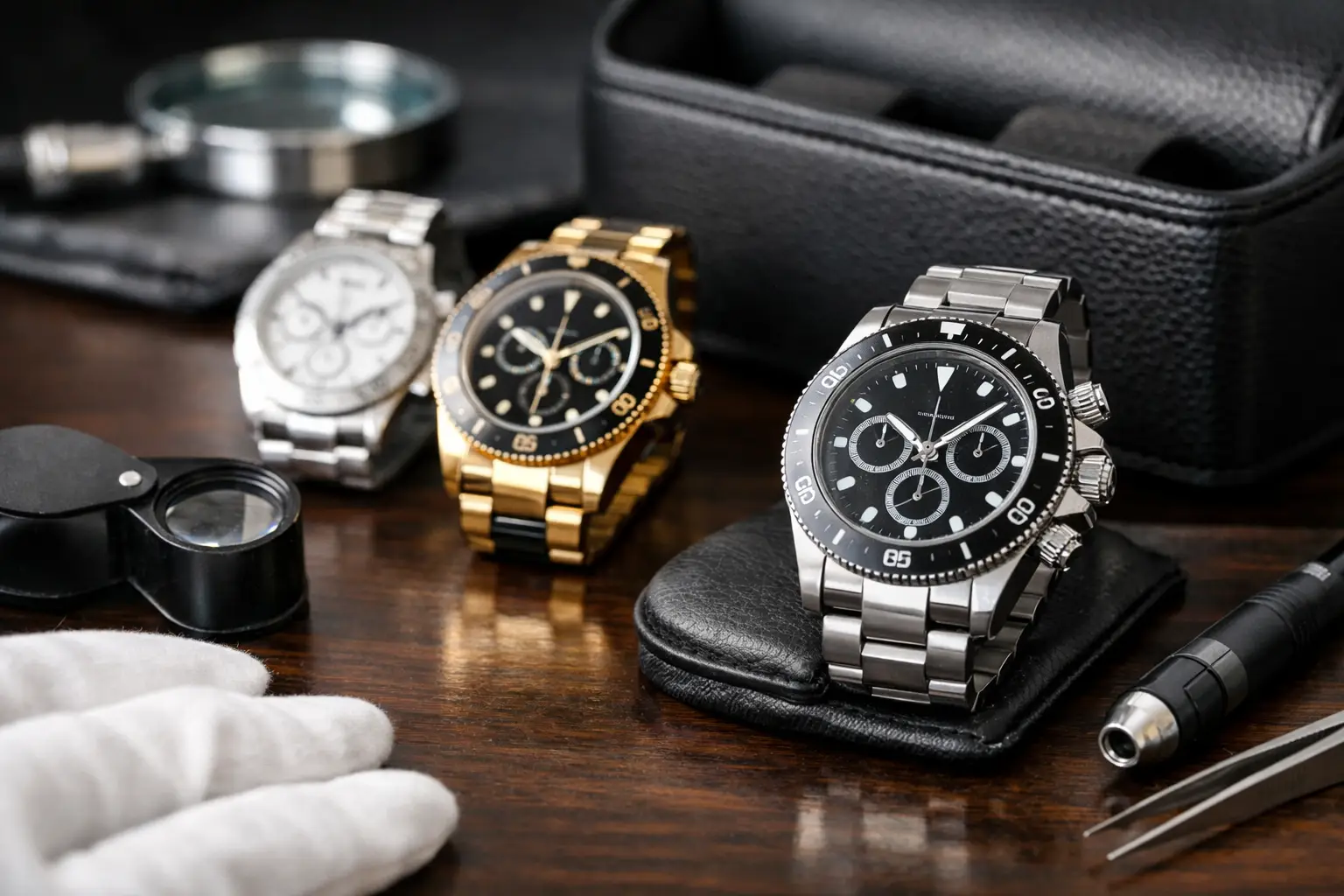
Guide to Authenticated Luxury Watches
A six-figure watch can look perfect in photos and still be the wrong buy. In this guide to authenticated luxury watches, the real question is not only which brand or reference you want – it is whether the watch is genuine, properly inspected, and offered with the level of protection a serious purchase deserves.
For many buyers, that is where confidence starts. A Rolex, Patek Philippe, Audemars Piguet, Omega, or Cartier carries prestige on its own, but prestige without verification is just risk with a polished finish. The secondary luxury watch market offers rare access, discontinued references, and immediate availability, yet it also demands a higher standard of due diligence.
Why authenticated luxury watches matter
Authentication is not a marketing extra. It is the line between buying a valuable asset and inheriting a problem. At the highest end of the market, even experienced buyers know that counterfeits have become more convincing, replacement parts can affect value, and incomplete histories can create long-term concerns.
An authenticated luxury watch should give you more than a verbal assurance. It should reflect a process. That process typically includes confirming the movement, dial, case, bracelet, engravings, and reference details are consistent with the model being sold. It should also address condition, timekeeping performance, water resistance where applicable, and whether the watch shows signs of theft, tampering, or undisclosed restoration.
This matters for collectors who care about originality, for professionals buying a visible status piece, and for gift buyers who cannot afford uncertainty. The higher the value of the watch, the less acceptable vague answers become.
A practical guide to authenticated luxury watches
If you are evaluating a luxury watch online, start with the seller before you start with the watch. A reputable retailer should be direct about its authenticity standards, inspection process, packaging, and warranty coverage. If those details are hard to find, incomplete, or written in broad language, that is a warning sign.
The watch itself should be presented clearly. High-resolution images, reference information, condition notes, and transparency around what is included in the sale all help reduce ambiguity. Original box and papers can strengthen confidence and support resale value, but they are not a substitute for professional authentication. A fake watch can still come with convincing accessories.
The strongest listings do not rely on brand name alone. They explain what has been checked and what protections are available after purchase. That is especially important with sought-after models such as the Patek Philippe Nautilus, Royal Oak Offshore, Omega Speedmaster, or Panerai Luminor, where buyer demand can outpace caution.
What authentication should actually cover
True authentication goes beyond whether a watch looks right at first glance. It should examine the full watch as a system. That includes the serial and reference consistency, the movement caliber, the finishing quality, case dimensions, dial printing, luminous application, hands, crystal, bracelet construction, clasp details, and brand-specific hallmarks.
For certain brands, small deviations matter. The shape of a crown guard on a Panerai, the texture and tapisserie pattern on an Audemars Piguet dial, or the engraving depth on a Rolex rehaut may separate an authentic watch from a highly sophisticated imitation. On complicated or limited-production pieces, expertise becomes even more valuable because originality affects both desirability and price.
Authentication should also account for parts replacement. A watch can be authentic overall and still contain non-original components that change how it should be valued. That does not always make it a bad purchase. It simply means the seller should disclose it clearly, and the price should reflect it.
Condition matters as much as authenticity
A genuine watch with poor condition reporting is still a risky purchase. Luxury watch buyers should expect clear information on case wear, stretch in the bracelet, service history, polishing, dial condition, and crystal integrity. If a watch has been refinished, over-polished, or repaired with aftermarket parts, that should not be left to guesswork.
Performance testing matters too. Timekeeping accuracy and water resistance are practical concerns, not small technical details. A dive watch that has not been pressure tested or a chronograph with inconsistent operation can become an immediate service expense. For premium buyers, inspection should reduce surprises after delivery.
This is one reason trust-first retailers stand apart. A careful inspection process does more than protect the transaction – it preserves the ownership experience. You should be able to wear the watch with confidence, not wonder what you missed.
What to look for before you buy
The best buying decisions usually come down to a handful of standards. First, confirm the watch is explicitly sold as 100% authentic. Second, check whether the seller offers warranty protection rather than leaving you on your own once the package arrives. Third, review whether the watch has been inspected for accuracy, water resistance, condition, and clean history.
Packaging also matters, particularly in the luxury segment. Original box and papers can support provenance and presentation, especially for gifting or future resale. Still, they should be viewed as part of the value package, not the foundation of trust. Authentication and inspection remain the foundation.
It is also worth paying attention to the quality of the buying experience itself. A serious luxury watch retailer should make high-value online buying feel controlled, not casual. Pricing should be transparent. Model information should be easy to review. Questions should be answered with authority, not sales pressure.
For newer buyers, this kind of structure reduces uncertainty. For seasoned collectors, it saves time. In both cases, the result is the same: less friction, stronger confidence, and a higher standard of purchase.
Common mistakes buyers make in the secondary market
The most common mistake is treating price as the main decision point. A watch listed below market value may look compelling, but if it lacks inspection, warranty, or a clear authenticity process, the discount can disappear quickly through servicing, disputes, or lost resale value.
Another mistake is assuming that all reputable-looking sellers operate at the same standard. Some rely heavily on brand recognition and attractive imagery while offering limited protection behind the scenes. Others are far more disciplined about authentication, testing, and disclosure. The difference is not always visible at a glance, which is why buyers should read the details carefully.
Buyers also sometimes overestimate the protection offered by paperwork alone. Box and papers are valuable, but they are not infallible. A clean presentation should support trust, not replace verification.
Finally, many people buy the hottest reference instead of the right watch. Immediate demand can cloud judgment. A better approach is to balance prestige, condition, wearability, and long-term satisfaction. The strongest purchase is not always the rarest piece. It is the one you can own confidently.
Who benefits most from an authenticated purchase
Authentication matters across the market, but it is especially valuable for three kinds of buyers. The first is the collector purchasing high-demand references where originality and condition have a direct effect on long-term value. The second is the professional buyer who wants a visible statement piece without the risk of uncertainty. The third is the gift buyer, where presentation, authenticity, and warranty all need to be beyond question.
In each case, peace of mind is part of the luxury. That is why a retailer like Lux-Watch positions trust, inspection, and warranty support at the center of the experience rather than as afterthoughts. When the transaction is handled correctly, the watch retains what made it desirable in the first place – prestige, craftsmanship, and confidence.
The standard your seller should meet
A true guide to authenticated luxury watches is really a guide to standards. The watch should be authentic. The condition should be honestly represented. The history should be clean. The packaging should match the promise. The warranty should provide meaningful protection. And the seller should treat your purchase with the seriousness that a luxury acquisition commands.
That standard is not excessive. It is appropriate. Whether you are buying a first Omega Speedmaster, a milestone Rolex, or a hard-to-source Patek Philippe, confidence should be built into the transaction from the start.
When a luxury watch is properly authenticated and professionally presented, you are not just buying a timepiece. You are buying certainty – and in this market, that is what makes the experience worth having.



Comments are closed