


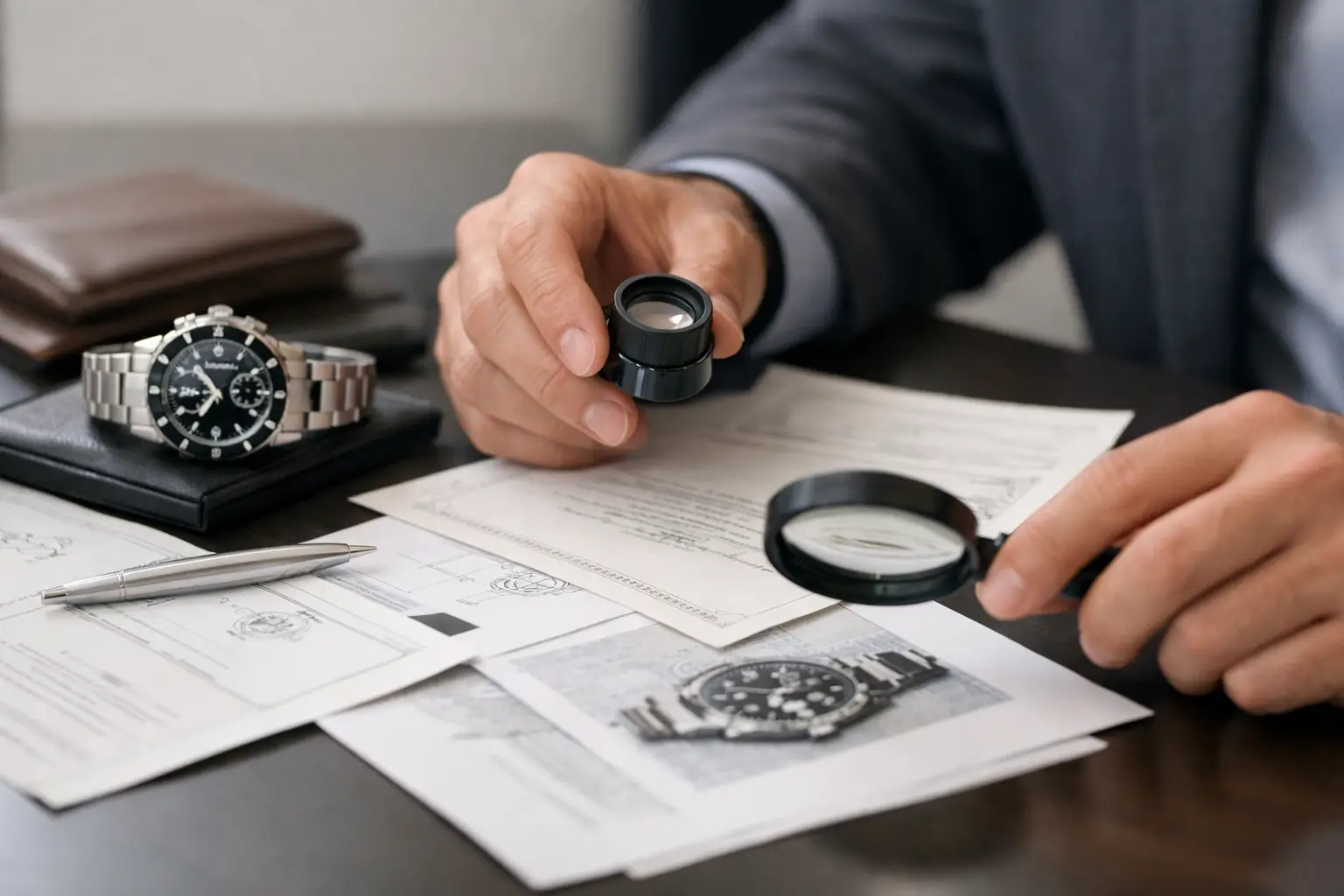
How to Verify Watch Papers Before You Buy
A luxury watch can look flawless in photos and still come with paperwork that tells a very different story. If you are spending serious money on a Rolex, Omega, Cartier, Patek Philippe, or Audemars Piguet, knowing how to verify watch papers is not a minor detail. It is one of the clearest ways to reduce risk before you commit.
Papers do not guarantee authenticity on their own, and experienced buyers know that. Boxes can be replaced, cards can be altered, and even convincing paperwork can be paired with the wrong watch. What the papers do provide is a record – one that should align with the watch, the seller’s claims, and the overall transaction. When that record does not line up, your confidence should drop immediately.
Why watch papers matter
In the secondary luxury market, paperwork supports provenance, resale value, and peace of mind. Original warranty cards, certificates, booklets, purchase receipts, and service records help establish that a watch has a traceable history. That matters more on some references than others, but on high-demand models it can influence both price and buyer confidence.
That said, papers are not the same as proof. A genuine warranty card attached to a stolen watch is still a problem. A correct box with an incorrect serial is still a mismatch. The smart approach is to treat papers as one part of authentication, not the entire answer.
How to verify watch papers the right way
The first step is simple: make sure the papers actually belong to the watch being offered. Start with the serial number, reference number, purchase date, and dealer information. These details should be consistent across the watch, the warranty card or certificate, and any included receipts or service documentation.
If the serial number on the paperwork does not match the case, walk away until the seller can explain it clearly. On many brands, this is the single most important checkpoint. A mismatch may be an innocent error, but on an expensive watch, innocent errors should not be brushed aside.
The model reference should also align with the exact watch in front of you. That means dial configuration, bracelet or strap type, metal, bezel style, and case size should make sense for that reference. If the paperwork says stainless steel and the watch is two-tone, or if the reference belongs to a different dial variant, you are no longer looking at a clean package.
What authentic watch papers should include
The format varies by brand and production year. Older watches may have paper certificates, while newer pieces often come with plastic warranty cards, serialized tags, manuals, and brand booklets. A modern set may look more complete than a vintage one, but completeness should always be judged in context.
At minimum, look for the identifying information that ties the document to the watch. That usually means a serial number or unique warranty number, the reference, purchase or activation date, and an authorized dealer stamp or printed dealer name where applicable. Some brands have moved toward digital registration or simplified warranty packaging, so the absence of one insert is not automatically a red flag. The issue is whether the full set makes sense for that brand, era, and model.
Print quality also matters. Luxury brands produce paperwork to a high standard. Fonts, spacing, logos, holograms, card stock, and lamination should feel precise, not approximate. Counterfeit papers often fail on small details – blurry printing, inconsistent typefaces, off-center text, weak embossing, or unusual materials.
Brand-specific details deserve attention
This is where many buyers get caught. They check that papers are present, but not whether they are correct for the brand and period. A Rolex warranty card from one production era should not look like a newer generation card. An Omega pictogram card should correspond to the watch and set. A Patek Philippe Certificate of Origin should reflect the level of precision expected from the brand.
If you are buying in the five-figure range or above, it is worth reviewing examples of original paperwork for that exact brand and approximate year. You do not need to become an archivist, but you do need to know whether the seller’s set looks plausible. The more expensive and collectible the watch, the less room there is for guesswork.
Red flags when verifying watch papers
Some issues should stop the process immediately. Obvious alterations are one of them. If names, dates, serials, or dealer stamps appear overwritten, scratched off, relabeled, or partially obscured, assume there is a reason.
Another warning sign is a vague seller explanation. Trusted sellers answer direct questions directly. If a seller avoids close-up photos of the card, refuses to provide serial confirmation, or says the papers are “from another watch but still prove it is real,” that is not reassurance. That is a liability being handed to you.
Pay attention to timing as well. A watch said to be purchased years before the model was released does not add up. A card activated in one country with a receipt from another may be fine, but it deserves explanation. Luxury watch transactions are built on consistency. When the story gets complicated, the risk goes up.
Service papers and receipts can help, but they are different
Buyers often group all documents together, but service records and original warranty papers are not interchangeable. Service paperwork can support a watch’s maintenance history and indicate that the watch passed through a recognized service channel. That has value, especially for older watches.
Still, service papers do not replace original sales documentation. A watch can be genuine and serviced, yet still lack original provenance. Depending on the model, that may be acceptable. On a modern sports Rolex or a collectible Audemars Piguet, missing original papers can affect market value more sharply than on a less collectible dress watch.
How to verify watch papers when buying online
Online buying requires a stricter process because you cannot inspect everything in person. Ask for high-resolution images of the watch, warranty card, serial area, accessories, and any service records. The photos should be clear enough to compare details, not styled in a way that hides them.
Request confirmation that the serial and reference on the papers match the watch. Serious sellers are used to this question. They should also be willing to explain whether the set is complete, what is original, and whether anything has been replaced over time.
Seller reputation matters here as much as the paperwork. A professionally inspected, authenticated watch from a trusted luxury retailer is a different proposition than a private listing with limited transparency. The higher the value, the less sense it makes to rely on paperwork alone.
Papers alone are never enough
This is the point many first-time buyers miss. You are not authenticating a card. You are assessing the entire watch package – the watch itself, its condition, its serials, its accessories, its service history, and the credibility of the seller behind it.
A clean set of papers should support what you already believe about the watch. It should not be the reason you believe it. If the watch looks wrong, if the caseback has been overpolished, if the movement history is unclear, or if the seller’s process feels evasive, paperwork will not rescue the purchase.
For that reason, many experienced buyers prefer working with established luxury watch retailers that inspect for accuracy, condition, water resistance, and history before a listing ever goes live. That standard matters because expensive mistakes rarely come from one obvious issue. They come from several small inconsistencies that were ignored.
When missing papers are acceptable
Not every good watch comes as a full set. Vintage pieces often surface without everything they originally left the boutique with, and some excellent pre-owned watches have lost paperwork over time. That does not make them bad purchases.
It does mean the watch should be priced accordingly, and the seller should be honest about what is and is not included. On some references, buying without papers can be a reasonable value play. On others, especially highly faked or heavily traded models, the discount may not be worth the added uncertainty.
If you are buying for gifting, collecting, or eventual resale, original papers usually add confidence and market appeal. If you are buying primarily to wear and the watch has been professionally authenticated, the equation may be different. It depends on the watch, the brand, and your tolerance for future friction.
The best luxury watch purchase is not just one that looks right on arrival. It is one that still feels right years later, when you review the documents, revisit the price, and know you bought with clarity instead of hope.



Comments are closed