


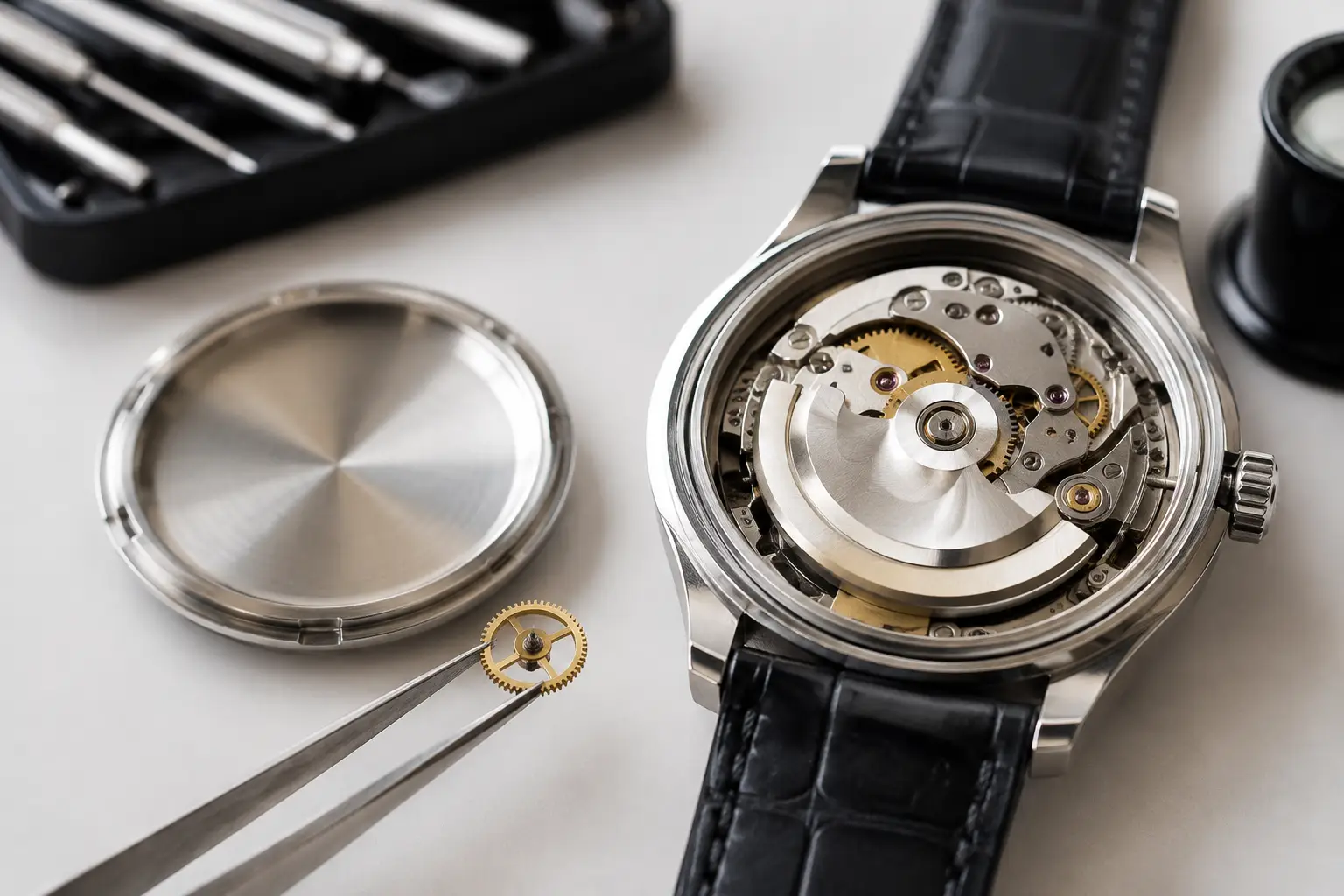
Identifying Replaced Components in Luxury Watches
A luxury watch can be fully authentic and still contain parts that were added years after it left the factory. Identifying replaced components is therefore not about assuming the worst. It is about understanding exactly what you are buying, how the watch has been cared for, and whether its condition supports the price.
For a collector, an original dial, handset, bezel, or bracelet can make a meaningful difference in desirability. For a buyer seeking a daily-wear Rolex, Omega, Cartier, or Panerai, professionally replaced service parts may be a sensible advantage. The right answer depends on the model, its age, its rarity, and your purpose for owning it.
Why Identifying Replaced Components Matters
Luxury watches are built to last, but they are also worn, serviced, polished, and exposed to the elements. A cracked crystal may be replaced after an impact. A crown may be changed to restore water resistance. A faded bezel insert may be exchanged during an official service. These repairs can preserve the performance and longevity of the watch.
The issue is disclosure and value. A vintage Omega Speedmaster with its original stepped dial and aged tritium hands may appeal strongly to collectors, even if those elements show honest wear. Replacing them with later service parts can make the watch cleaner and more practical, but may reduce its period correctness and collector premium.
The same principle applies to a Rolex Submariner with a later dial, an Audemars Piguet Royal Oak with a refinished bracelet, or a Patek Philippe with replacement hands. None of these details automatically makes a watch undesirable. They simply change the conversation around originality, condition, and fair market value.
Original Parts, Service Parts, and Aftermarket Parts
Not all replacement components carry the same significance. The distinction begins with where the part came from and how it was fitted.
An original factory component was supplied with the watch when it was first sold. On older pieces, this may include a dial with period-correct printing, hands with matching luminous material, a correct bracelet clasp code, and a bezel insert appropriate to the reference and production year.
A factory service component is a genuine part installed by the brand or an authorized service provider at a later date. It is authentic, functional, and often preferable for reliability. However, it may differ from the watch’s original specification. A service dial can have brighter luminous material, updated logo printing, or a different finish from the period-correct version.
An aftermarket component was not produced by the original manufacturer. Aftermarket diamonds, dials, bezels, bracelets, and crystals are common in parts of the pre-owned market. Some modifications are visually striking, but they can materially affect value, warranty eligibility, service options, and future resale appeal. For most collectors, a watch with undisclosed aftermarket parts deserves careful scrutiny.
Components That Deserve a Closer Look
Dial and Hands
The dial is often the most consequential component to assess. Look closely at the brand signature, minute track, applied markers, text spacing, luminous plots, and finish. On vintage watches, patina should generally feel consistent. Hands that glow bright white beside heavily aged dial markers may indicate a later replacement, though there are legitimate exceptions.
Service dials are not inherently negative. A modern Rolex worn regularly may benefit from a fresh, factory-correct dial and handset. On a rare vintage reference, however, original dial and hands can account for a substantial portion of collector value.
Bezel, Crystal, Crown, and Pushers
These are high-wear elements, so replacements are common and often appropriate. A new crown or pusher can be essential to maintaining water resistance. A replaced crystal can improve legibility and protect the dial. The key is whether the parts are correct for the reference.
A vintage acrylic crystal, for example, has a different appearance from a modern sapphire replacement. A bezel insert with the wrong font, shade, or construction may signal an incorrect replacement. A crown that sits too far from the case or lacks the expected profile can also warrant further inspection.
Bracelet, Clasp, and Case
Bracelets stretch, links are refinished, and clasps are replaced. Check that the bracelet reference, end links, clasp markings, and production codes align with the watch where applicable. A period-correct bracelet can add substantial value, particularly on sought-after sport models.
The case requires equal attention. Polishing is not technically a replaced component, but it can be just as important. Over-polishing can soften the sharp bevels of a Royal Oak, reduce the definition of a Rolex case, or alter the proportions that make a vintage watch compelling. Clean lines and light, sympathetic refinishing are very different from a heavily reshaped case.
Movement Components
Most mechanical watches require periodic servicing, and replacement movement parts are often normal. Springs, gaskets, seals, reversing wheels, and worn gears may be changed to keep the movement accurate and dependable. These internal service parts generally matter less to value than a replaced dial or bezel, provided the movement remains correct for the reference and has been serviced properly.
A movement bearing incorrect bridges, mismatched serial markings, or a caliber not associated with the stated model is a different matter. That calls for immediate expert review.
How to Assess a Watch Before Purchase
Begin with the reference number and the approximate production period. This establishes the specification you should expect. A watch can have legitimate variation across years, so avoid judging a component from one online image alone. Compare details against reliable reference material and, when possible, examples known to be original.
Then examine high-resolution images in good light. Request clear views of the dial, hands, case sides, lugs, crown, caseback, bracelet, clasp, and movement where appropriate. Look for consistency rather than perfection. On a watch with decades of history, matching wear can be more reassuring than parts that appear unusually new beside heavily aged elements.
Documentation can strengthen the picture. Service records may show when a crystal, crown, dial, or bracelet component was replaced. Original warranty papers, sales receipts, and prior service invoices help support provenance, but paperwork should never substitute for a proper physical inspection. Papers can be separated from a watch, and a watch can be altered after documentation was issued.
Ask direct questions: Which components have been replaced? Were they genuine factory parts? Was the work completed by the manufacturer, an authorized service center, or an independent watchmaker? Are original removed parts included? A trusted seller should address these questions clearly rather than treating them as an inconvenience.
How Replacements Affect Value
The market rewards originality most strongly when a watch is vintage, rare, discontinued, or historically significant. An original tropical dial on a vintage Rolex, a correct early bezel on a Speedmaster, or an untouched Patek Philippe dial can command a premium because these details cannot be easily recreated.
For modern luxury watches, the calculation may be more practical. A genuine replacement crown, crystal, or clasp can be a positive sign of conscientious maintenance. If you intend to wear the watch frequently, reliable operation and water resistance may matter more than preserving every aged component.
What should not be accepted is ambiguity. A price should reflect material changes from original configuration. If a watch has a replacement dial, aftermarket diamond bezel, non-original bracelet, or heavily refinished case, that condition should be described plainly and priced accordingly.
When Expert Inspection Is Worth It
Expert review is especially valuable when purchasing a high-value vintage piece, a limited edition, or a watch with an unusually strong price relative to comparable examples. It is also wise when the seller cannot provide clear images, service history, or direct answers about condition.
A qualified watch specialist can assess reference correctness, movement condition, serial consistency, case geometry, dial originality, and evidence of prior work. At Lux-Watch, inspection should give buyers more than a general statement of authenticity. It should provide the confidence that the watch’s components, condition, and presentation have been considered with the care a prestige purchase deserves.
The best luxury watch is not always the one with every original part. It is the one whose history is honestly represented, whose value matches its condition, and whose character fits the way you plan to enjoy it.


Comments are closed