


When Should Watches Be Serviced? A Luxury Guide
A luxury watch can appear flawless on the wrist while its movement is quietly approaching the point where attention is needed. So, when should watches be serviced? The right answer depends on the movement, the watch’s age, how it is worn, and whether its water resistance is part of your daily routine. For a Rolex, Omega, Patek Philippe, Cartier, or Audemars Piguet, proper timing protects more than accuracy. It helps preserve condition, reliability, and collector confidence.
When Should Watches Be Serviced?
For most modern mechanical luxury watches, a complete service every five to seven years is a sensible baseline. That interval suits a watch that is worn regularly, kept away from hard impacts, and not exposed to frequent water use. Some manufacturers specify their own recommended schedules, and those guidelines should always take priority, particularly while a factory warranty remains in effect.
A watch that runs well does not automatically need immediate service at the five-year mark. Modern oils, materials, and manufacturing tolerances are considerably better than they were decades ago. Still, postponing maintenance indefinitely can allow lubricants to degrade and friction to increase inside the movement. What begins as a minor adjustment may become avoidable wear to components that are costly or difficult to replace.
For vintage pieces, the schedule is less predictable. A vintage Patek Philippe dress watch kept for occasional formal wear may need inspection rather than routine intervention. A vintage Rolex Submariner worn every week may require more proactive care, especially if its seals have not been tested recently. Originality matters in the collector market, so the goal is not unnecessary restoration. It is careful, documented maintenance by a qualified specialist.
Mechanical, Automatic, and Manual-Wind Watches
Automatic and manual-wind watches rely on a finely regulated mechanical movement. Their oils eventually age, and their moving parts require clean lubrication to operate as intended. A five-to-seven-year service interval is usually appropriate, though a high-complication watch, a frequently worn chronograph, or a watch subjected to demanding use may deserve earlier evaluation.
Complications add another consideration. Chronographs, annual calendars, perpetual calendars, GMT functions, and moonphase displays contain additional components and adjustment points. The more complex the movement, the more valuable it is to use a service provider with direct experience in that caliber and brand.
Quartz Watches Need Care Too
Quartz watches generally require less frequent full movement service, but they are not maintenance-free. Battery replacement is commonly needed every two to four years, depending on the model. It should be performed before a depleted battery has a chance to leak and damage the movement.
Each battery change is also a practical moment to inspect seals and test water resistance. This matters for luxury quartz watches from Cartier, Breitling, Omega, and other prestige makers. A simple battery exchange is not the same as a pressure-tested maintenance visit.
What Changes a Watch Service Schedule?
How you wear a watch is as meaningful as its brand or age. A steel sports watch worn during travel, workouts, swimming, and weekends outdoors faces a different set of demands than a precious-metal dress watch reserved for dinners and business events.
Water exposure is one of the largest variables. Water-resistant does not mean permanently waterproof. Gaskets around the crown, caseback, and crystal can dry out or lose elasticity over time. If you swim, shower, sail, or regularly encounter humid conditions while wearing your watch, have its water resistance tested annually. A diver’s watch should receive especially disciplined attention before its seals are trusted underwater.
Magnetism, shocks, and temperature swings can also affect performance. A mechanical watch may become magnetized through proximity to speakers, magnetic clasps, tablets, and certain bags or accessories. A strong impact can disturb a balance assembly, damage a rotor, or affect hands and dial components. These issues do not always leave obvious exterior evidence.
Storage habits matter as well. A watch left in a damp environment, exposed to direct sun, or stored with a depleted battery faces risks that are easy to avoid. Keep timepieces in a dry, stable setting and use a secure watch box or safe when they are not being worn.
Signs Your Watch Should Be Serviced Now
Service intervals are helpful, but symptoms should always take precedence. Do not wait for a calendar reminder if a watch begins behaving differently. Arrange a professional assessment if you notice any of the following:
- The watch is gaining or losing noticeably more time than usual.
- The power reserve has shortened, or an automatic watch stops unexpectedly.
- The crown feels rough, loose, or difficult to operate.
- Moisture, fogging, or discoloration appears beneath the crystal.
- The date, chronograph, or other complication does not change correctly.
- You hear a new rattling sound or feel unusual resistance when winding.
Condensation under the crystal deserves immediate attention. Even a small amount of moisture can lead to dial damage, corrosion, and deterioration of the movement. Do not attempt to dry the watch with heat. Keep it protected and send it to a qualified watchmaker as soon as possible.
What a Proper Luxury Watch Service Includes
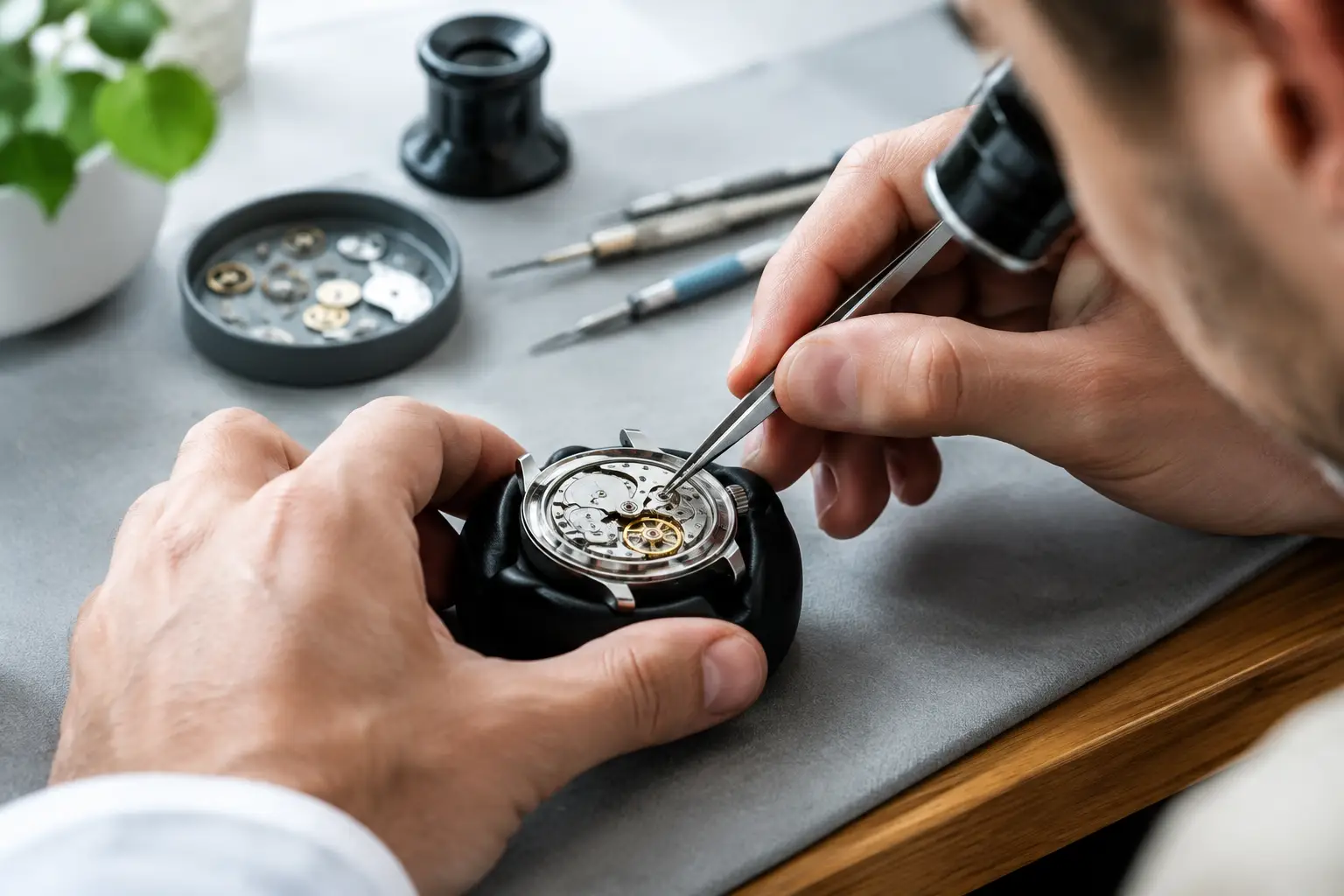
A complete service is far more involved than a quick cleaning or timing adjustment. The movement is disassembled, inspected, cleaned, lubricated, reassembled, and regulated. Worn components are identified and replaced only when necessary. The watch is then tested for accuracy, power reserve, and functional performance.
For water-resistant models, pressure testing and gasket replacement should be part of the process. The case and bracelet may be cleaned, but cosmetic refinishing deserves a conversation before it is approved. Polishing can remove metal and soften the crisp edges that define a Royal Oak, Nautilus, or vintage sports watch. On collector-grade pieces, preserving original case lines and natural patina can be more desirable than making the watch look newly refinished.
Request clear service documentation, including the date, work completed, replaced parts, and water-resistance results where applicable. A transparent record gives the owner useful reassurance and can strengthen buyer confidence if the watch is later offered for sale or trade.
Factory Service or Independent Specialist?
A brand-authorized service center offers access to factory procedures, genuine parts, and model-specific testing. This can be the strongest choice for modern watches under warranty, complicated pieces, and watches where official service history is a priority.
A highly respected independent watchmaker can also be an excellent option, particularly for certain out-of-warranty or vintage pieces. The deciding factor is expertise, not simply convenience. The specialist should have a proven record with the relevant brand and movement, provide a written estimate, explain any proposed replacement parts, and stand behind the work.
Be cautious with any service provider that promises a fast, low-cost overhaul without discussing movement condition, pressure testing, or preservation choices. With a high-value timepiece, a lower upfront price can become expensive if the work compromises water resistance, originality, or long-term performance.
Service History Protects More Than Timekeeping
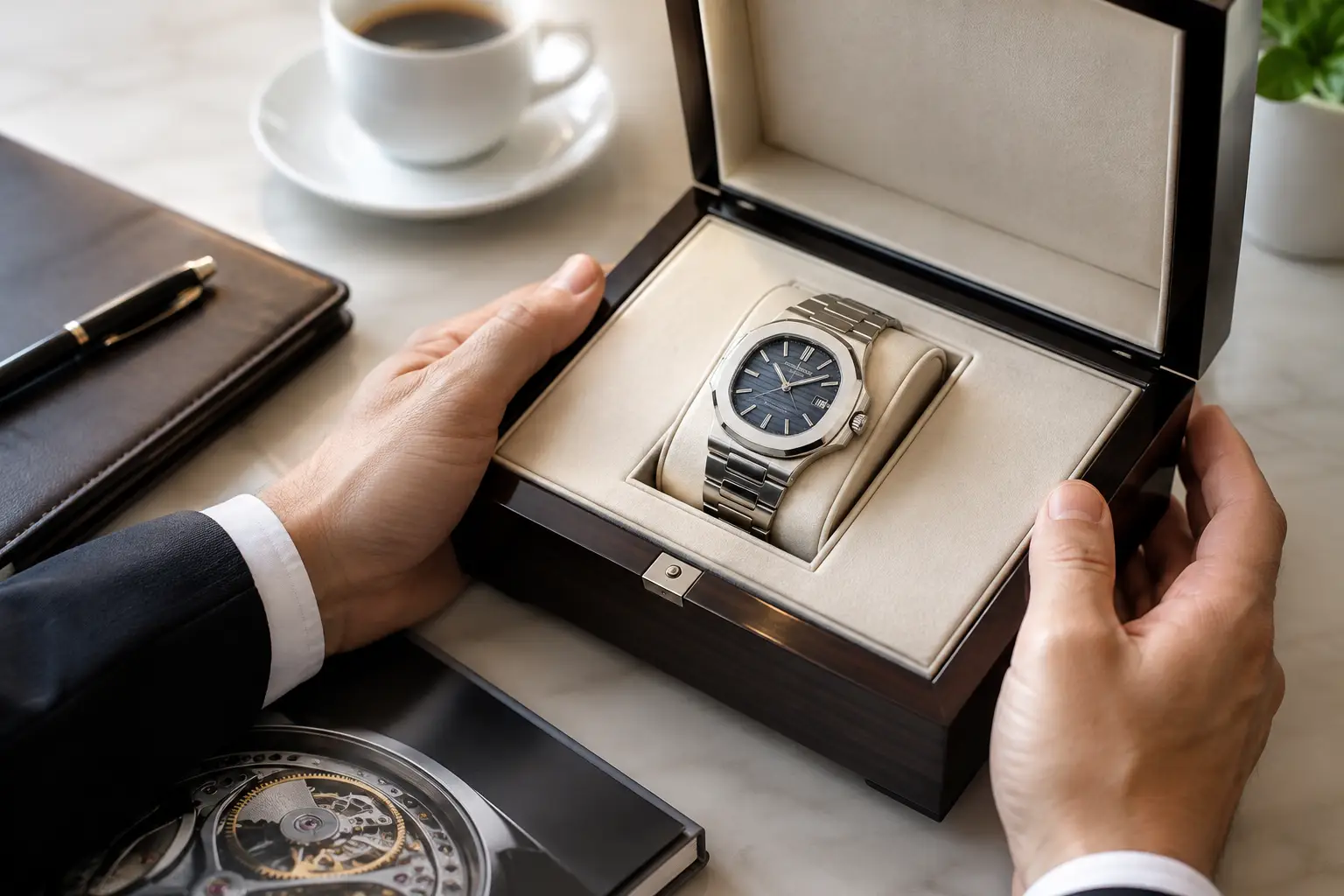
Collectors assess condition closely, and documented maintenance is part of a watch’s story. Original box, papers, warranty documentation, and service records all support a more confident ownership experience. For sought-after references, a clean history can also make future resale or trade discussions more straightforward.
That does not mean every watch should be polished or have every aged component replaced. In luxury collecting, preservation is often more valuable than cosmetic perfection. The best service approach respects the watch’s individual condition, its intended use, and the standards expected for its category.
A fine watch is built to accompany significant moments for decades, not merely seasons. Treat service as considered stewardship: inspect it before water exposure, respond quickly to changes in performance, and entrust its movement to specialists who understand the value of what is inside the case.


Comments are closed