


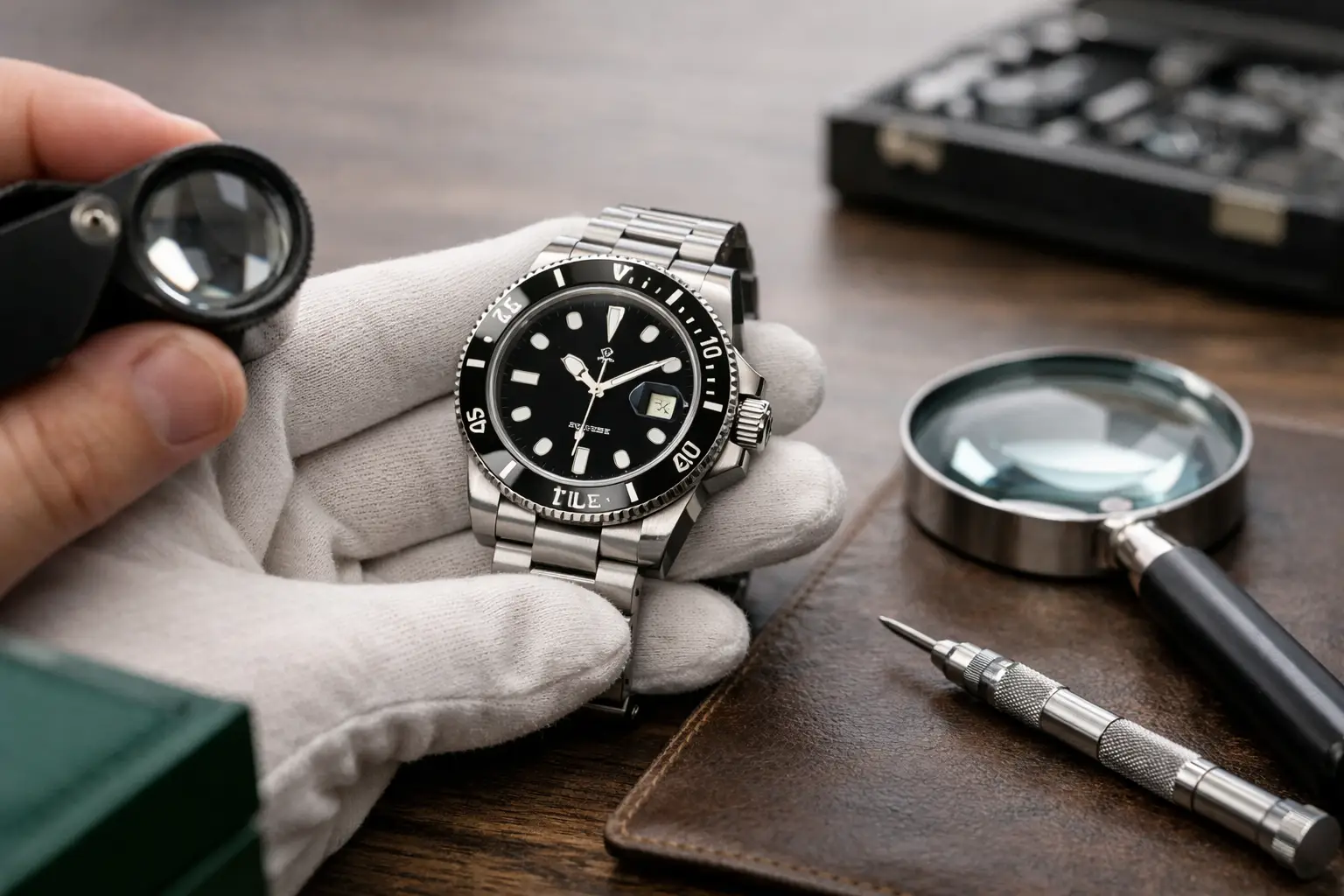
How to Check an Authentic Rolex Watch
A Rolex rarely gives itself away at first glance. The biggest mistakes happen when a buyer sees a clean dial, a familiar crown logo, and a strong asking price, then assumes the rest will check out. If you are researching how to check authentic Rolex watch details before spending serious money, that instinct is the right one. At this level, confidence should come from verification, not appearance.
How to check authentic Rolex watch details before you buy
The safest way to evaluate a Rolex is to think in layers. A genuine watch should make sense as a complete package – the case, dial, bracelet, movement, reference, paperwork, and seller story should all align. Counterfeits have improved, but they still tend to break down when you look beyond the headline details.
Start with the basic identity of the watch. Every Rolex model has a reference number tied to a specific design, size, metal, bezel configuration, and dial family. If a seller presents a Submariner case with a dial layout that belongs to a Datejust, or offers a two-tone configuration that Rolex never produced for that reference, that is not a small inconsistency. It is a major warning sign.
This is where many buyers get caught. They focus on whether the watch looks expensive instead of whether it looks correct. An authentic Rolex is not simply well-made. It is internally consistent.
Check the reference, serial, and model configuration
A Rolex should have identifying numbers that match the watch being offered. Depending on production year, serial and reference engravings may appear in different locations, but the key point is consistency. The numbers should be crisp, cleanly executed, and appropriate to the era.
Just as important, those numbers should correspond to the actual watch in front of you. The reference should match the case shape, bezel type, bracelet family, and intended dial style. If the watch has been modified with aftermarket parts, the seller should say so clearly. Diamonds added later, replacement bezels, custom dials, or non-Rolex bracelets can affect both authenticity confidence and long-term value.
That does not automatically make a watch fake, but it does change what you are buying. For collectors and gift buyers alike, there is a significant difference between authentic Rolex with aftermarket modifications and a fully original, factory-correct watch.
Dial quality tells you more than most buyers realize
The dial is one of the first places counterfeiters get close enough to fool casual buyers and one of the first places they fail under closer review. On an authentic Rolex, printing should be precise, balanced, and sharply defined. Text spacing matters. Marker alignment matters. The coronet logo should look deliberate and refined, not thick, soft, or uneven.
Lume application should also appear controlled. Hour plots that look messy, inconsistent in shape, or oddly colored can suggest replacement work or poor reproduction. Date windows deserve extra attention. Rolex date magnification, where applicable, should look proportionate and clean, not distorted or weak.
However, context matters. Vintage Rolex watches can show aging, patina, relumed markers, or service replacement dials. Those details are not automatically negative. They simply require more expertise to interpret. A tropical dial on an older model may be attractive and collectible. A badly refinished dial on the same watch may severely hurt value.
The case, crown, and bracelet should feel exact
Rolex is known for precision finishing, but precision does not always mean flashy. On a genuine watch, the transitions between brushed and polished surfaces should be controlled. The edges should feel intentional. The crown should screw down smoothly, and the caseback should fit as expected for the model.
Bracelets are another strong indicator. An authentic Rolex bracelet should feel substantial, with solid construction and clean finishing. Clasps should close securely and engravings should appear sharp, not shallow or crude. End links should fit the case properly without obvious gaps or rattle beyond what is normal for the bracelet style and age.
Weight alone is not enough to confirm authenticity, but it can still be useful. Many counterfeit watches feel lighter, looser, or less balanced than the genuine article. Still, some better fakes now imitate weight reasonably well, so this should support your judgment, not replace it.
How to check authentic Rolex watch movement clues
The movement is where many fake watches fail, but it is also the area most buyers cannot inspect casually. You should never rely on a seller’s claim that a watch has an automatic movement or “keeps good time” as proof of authenticity. Plenty of counterfeit watches do both.
A genuine Rolex movement is built to a high standard, and the watch should reflect that in operation. The seconds hand sweep should look smooth, though not perfectly continuous like a digital animation. The winding action should feel refined. The crown functions should operate with clean, controlled resistance.
If the case is opened by a qualified professional, the movement should match the caliber appropriate to the reference and production period. This is one of the clearest ways to confirm authenticity, but it is not always available in a remote transaction. In those cases, service history, timekeeping results, and seller transparency become even more important.
Paperwork helps, but it is not the whole answer
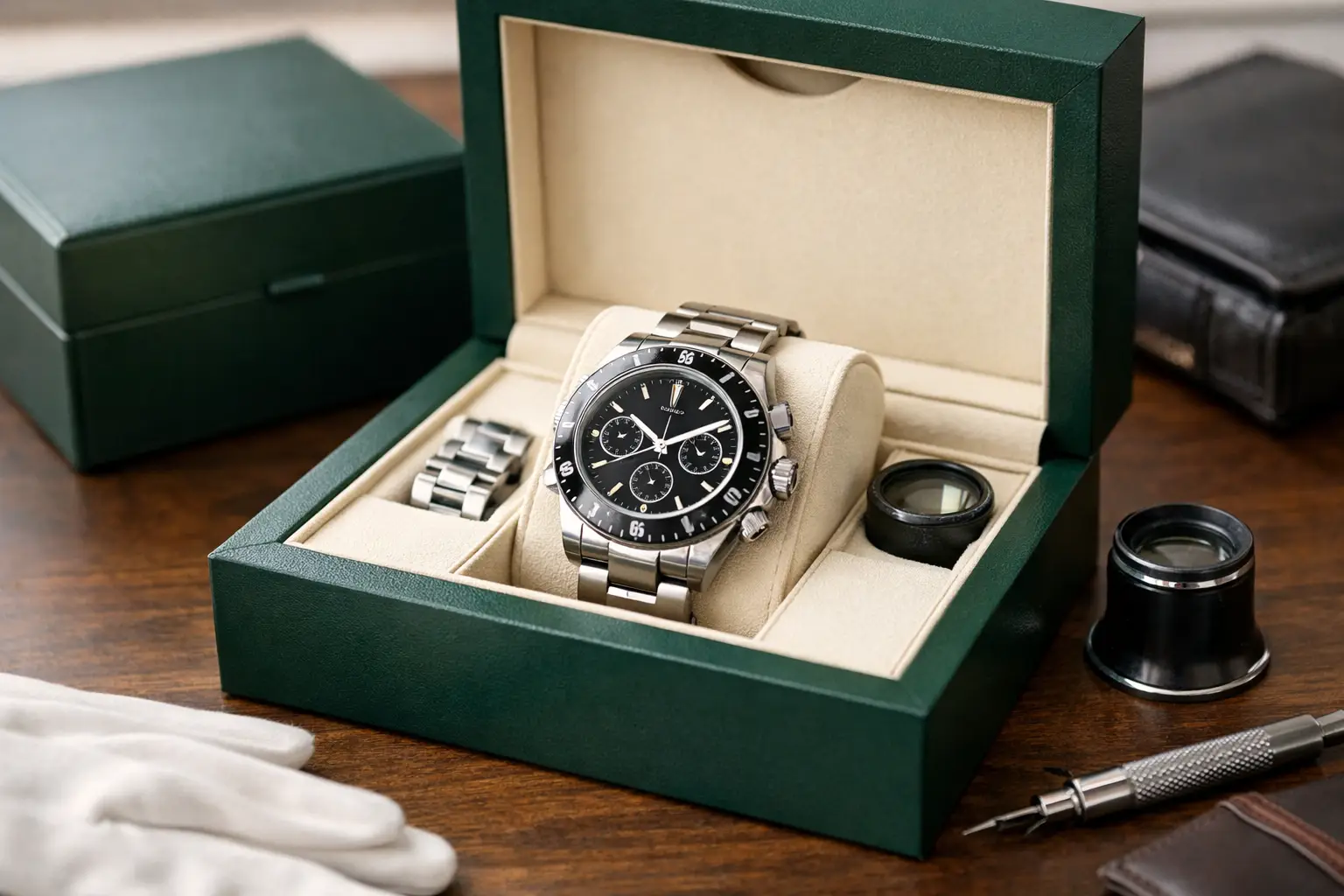
Buyers often overvalue the box and papers. Original packaging, warranty cards, booklets, and hang tags can support confidence, but none of them should be treated as standalone proof. Counterfeit documentation exists, and authentic papers can be separated from the original watch.
What matters is whether the full set makes sense together. The serial details, model designation, production timing, and overall presentation should align. A complete set is valuable because it strengthens provenance, not because it removes the need for inspection.
The opposite is also true. A Rolex without box and papers is not automatically suspect. Many genuine older watches trade without their original accessories. The difference is that a trustworthy seller will be direct about what is included, what has been replaced, and what has been independently verified.
Seller credibility is part of authentication
If a seller avoids detailed photos, hesitates to answer reference-specific questions, or gives vague explanations about service and ownership, treat that as part of the watch evaluation. Authenticity is not only about the object. It is also about the reliability of the transaction.
A serious luxury watch seller should be willing to speak clearly about condition, originality, inspection standards, and warranty support. They should understand the difference between authentic, original, unpolished, serviced, and modified. Those terms are not interchangeable.
This is one reason experienced buyers prefer vetted retailers over anonymous listings. An authenticated watch backed by inspection, performance testing, and a clear guarantee reduces the number of assumptions you need to make. In a category where one mistake can cost thousands, that is not a premium feature. It is basic protection.
Common red flags buyers should not ignore
Price is the most obvious one. If the deal looks dramatically better than the market, there is usually a reason. Rolex pricing can vary based on condition, year, completeness, and rarity, but there are limits. A major discount without a compelling explanation should make you more cautious, not more eager.
Look closely at listing language too. Phrases like “Rolex style,” “aftermarket custom,” “not sure of authenticity,” or “I am not an expert” should slow the process down immediately. Blurry photos, missing side angles, no movement information, and no close-ups of engravings or clasp details are also common signs that you are being asked to trust too much.
There is also the issue of mixed-part watches. These may contain genuine Rolex components alongside non-original or incorrect replacements. They occupy a gray area that can confuse newer buyers. The watch may not be counterfeit in the simplest sense, but it may still be misrepresented and overpriced.
When professional authentication is the right move
Some watches can be screened confidently from detailed photos and a reputable seller profile. Others deserve a deeper review before any money changes hands. If the watch is vintage, heavily customized, unusually rare, or priced at the top of the market, independent authentication is a smart step.
That can include movement verification, pressure testing, timing analysis, and confirmation that the serial, reference, dial, bracelet, and clasp codes belong together. The more expensive the watch, the less sense it makes to skip the final layer of due diligence.
For many buyers, the real question is not simply how to check authentic Rolex watch signs. It is how to buy in a way that makes those checks part of the process from the start. That is where a trusted source matters most. A retailer such as Lux-Watch builds confidence by pairing prestige inventory with authentication standards, warranty protection, and condition transparency designed for high-value buying.
A Rolex should feel exciting, but it should never feel uncertain. The right watch can carry status, craftsmanship, and long-term value for years. The right transaction gives you something just as important – the confidence to enjoy it without second-guessing what is on your wrist.

Comments are closed