


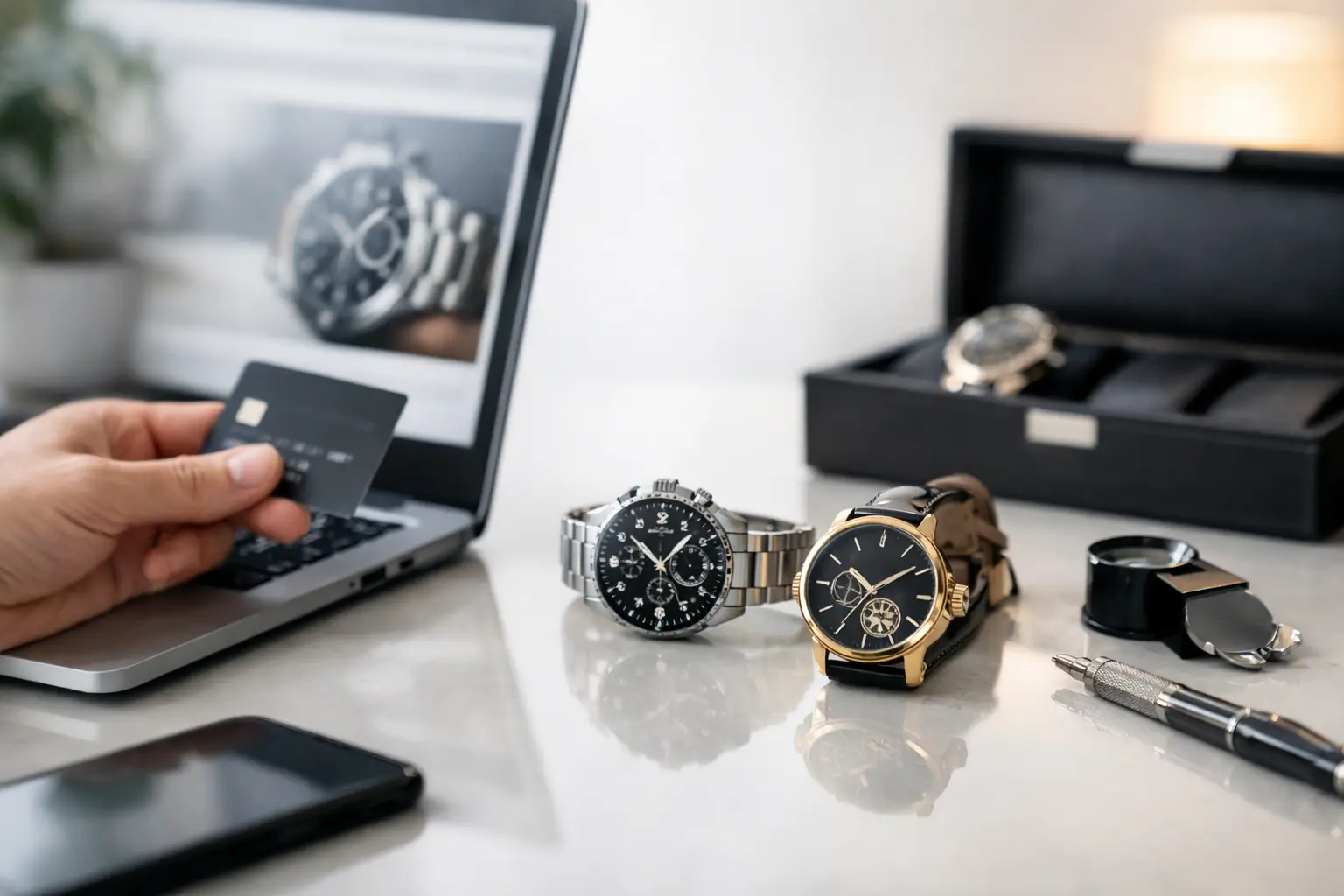
How to Buy Luxury Watches Online Safely
A luxury watch can lose its appeal the moment doubt enters the transaction. When the price reaches five figures and the model name carries weight – Rolex, Patek Philippe, Audemars Piguet, Omega, Cartier – confidence matters as much as the watch itself. If you are researching how to buy luxury watches online, the real question is not simply where to click. It is how to buy with proof, protection, and complete clarity.
The online market has made elite timepieces more accessible than ever. It has also made it easier for buyers to run into polished listings that hide incomplete histories, replaced parts, inaccurate condition reports, or worse, counterfeit pieces presented as genuine. The difference between a strong purchase and an expensive mistake usually comes down to process.
How to buy luxury watches online without unnecessary risk
The strongest online purchase starts with the seller, not the watch. A desirable model can distract buyers from the basics, especially when inventory is limited or pricing looks aggressive. But a serious luxury watch retailer should make trust visible before asking for payment.
That means clear authenticity standards, detailed condition disclosures, warranty protection, and evidence that every watch has been inspected beyond its appearance. Accuracy, water resistance, overall condition, and clean history should not be assumptions. They should be part of the buying standard.
A trustworthy seller also presents inventory like a specialist, not a reseller guessing its way through prestige categories. You should see consistency across product pages, recognizable brand authority, transparent pricing, and direct access to support if you have questions before purchase. When a retailer is confident in its process, it does not hide behind vague descriptions.
Start with the right watch, not just the right brand
Many buyers begin with a brand and stop there. That is understandable, but it is rarely enough. Rolex, Omega, Panerai, Cartier, and Breitling each produce very different watches across sport, dress, and collector-driven lines. Even within one family, the experience can vary substantially.
A Submariner and a Day-Date send different signals. An Omega Speedmaster and a Seamaster speak to different tastes. A Patek Philippe Nautilus and an Audemars Piguet Royal Oak Offshore may both sit in the same prestige conversation, but they wear differently, trade differently, and attract different buyers.
Before you shop, decide what matters most: daily wear, formal use, collection value, investment potential, a milestone gift, or immediate brand recognition. This narrows your search and prevents the common mistake of buying a famous reference that does not actually fit your lifestyle.
Case size, metal, dial configuration, bracelet versus strap, year, and box and papers all influence price and long-term satisfaction. The more precise your criteria, the easier it becomes to compare listings intelligently.
What to check before you buy
When you are evaluating a listing, photographs alone are never enough. Luxury watches should be sold with documentation that supports authenticity and condition, not just marketing language.
Start with the essentials. Confirm whether the watch includes original packaging, warranty coverage, and any accompanying papers. These details affect both confidence and future resale appeal. A watch can still be legitimate without a full set, but the trade-off should be reflected in price and clearly disclosed.
Next, examine the condition report. Terms like excellent or mint can mean very different things from one seller to another. Look for a description that addresses the case, crystal, bezel, dial, bracelet, clasp, and movement performance in plain terms. If the watch has been polished, serviced, or had components replaced, that should be stated clearly.
You should also expect inspection standards that go beyond cosmetics. Accuracy testing matters. Water resistance matters, particularly for sport models. A clean history matters because stolen or problem watches can create legal and ownership issues long after the purchase is complete.
If key details are missing, ask. A reputable seller will answer directly.
Authenticity is not a slogan
In high-end watch retail, authenticity claims should be specific. Saying a watch is authentic is the minimum. Explaining how that conclusion is reached is what builds confidence.
Look for a seller that inspects watches against brand and reference expectations, checks serial and model consistency where appropriate, reviews movement integrity, and verifies that the watch aligns with the configuration being offered. This is especially important in the secondary market, where a watch may contain aftermarket or non-original components that reduce collector value even if the watch itself is technically genuine.
That distinction matters. A fully authentic watch with replaced hands, an aftermarket diamond bezel, or service parts not disclosed in the listing is not the same proposition as an untouched example in original configuration. Neither is automatically wrong, but the pricing and buyer expectations should be different.
For many buyers, the safest path is to work with a retailer whose entire business is built around authenticated luxury inventory and documented inspection. That is where trust moves from promise to standard.
Price matters, but context matters more
Everyone wants a strong price. Smart buyers know that unusually low pricing in luxury watches often signals a missing piece of the story.
Sometimes the issue is simple: no box, no papers, visible wear, or older service needs. Sometimes it is more serious: questionable provenance, undisclosed replacement parts, or a seller moving inventory without proper inspection. A lower price is not always a red flag, but it always deserves an explanation.
Compare similar models based on reference, age, material, condition, set completeness, and market availability. A Rolex GMT-Master II with box and papers should not be evaluated the same way as one sold watch-only. A limited-edition Hublot or Richard Mille can carry a premium based on scarcity alone. Precious metal pieces introduce another layer of value that can distort casual price comparisons.
The better question is not, Is this the cheapest option? It is, Does this price make sense for this exact watch, in this exact condition, with this exact level of support?
Seller communication tells you a lot
Luxury buyers should not have to chase clarity. If a retailer is difficult before the purchase, that usually does not improve afterward.
Good communication is measured by precision. Can the seller explain the watch’s condition without evasion? Can they confirm what is included in the sale? Can they explain inspection, warranty terms, and shipping procedures in a way that feels practiced and transparent?
This matters even more for first-time online buyers and gift purchasers. A serious retailer understands that reassurance is part of the product. For a high-value purchase, responsive consultation is not an extra. It is part of the buying standard.
Shipping, insurance, and warranty are part of the purchase
A luxury watch transaction is not complete when the card is charged. Delivery and post-sale protection matter just as much.
Before you buy, confirm how the watch will be shipped, whether it is fully insured in transit, and what signature or verification is required upon delivery. High-value timepieces should never be treated like routine ecommerce parcels.
Warranty coverage also deserves close attention. A warranty does not replace authentication, but it does show that the seller stands behind the watch after it arrives. Review what is covered, how claims are handled, and whether there are exclusions for water damage, misuse, or cosmetic wear. Clear terms signal a mature operation.
For many buyers, this is where premium online retailers separate themselves from marketplace sellers. The watch may look the same in photos, but the buying experience and protection level are not the same.
How to buy luxury watches online if you are new to collecting
If this is your first serious purchase, keep your standards high and your shortlist tight. Start with models that have strong recognition, stable demand, and easy-to-understand configurations. That often means established references from Rolex, Omega, Cartier, Breitling, or Panerai rather than highly complicated or heavily customized pieces.
There is value in buying your first watch from a retailer that makes the process feel controlled and straightforward. The right seller removes uncertainty by combining authenticated inventory, original packaging when available, warranty protection, and thorough inspection. That kind of structure turns hesitation into confidence.
Lux-Watch is built for exactly that type of buyer: someone who wants prestige without compromising on proof.
For experienced collectors, the priorities may shift toward reference rarity, dial variation, production era, or long-term collectibility. Even then, the fundamentals do not change. Buy the seller before you buy the watch.
The best online luxury watch purchase feels decisive for a reason. Every question has been answered before the package ever leaves the building. When authenticity is documented, condition is clear, and the retailer stands behind the watch, you are not simply buying a timepiece. You are buying certainty – and that is what makes the experience worthy of the watch itself.



Comments are closed