


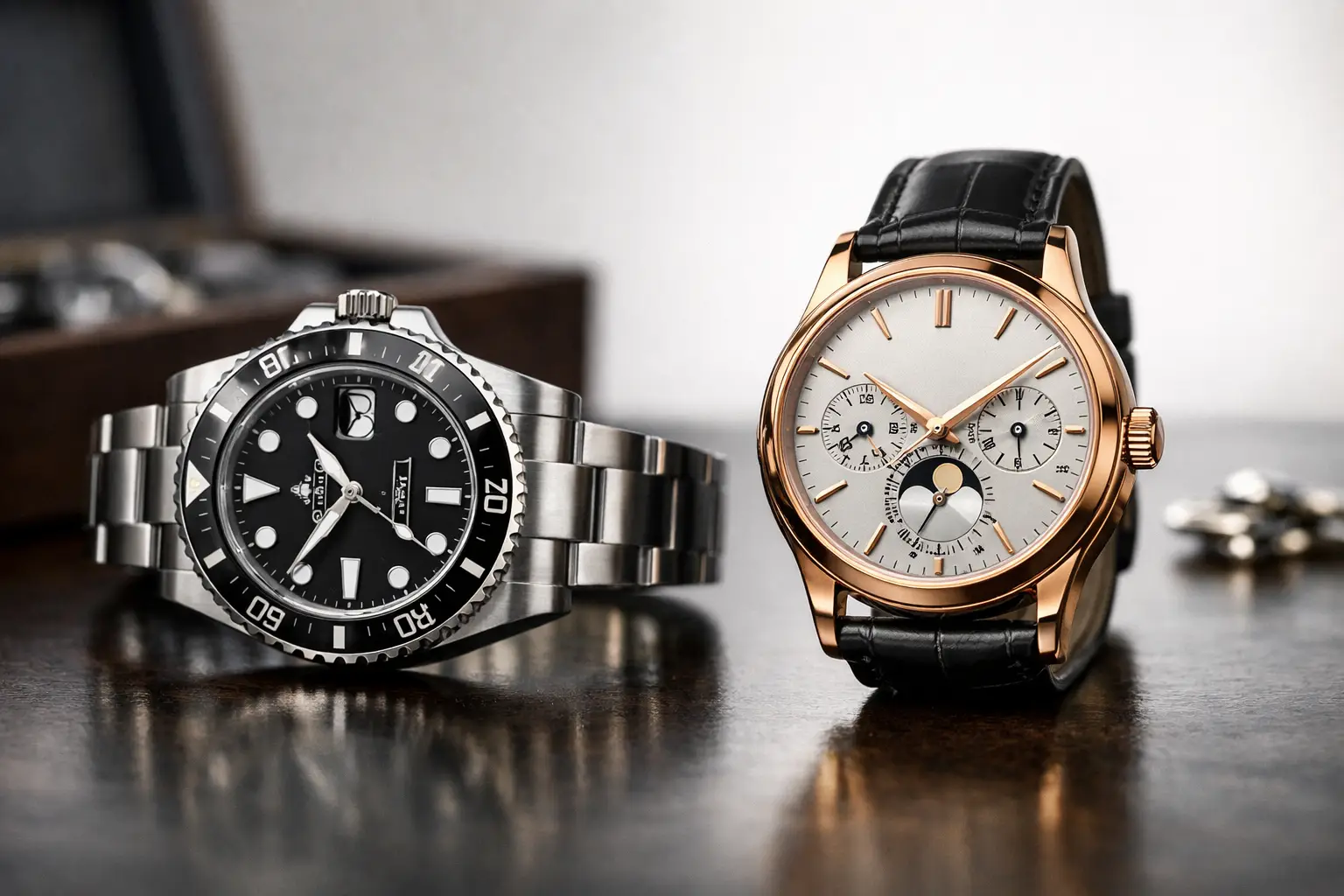
Rolex Versus Patek Philippe for Your Collection
A steel sports watch can look equally at home beneath a tailored cuff or beside a supercar key, yet the name on its dial changes the message entirely. In the Rolex versus Patek Philippe decision, buyers are not simply comparing two Swiss manufacturers. They are choosing between two distinct expressions of achievement: Rolex’s instantly recognized authority and Patek Philippe’s quieter, collector-led refinement.
Both names command respect, possess exceptional heritage, and produce watches with lasting appeal. Neither is automatically the better purchase. The right choice depends on how you will wear it, what you value in watchmaking, and whether you want your watch to be recognized across the room or appreciated upon closer inspection.
Rolex Versus Patek Philippe: The Core Difference
Rolex is the benchmark for universal luxury recognition. Its watches are built around utility, resilience, and unmistakable design codes. A Submariner, Daytona, GMT-Master II, or Datejust is immediately legible, even to someone with no knowledge of watches. That visibility is part of Rolex’s power. It is a brand for the buyer who wants a serious Swiss watch that can perform daily and project confidence without explanation.
Patek Philippe occupies a more rarefied position. Its reputation rests on traditional high watchmaking, restrained design, and a deep connection to generational collecting. While the Nautilus has become a globally recognizable exception, many Patek Philippe references are intentionally discreet. A Calatrava or Grand Complication does not need to announce itself. Its appeal lies in proportion, finishing, movement architecture, and the knowledge that it represents one of the most respected names in haute horlogerie.
Rolex is often the clearer choice for everyday prestige. Patek Philippe is often the more personal choice for a buyer drawn to horological distinction. There is meaningful overlap, especially in the high-demand sports-watch category, but their identities remain fundamentally different.
Design That Changes How You Wear It
Rolex: Purposeful and immediately recognizable
Rolex designs are remarkably consistent because they work. The Oyster case, Mercedes hands, Cyclops lens, fluted bezel, and Jubilee or Oyster bracelet are visual signatures developed over decades. The result is a watch that feels substantial, balanced, and ready for regular use.
A Rolex sports model can move comfortably from travel to business meetings to weekends. Models such as the Submariner and Explorer were born from functional ideas, and that practical character still comes through. Even dressier options like the Datejust and Day-Date retain enough presence to serve as daily watches.
For a first major luxury-watch purchase, this versatility matters. A Rolex may be a significant acquisition, but it rarely feels too delicate or too formal to wear. Its design language is confident, not fragile.
Patek Philippe: Refined proportions and collector appeal
Patek Philippe approaches design with greater restraint. Cases tend to feel slimmer, dials more composed, and details more deliberate. The appeal is often in the second look: the sweep of a lug, the texture of a dial, the symmetry of a perpetual calendar display, or the integration of a bracelet into the case.
The Nautilus and Aquanaut offer sportier entry points into the brand’s world, combining precious finishing with relaxed wearability. Even so, their effect is more polished than overtly rugged. A Calatrava, meanwhile, is a natural companion to formal attire and a strong choice for buyers who value understatement over visual impact.
If you want one watch to wear without hesitation in nearly every setting, Rolex has the practical advantage. If you already own a versatile sports watch and want something with more discreet sophistication, Patek Philippe can be the more compelling addition.
Craftsmanship, Movements, and Technical Character
Both brands manufacture movements to an exceptionally high standard, but they emphasize different strengths. Rolex is known for engineering consistency. Its modern movements are designed to be precise, durable, and dependable in real life. Features such as strong power reserves, practical anti-magnetic properties, and robust cases support the brand’s reputation as a maker of watches meant to be worn frequently.
Patek Philippe places more emphasis on traditional finishing and complications. Depending on the model, collectors may find hand-finished bridges, carefully executed anglage, intricate calendar mechanisms, chronographs, and minute repeaters. The Patek Philippe Seal reflects the brand’s own quality standards across finishing, performance, and long-term service.
This does not mean a Rolex is simple or a Patek Philippe is impractical. Rolex’s precision manufacturing is sophisticated in its own right, while Patek produces watches designed to remain in service for generations. The difference is in character. Rolex excels at refined industrial watchmaking built for active ownership. Patek Philippe excels at elevating watchmaking into a more intimate form of mechanical art.
Price, Availability, and Long-Term Demand
The purchase experience can be as important as the watch itself. Desirable Rolex models and sought-after Patek Philippe references may be difficult to obtain through traditional retail channels. Availability varies by model, configuration, condition, provenance, and market demand.
Rolex offers a broader range of price points and a larger overall production footprint. That generally gives buyers more choice, particularly among Datejust, Oyster Perpetual, Explorer, and pre-owned professional models. Highly coveted references, including certain Daytonas, GMT-Master IIs, and Submariners, can still command substantial premiums.
Patek Philippe ownership usually begins at a higher price level, and the ceiling rises quickly with precious metals, complicated movements, and limited-production references. The Nautilus and Aquanaut remain especially sought after, while classic dress and complication pieces appeal to buyers who value rarity and traditional craft over mainstream recognition.
Neither brand should be purchased solely on the expectation of financial returns. Market values can change, and condition, originality, service records, dial configuration, and completeness all matter. Buy the reference you will be proud to own and wear. Strong demand is valuable, but personal conviction is more durable than speculation.
Which Watch Belongs in Your Collection?
Choose Rolex when you want an iconic, durable, and highly versatile luxury watch. It is particularly well suited to a professional who wants one prestigious daily wearer, a frequent traveler who values functionality, or a collector building a foundation of timeless sport-watch references. Rolex also makes sense for a gift when immediate brand recognition and reliable wearability are priorities.
Choose Patek Philippe when your interest extends beyond ownership into the finer details of watchmaking. It is ideal for collectors who appreciate elegant proportions, movement finishing, traditional complications, and the satisfaction of owning a piece with a more discreet social signal. A Patek Philippe can mark a major milestone with a sense of permanence that few objects can match.
For some collectors, the answer is not either-or. A Rolex Submariner or GMT-Master II can cover daily life and travel, while a Patek Philippe Calatrava, Aquanaut, or Nautilus provides a contrasting expression of luxury. The two brands complement one another because they answer different occasions and different instincts.
Buy the Watch, Then Verify the Details
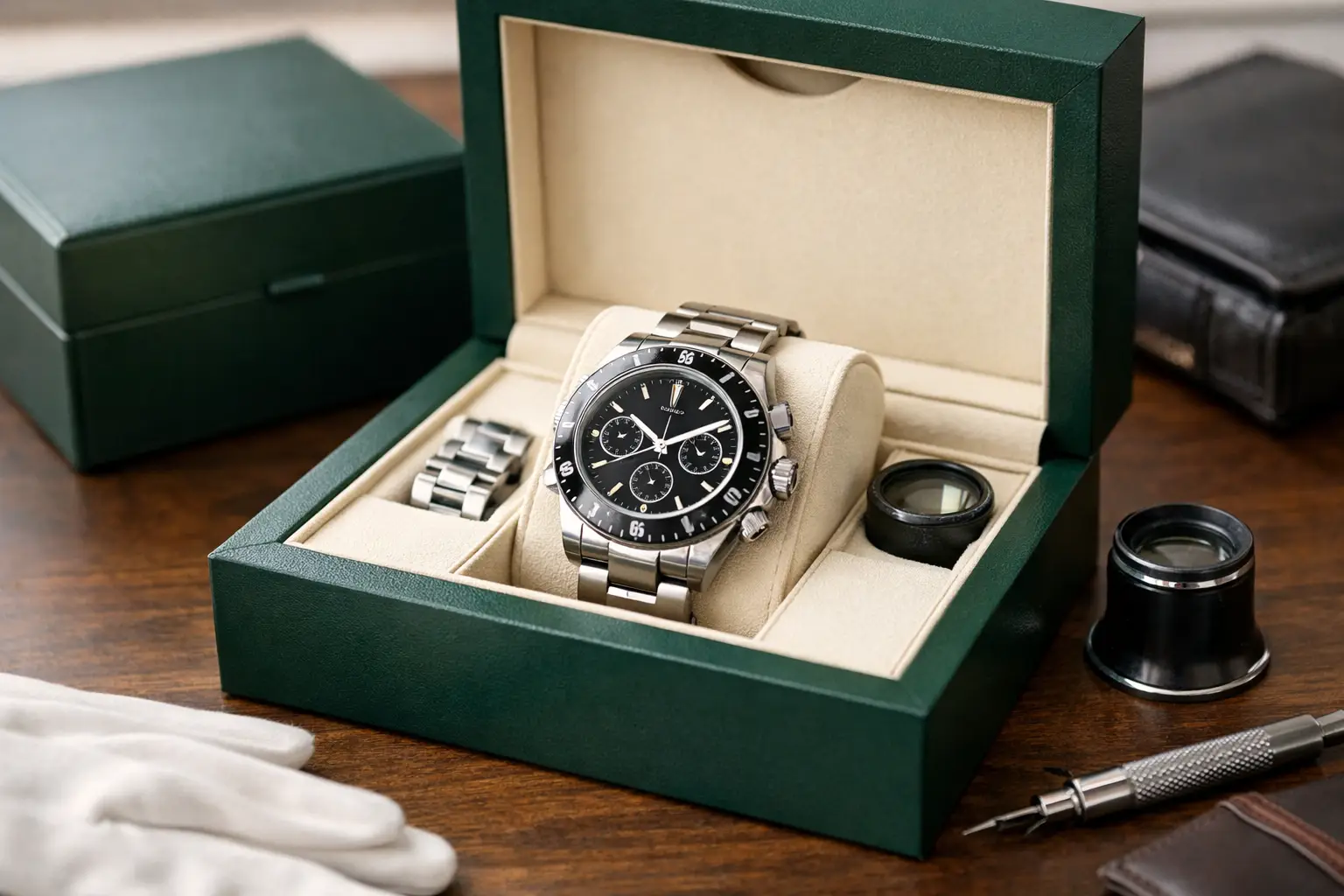
At this level, authenticity and condition are not secondary concerns. They are part of the value of the watch. Reference numbers, serial information where applicable, dial and bezel originality, bracelet stretch, service history, included box and papers, and water-resistance testing can all shape buyer confidence and future desirability.
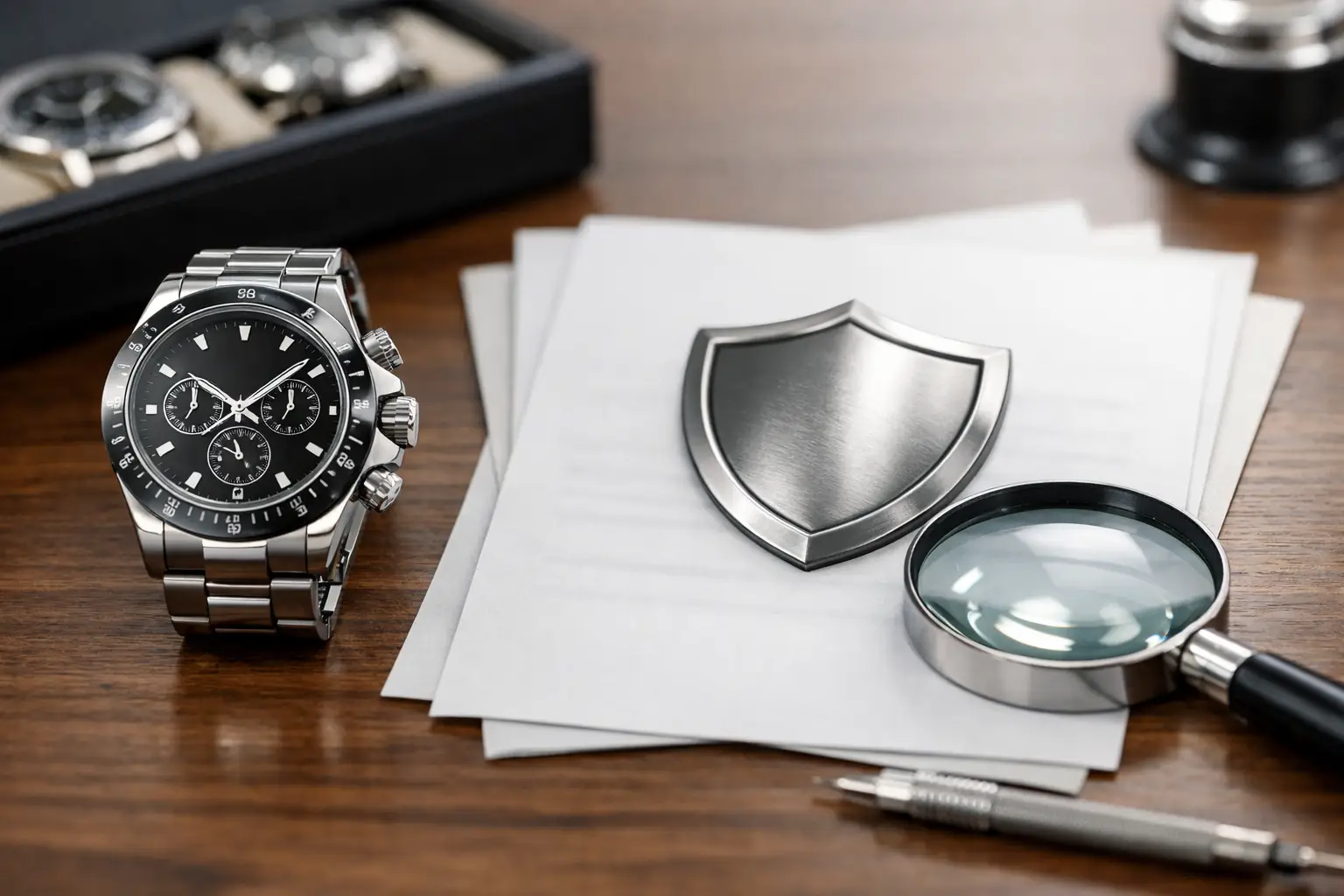
A trusted specialist should present those details clearly and stand behind the timepiece. At Lux-Watch, every watch is inspected for accuracy, condition, water resistance, and clean history, with authenticity and warranty protection central to the purchase experience. That reassurance matters whether you are selecting an immediately recognizable Rolex or a more nuanced Patek Philippe reference.
The strongest choice is the one that still feels right after the specifications, market discussion, and status signals fade into the background. Put it on your wrist, consider where it will travel with you, and choose the watch whose character feels earned rather than merely admired.

Comments are closed