


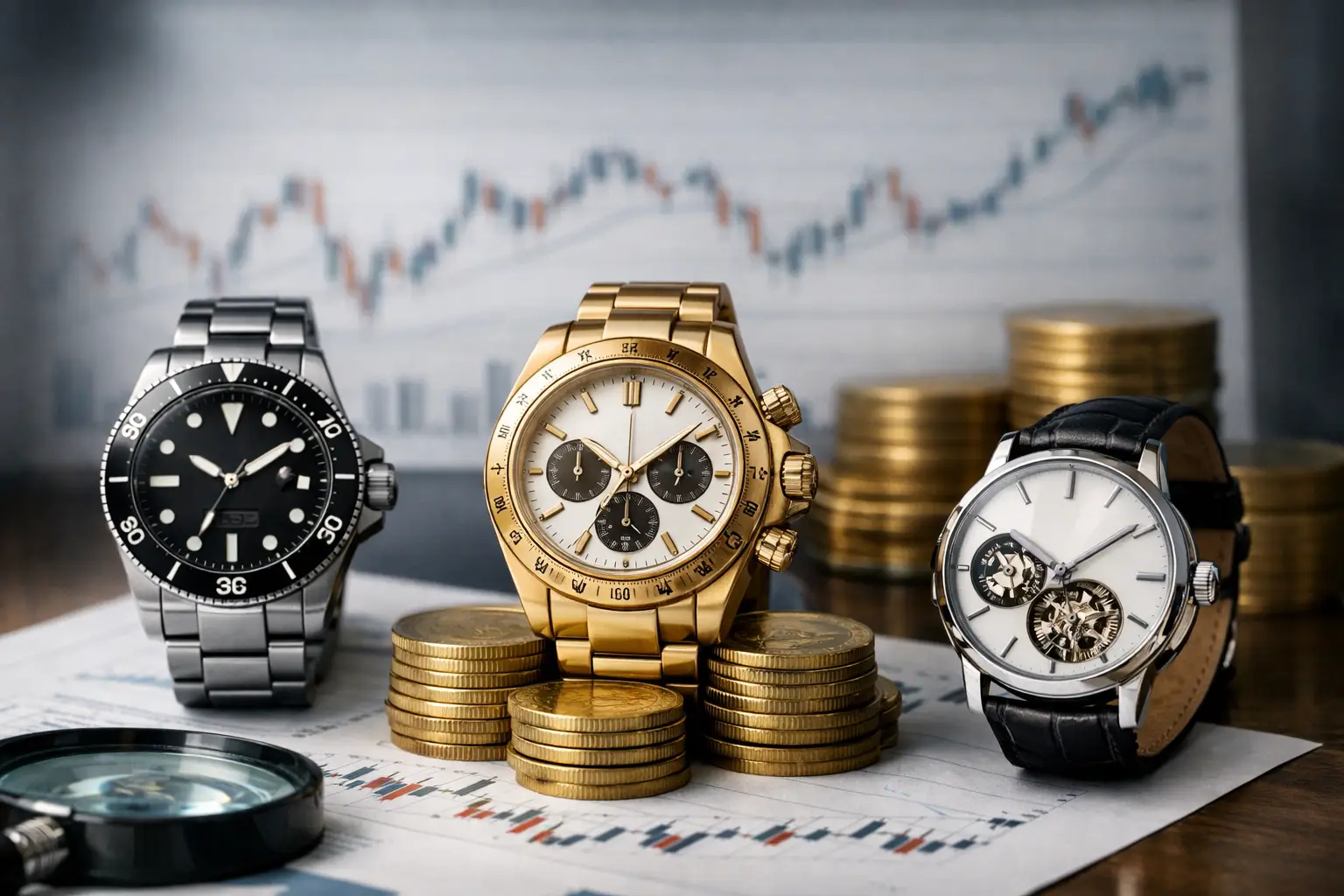
Which Watch Brands Hold Value Best?
A luxury watch can look impressive on the wrist and still disappoint the moment it reaches the resale market. That is why serious buyers keep asking which watch brands hold value – not as a trend question, but as a buying standard. In the high-end market, brand prestige matters, but so do model demand, production levels, condition, and buyer confidence.
The short answer is that a small group of brands consistently outperforms the rest. Rolex, Patek Philippe, Audemars Piguet, and Richard Mille tend to sit at the top of the value-retention conversation, with Omega and Cartier holding strong in select references. But the real answer is more precise: certain models within elite brands hold value far better than others.
Which watch brands hold value most consistently?
If your goal is value retention, not every luxury name belongs in the same category. Some brands have extraordinary heritage yet still lose a meaningful portion of retail price on the secondary market. Others have built a rare combination of global recognition, controlled supply, and sustained buyer demand.
Rolex remains the benchmark. Its strongest sport models, especially the Submariner, Daytona, GMT-Master II, and certain Datejust and Explorer references, benefit from unmatched brand awareness and broad liquidity. That matters. A watch that is easy to recognize and easy to resell usually has a stronger floor than one admired only by dedicated enthusiasts.
Patek Philippe also holds its place near the top, particularly with the Nautilus, Aquanaut, and select complicated models. Patek buyers are not simply paying for a name. They are buying into one of the strongest reputations in watchmaking, supported by exceptional finishing, limited availability, and long-term collector appeal.
Audemars Piguet is led by the Royal Oak family. The Royal Oak and Royal Oak Offshore have developed a level of recognition that goes well beyond niche collecting circles. That visibility supports values, especially for in-demand case sizes, materials, and discontinued references.
Richard Mille operates in a more specialized part of the market, but the brand has shown remarkable resilience at the top end. Ultra-low production, aggressive design identity, and a client base that values exclusivity all support pricing. It is not the broadest resale market, but for the right references, demand remains extremely strong.
Omega deserves a more careful reading. The brand as a whole does not behave like Rolex on the secondary market, yet certain models perform very well. The Speedmaster Professional has long-standing demand, and select Seamaster references hold value better than many buyers expect. Omega offers a more accessible path into prestige collecting, though resale performance is more model-specific.
Cartier is another brand that has strengthened considerably in the value conversation. The Santos, Tank, and certain limited or high-demand variations have attracted serious interest from both collectors and style-driven buyers. Cartier benefits from cross-category appeal – luxury, design, history, and recognizable status – which helps support resale demand.
Why some brands protect value better than others
Brand prestige is only the starting point. What protects value is the combination of reputation, scarcity, and market confidence.
First, there is recognition. A brand that is instantly understood by buyers across different markets has an advantage. Rolex is the clearest example. Even outside collector circles, buyers know what it is, what it represents, and why it carries status. That broad demand base creates resilience.
Second, there is supply discipline. Watches tend to hold value better when availability is controlled. If a brand floods the market with similar models, prices soften. If production stays selective and demand remains high, pricing usually stays firmer.
Third, there is model identity. A watch with a strong, established design language tends to perform better than a watch that changes too often or lacks a defining place in the brand catalog. The Nautilus, Royal Oak, Daytona, and Speedmaster all benefit from being immediately recognizable.
Finally, buyer trust matters more than many first-time purchasers realize. Authenticity, condition, service history, original box and papers, and a clean ownership background all influence resale performance. In a high-value category, confidence is part of the asset.
The brands that usually lead the market
Rolex
Rolex is still the safest answer for many buyers. It has global brand strength, deep resale liquidity, and enduring demand across multiple collections. Steel sport models usually attract the most attention, but even classic pieces can remain strong when bought well.
That does not mean every Rolex is guaranteed to appreciate. Precious metal references, heavily customized pieces, and less popular configurations can behave very differently. Still, as a brand, Rolex sets the standard for reliable value retention.
Patek Philippe
Patek Philippe performs best when rarity, design significance, and collector demand align. The Nautilus and Aquanaut often dominate the conversation, but not every Patek trades the same way. More formal or less in-demand references can be softer in resale terms, even while remaining highly prestigious.
For buyers who prioritize long-term stature and collector credibility, Patek remains one of the strongest names in the market.
Audemars Piguet
Audemars Piguet is powered by the Royal Oak. Few integrated-bracelet sports watches command the same level of attention. Demand has stayed strong across many references, though pricing can be more sensitive to trend cycles than buyers assume.
The right Royal Oak or Royal Oak Offshore can hold value exceptionally well. The wrong one can still be desirable, but with a narrower resale audience.
Omega and Cartier
These are not identical cases, but both matter for buyers who want prestige with stronger relative value than many competing luxury brands.
Omega shines when the watch has a clear icon behind it, especially the Speedmaster Professional. Cartier performs best with design-led classics that have remained relevant for decades. In both cases, buyers should focus less on the brand name alone and more on the exact reference.
Which watches within these brands tend to hold value best?
This is where disciplined buying matters. Within strong brands, iconic core models usually outperform fringe releases. Stainless steel sport watches often lead because they attract the widest pool of buyers. Limited production can help, but only if the model is genuinely desirable.
Watches that usually perform well share a few traits: they are easy to identify, hard to replace, and consistently wanted. A Rolex Daytona, Patek Philippe Nautilus, Audemars Piguet Royal Oak, Omega Speedmaster Professional, or Cartier Santos has a market identity that does not need explanation.
By contrast, fashion-driven releases, oversized trend pieces, or references with unusual configurations can be harder to move later. They may suit personal taste perfectly, but they are not always the strongest value-retention choices.
What hurts resale value, even with top brands?
The biggest mistake is assuming the brand alone does all the work. It does not.
Condition has a direct impact. Over-polishing, stretched bracelets, replacement parts, and visible wear can reduce buyer confidence quickly. Missing box and papers can also affect pricing, especially on collectible references where provenance matters.
Timing matters too. Buying at the peak of a hype cycle can compress your margin for future resale. Even elite brands experience price corrections. A strong brand can limit the downside, but it does not erase market reality.
Then there is originality. Buyers in the luxury watch market value authenticity in a very literal sense. Factory parts, documented history, and proper inspection are not small details. They are part of the watch’s financial credibility.
How to buy with value retention in mind
Start with the model, not just the logo. If you are evaluating which watch brands hold value, narrow your search to references with established demand and proven resale history. Avoid assuming that every limited edition or precious metal variant will outperform a classic steel model.
Buy condition and confidence. That means verified authenticity, accurate inspection, warranty protection, and transparency around the watch’s history. In the secondary luxury market, a trustworthy source can protect your position as much as the brand itself.
It also helps to be realistic about your goal. Some buyers want the strongest possible resale floor. Others are comfortable trading some value retention for a design they truly want to wear. That is a reasonable trade-off. A watch can be a smart purchase without being treated like a short-term investment vehicle.
For buyers who want a strong blend of prestige and stability, the safest ground is still found in iconic references from Rolex, Patek Philippe, Audemars Piguet, Omega, and Cartier. At Lux-Watch, that is exactly why authenticated, inspected, high-demand models continue to matter – they offer not just status and craftsmanship, but confidence at the moment of purchase.
The best watch to buy is usually the one that gives you both reasons to keep it and reasons to trust its market when you do not.

Comments are closed