



Clean History Luxury Watches Worth Buying
A flawless dial and polished case can make a luxury watch look exceptional. But for a serious buyer, appearance is only part of the decision. Clean history luxury watches offer something more valuable: confidence that the timepiece is authentic, properly represented, and free from concerns that could affect ownership, service, resale, or peace of mind.
For a Rolex, Patek Philippe, Audemars Piguet, Omega, or Cartier, provenance matters. The right watch should feel like a reward from the moment it arrives, not a question mark that follows you after the purchase.
What Does a Clean Watch History Mean?
A clean history generally means there is no known indication that a watch has been reported stolen, subject to an unresolved ownership dispute, materially misrepresented, or compromised by undisclosed alterations. It also means the seller has taken reasonable steps to inspect the piece, verify authenticity, and accurately disclose its condition.
There is no single universal database that can provide a complete lifetime record for every luxury watch. Records differ by brand, model age, country, prior owner, and whether the watch was serviced through an authorized channel. That is why “clean history” should never be treated as a vague sales phrase. It should reflect a careful process of authentication, condition review, serial-number evaluation where appropriate, and transparent representation.
For buyers, the practical point is simple: a watch should not carry hidden complications. You deserve to know what you are buying, how it presents today, and whether there are any meaningful factors that may affect its future value or wearability.
Why Clean History Luxury Watches Matter
Luxury watches are personal objects, but they are also substantial assets. A stainless steel sport model, a complicated dress watch, or a limited-production piece can represent a significant investment. Provenance and condition can influence not only the buying experience, but also insurance, future service, collector appeal, and eventual resale.
A questionable watch can become expensive long after the initial transaction. If a serial number raises concerns, if parts are later found to be non-original, or if a watch was incorrectly described as complete, the buyer may face difficult questions when seeking service or selling the watch. The best time to uncover those issues is before the watch changes hands.
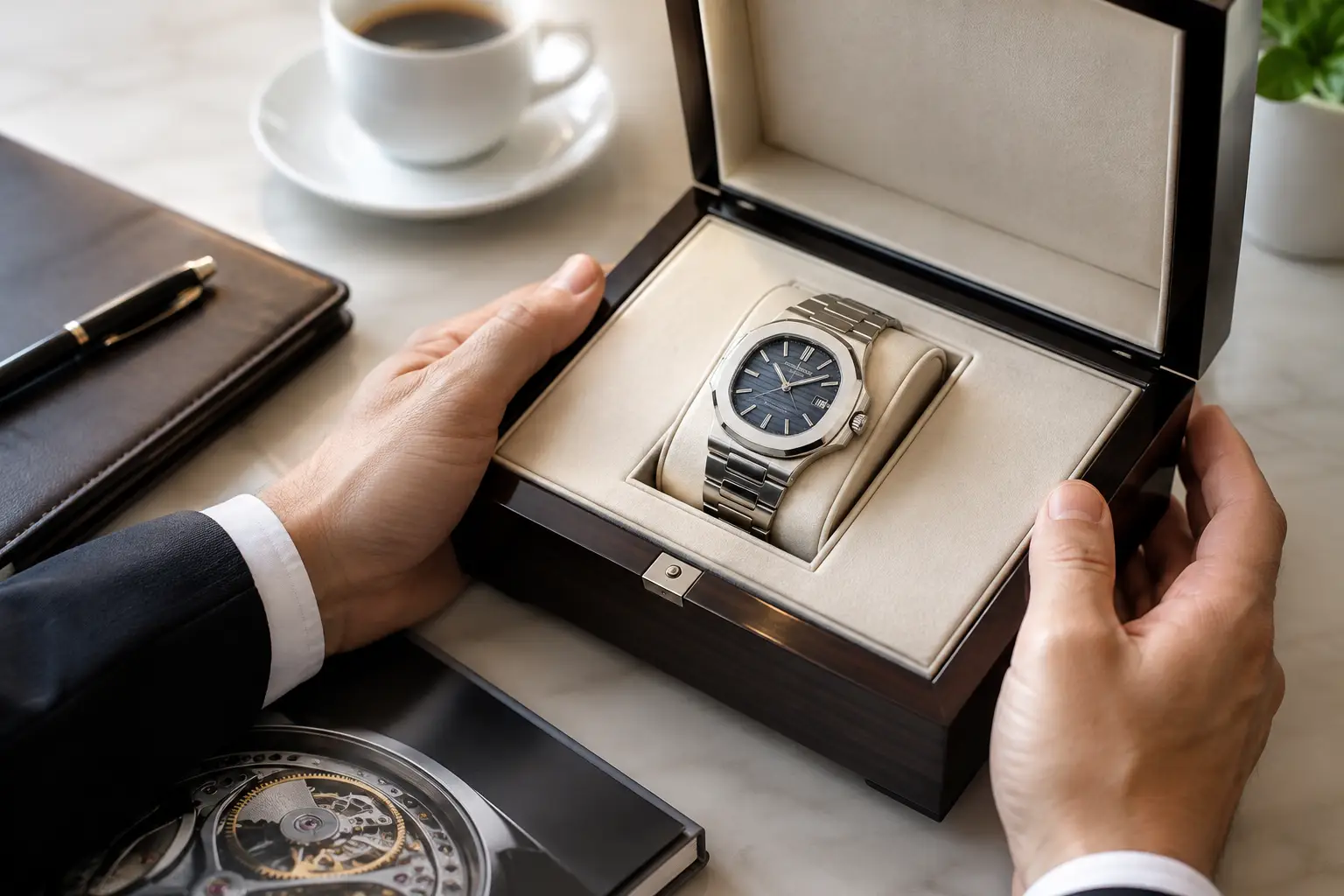
Clean history is particularly important for high-demand references. A Rolex Submariner, Daytona, GMT-Master II, Patek Philippe Nautilus, or Audemars Piguet Royal Oak may be widely recognized and actively traded. That desirability also makes these models more vulnerable to counterfeit components, altered configurations, and misleading listings. The same principle applies to vintage pieces, where originality can matter as much as mechanical performance.
Condition Is Not the Same as History
A watch can be in excellent cosmetic condition and still require deeper scrutiny. Conversely, a well-worn watch with an honest service record and correct period details may be a stronger collector purchase than a heavily refinished example with unclear background.
Condition addresses what you can see and measure: case wear, bracelet stretch, scratches, dial integrity, bezel condition, movement performance, and water resistance. History addresses what happened before the watch reached the seller. Both deserve attention.
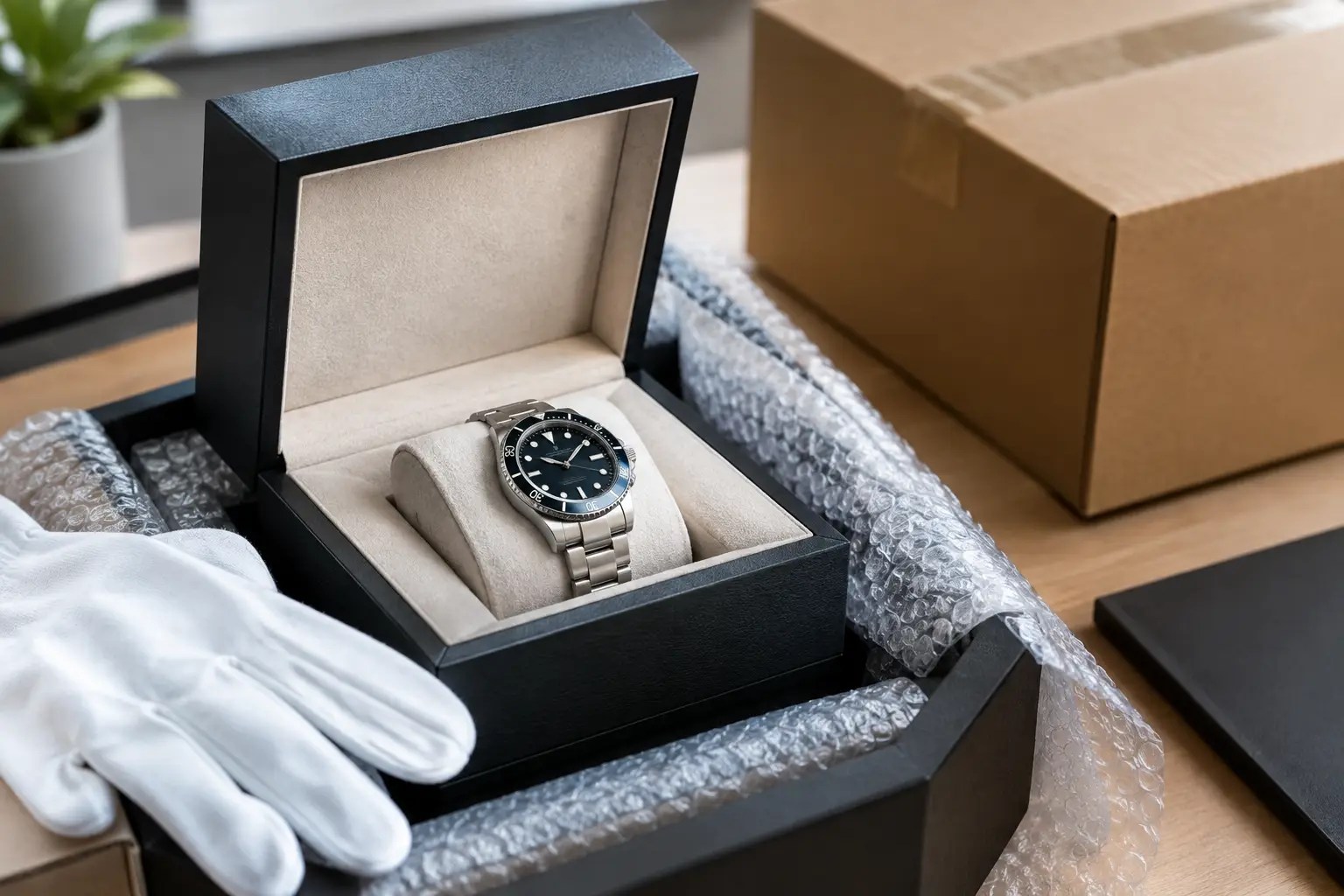
Original box and papers can add confidence and collector value, particularly for modern watches. However, they are not a substitute for authentication. Documents can be separated from a watch, altered, or paired incorrectly. A complete set is desirable, but the watch itself must stand on its own through expert evaluation.
The right seller will be clear about what is included. If a watch comes with its original box, warranty card, manuals, service documentation, or additional accessories, that information should be stated precisely. If items are not included, that should be equally clear.
What a Careful Inspection Should Cover
A proper pre-sale review goes beyond confirming that a watch runs. It should consider the details that define authenticity, originality, and long-term ownership confidence.
The case, bracelet, clasp, dial, hands, bezel, crystal, crown, and movement should be evaluated for consistency with the reference. On a modern watch, this may include checking engravings, serial conventions, bracelet codes, and movement architecture. On a vintage watch, the assessment requires more nuance. Period-correct components may be more relevant than factory-fresh appearance, and a replacement service dial or polished case can materially change collector value.
Mechanical testing also matters. Accuracy should be assessed, and water resistance should be tested when the model and condition allow it. A diver’s watch is designed for a different purpose than a vintage dress piece, so expectations should be appropriate to the watch. Water-resistance testing is valuable, but it is not a permanent guarantee – seals age, crowns are left open, and impact can change performance over time.
A professional inspection should lead to accurate disclosure, not exaggerated claims. “Unpolished,” “all original,” and “mint” are meaningful descriptions that should be used carefully. If a case has been refinished, a bracelet has stretch, or a component has been replaced during service, an informed buyer should know.
Questions Worth Asking Before You Buy
When considering a high-value watch online, direct questions are appropriate. A credible luxury retailer should be prepared to address the watch’s authenticity, condition, included accessories, warranty coverage, and inspection process without hesitation.
Ask whether the watch has been authenticated and whether it has been checked for accuracy and water resistance. Confirm the exact reference, case size, dial configuration, metal type, and bracelet or strap supplied. For a pre-owned piece, ask whether there are known service parts, refinishing, or notable condition details that are not immediately apparent in photographs.
It is also worth understanding the seller’s warranty terms. A warranty provides meaningful reassurance when it is clearly defined, particularly for the movement and functional performance. It does not erase the need for good buying judgment, but it shows that the retailer is willing to stand behind the timepiece after delivery.
For collectors, photographs should support the description rather than replace it. Clear images of the dial, case sides, lugs, bracelet, clasp, movement where applicable, and included documents help establish a more complete picture. If you are buying a reference you know well, compare the visible details against expected characteristics for that model and production period.
The Trade-Off Between New, Pre-Owned, and Vintage
A clean history can matter in every category, but the standard of evaluation changes with the watch.
A new or unworn watch may offer the strongest cosmetic presentation and the simplicity of current documentation. Yet availability can be limited for sought-after models, and price premiums can be substantial. A carefully vetted pre-owned watch can provide access to discontinued references, rare dial variations, or a more favorable entry point into a prestigious collection.
Vintage watches bring the greatest character and often the most complexity. Their appeal may lie in aged lume, period-correct details, and a case that shows decades of honest ownership. Expect more variation, fewer complete records, and a greater need for specialist evaluation. With vintage, an honest watch is often more compelling than a watch made to look artificially new.
The best choice depends on your purpose. If you want a daily-wear Omega Speedmaster or Panerai Luminor, mechanical condition and warranty support may lead the decision. If you are acquiring a Patek Philippe or Royal Oak as a long-term collector piece, originality, completeness, and documented provenance may deserve more weight.
Buy Confidence, Not Just a Reference Number
The reference number gets your attention. Trust should earn your purchase.
At Lux-Watch, that standard begins with authenticated luxury timepieces, careful inspection, and clear representation of condition and included accessories. Buyers should expect accuracy, water-resistance evaluation where appropriate, warranty protection, and the confidence that comes from dealing with a specialist who understands what is at stake.
A luxury watch should carry history in the meaningful sense: heritage, craftsmanship, and the marks of a life well lived. Before you make it yours, make sure its history is one you can wear with complete confidence.


Comments are closed