


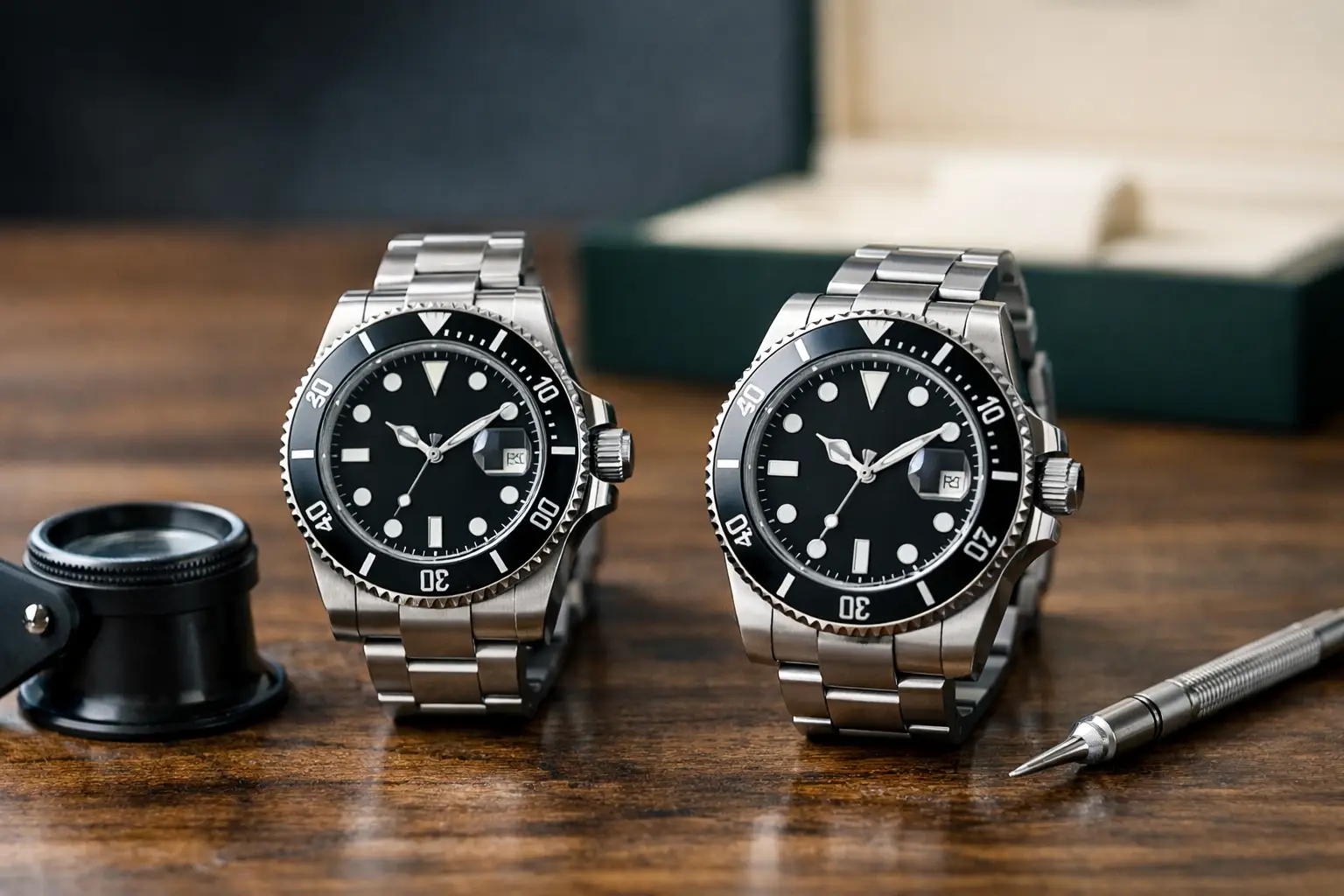
Authentic Rolex vs Fake: What to Check
A Rolex offered at a great price can feel like a smart find right up until one detail looks off. That is the risk behind the authentic Rolex vs fake question. When the purchase involves thousands, and sometimes tens of thousands, small mistakes become expensive ones.
Rolex remains one of the most counterfeited names in luxury watches for a simple reason: demand is relentless, and the brand is instantly recognizable. Some fakes are crude and easy to spot. Others are built to survive a quick glance, a few photos, and even a casual in-person inspection. That is why buyers need more than one giveaway. You need a pattern of proof.
Authentic Rolex vs Fake: Why the Details Matter
A fake Rolex is not just a cosmetic problem. It affects value, serviceability, long-term reliability, and resale. A counterfeit watch has no legitimate standing in the collector market, and if undisclosed replacement parts or forged paperwork are involved, the risk extends beyond the watch itself.
For serious buyers, authenticity is tied to confidence. You are not only buying steel, gold, or a dial layout. You are buying brand heritage, precise manufacturing, and a watch that holds its place in the market. When any part of that chain is uncertain, the entire purchase becomes questionable.
Start With the Seller Before the Watch
Most people begin by studying the watch. In practice, the seller often tells you just as much. A trusted luxury watch retailer should be direct about authentication standards, condition, inspection, warranty support, and history. If the language is vague, the photos are limited, or basic questions are avoided, that is already a warning sign.
A legitimate seller should be comfortable discussing serials, reference numbers, service history, original packaging, and whether any parts have been replaced. Not every authentic Rolex comes with a full set, especially on the secondary market, but the explanation should be clear and consistent. Trust is built through documentation and transparency, not pressure.
The Biggest Visual Tells
Counterfeiters tend to copy the look of a Rolex before they copy the feel of one. That means the broad design can appear convincing while proportions and finishing fall short.
Case shape is a strong place to start. On an authentic Rolex, the lugs, crown guards, bezel edges, and case lines are precise and balanced. Fakes often miss these proportions. The watch may look slightly too thick, too sharp, or oddly soft around the edges. Those small inconsistencies matter because Rolex manufacturing is famously controlled.
The dial is even more revealing. Printing on a genuine Rolex should look crisp, even under magnification. Text that appears blurry, too bold, misaligned, or unevenly spaced is a concern. Hour markers should sit cleanly and symmetrically. Lume application should be neat, not sloppy or excessive. If a cyclops lens is present, the date magnification should look correct for the model, not weak or distorted.
Then there is the bracelet. Rolex bracelets feel substantial, secure, and finely finished. On a fake, the bracelet may rattle too much, feel overly light, or show rough finishing on the sides and clasp. The clasp engravings can also reveal poor workmanship, especially if fonts or coronet shapes look wrong.
Weight, Feel, and Build Quality
One of the fastest ways to spot a counterfeit is simply to hold the watch. An authentic Rolex feels deliberate. The weight should match the materials, the case should feel dense, and the bracelet should move smoothly without feeling loose or tinny.
This is not a universal rule on its own because different Rolex references wear differently, and some modern fakes have improved their case weight. Still, poor balance, hollow-feeling links, or a flimsy clasp should make you pause. Premium construction is difficult to imitate consistently.
The winding action also matters. A genuine Rolex crown should screw down with precision and unscrew smoothly. Setting the time and date should feel controlled, not gritty or imprecise. Counterfeits often struggle here because finishing the external surfaces is easier than recreating the tactile quality of the movement and crown system.
Movement Clues Separate the Best From the Rest
If there is one area where authentic Rolex vs fake becomes decisive, it is the movement. Rolex calibers are built to strict standards of reliability and accuracy. A counterfeit may imitate the sweep of the seconds hand, but the internal construction is usually where the illusion breaks.
Many buyers still assume a smooth seconds hand alone proves authenticity. It does not. Numerous fake watches now imitate that visual effect well enough to mislead non-specialists. The real question is how the movement performs and whether it matches the reference.
Opening the case should only be done by a qualified professional, but movement inspection remains one of the strongest forms of verification. The finishing, rotor design, bridge layout, engravings, and caliber architecture should correspond to the watch. A mismatch between the reference and the movement is a serious red flag.
Even without opening the case, timing performance and crown function can be informative. If a watch gains or loses time dramatically, has an erratic sweep, or behaves inconsistently when winding and setting, authenticity should be questioned immediately.
Engravings, Serials, and Paperwork
Rolex engravings should be clean and intentional, never shallow, crooked, or decorative for the sake of appearance. Serial and reference numbers must be correctly placed and consistent with the model and production period. If these details are missing, altered, or difficult to verify, the watch deserves closer scrutiny.
Paperwork can help, but it should never be treated as final proof on its own. Counterfeit boxes, cards, tags, and booklets are widely available. A convincing package can accompany a fake watch just as easily as an authentic one. Documents should support the watch, not replace physical authentication.
That is where experienced inspection matters. A trustworthy retailer will evaluate not just whether papers exist, but whether they align with the watch, the production era, the condition, and the overall history.
Price Is a Clue, Not the Whole Answer
A price that seems too low is still one of the oldest warning signs because it remains one of the most reliable. Rolex holds value well, especially on high-demand sport models. If a seller is listing a desirable reference far below established market levels without a credible reason, caution is warranted.
That said, high pricing does not guarantee authenticity. Some counterfeit sellers deliberately price aggressively to make a fake look believable. Buyers who rely on price alone can be misled in both directions. The better approach is to compare price with condition, set completeness, service history, and seller reputation.
Super Fakes Change the Conversation
The market now includes so-called super fakes, watches designed to imitate authentic Rolex models at a much higher level than standard counterfeits. These pieces can feature better cases, better bracelets, and more convincing dial work. For first-time buyers, that makes visual checks less reliable than they once were.
This does not mean authentication is impossible. It means casual buying is more dangerous. A strong seller, professional inspection, and a documented process matter more than ever. When a watch is expensive, convenience should never outrank verification.
How Smart Buyers Protect Themselves
The safest purchase is rarely the one that depends on your own guesswork. It comes from a source that has already done the work: checked the watch for authenticity, inspected accuracy and water resistance, evaluated condition, and screened for issues that could affect long-term ownership.
That is especially important in the secondary luxury market, where even authentic watches can vary significantly in originality, service history, and replacement parts. A polished case, aftermarket diamond setting, or non-original component does not necessarily make a watch fake, but it changes value and collectibility. Buyers deserve to know exactly what they are buying.
For that reason, trusted retailers have an advantage over anonymous marketplaces. The point is not only convenience. It is accountability. When a seller stands behind authenticity with inspection standards and warranty support, the transaction becomes far more secure.
When in Doubt, Slow Down
A Rolex should feel like a confident acquisition, not a gamble. If the photos are limited, the story changes, the pricing is hard to explain, or the watch simply raises questions, stepping back is the smart move. There will always be another watch. There may not be another chance to avoid a costly mistake.
For buyers who want prestige without uncertainty, authentication is not a bonus feature. It is the foundation of the purchase. Lux-Watch serves that expectation by focusing on verified authenticity, clear condition standards, and the level of reassurance serious watch buyers should expect before they commit.
A real Rolex rewards patience. The right watch, from the right source, should leave no need for guesswork.

Comments are closed