


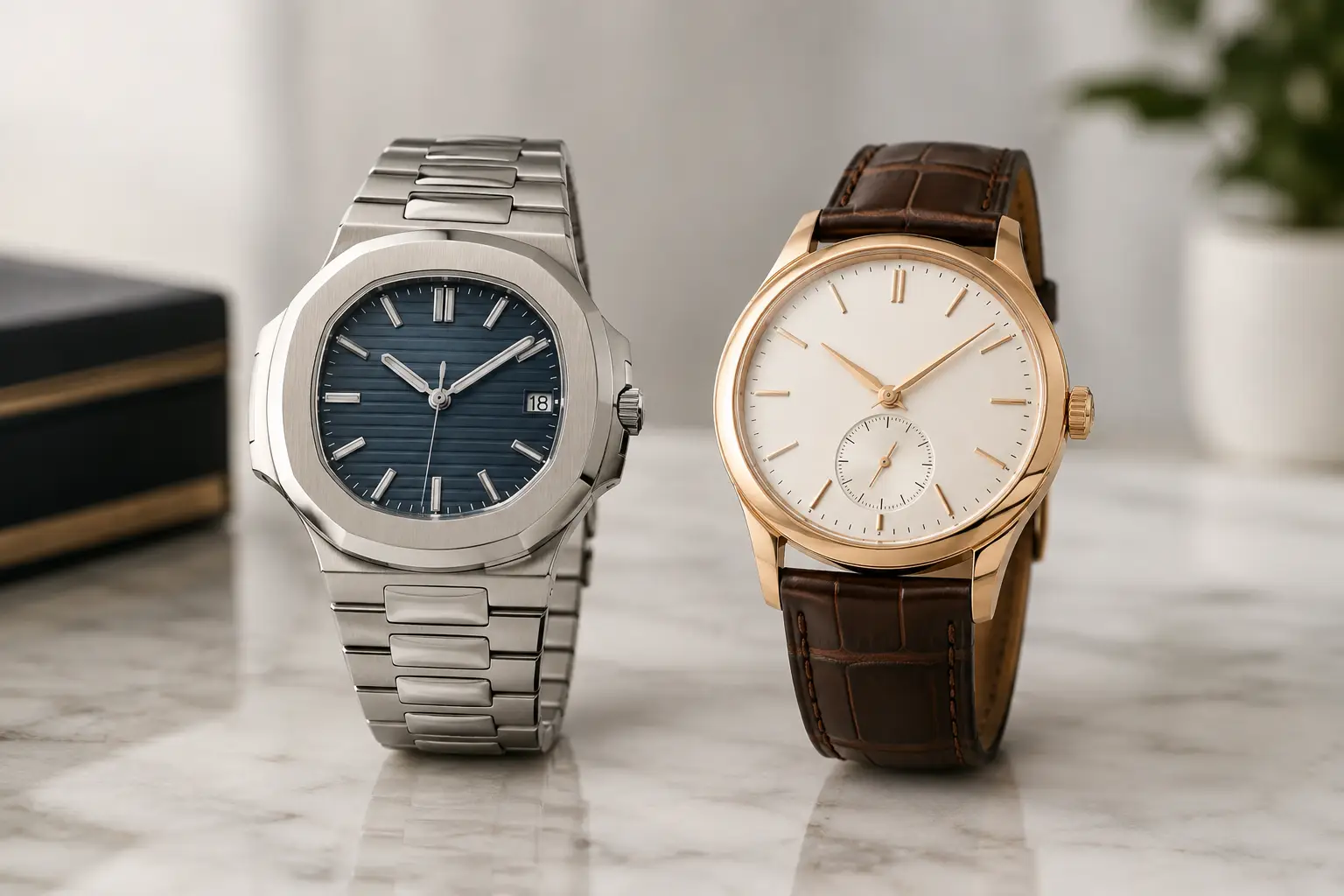
Patek Philippe versus Vacheron Constantin Compared
A six-figure watch purchase is rarely decided by a logo alone. Patek Philippe versus Vacheron Constantin is a comparison between two of Switzerland’s most respected maisons, each offering exceptional finishing, serious heritage, and a distinct expression of personal taste. The right choice depends on whether you prioritize market recognition, discreet refinement, sport-watch versatility, or the pleasure of owning something less expected.
Both names belong at the highest level of modern collecting. Yet they reward different buyers. Patek Philippe often carries stronger mainstream prestige and formidable secondary-market demand in key references. Vacheron Constantin offers equally compelling pedigree with a more individual, less obvious presence on the wrist.
Patek Philippe versus Vacheron Constantin: Heritage
Vacheron Constantin traces its history to 1755 and is widely recognized as the world’s longest continuously operating watch manufacturer. Its identity is rooted in classical Geneva watchmaking, shaped by finely finished dress watches, artistic métiers d’art pieces, and complicated mechanical movements. The Maltese cross emblem signals a house that has consistently favored elegance over noise.
Patek Philippe was founded in 1839 and has become, for many buyers, the definitive name in collectible Swiss watchmaking. The brand’s reputation was built through landmark perpetual calendars, minute repeaters, chronographs, and a family-owned approach that reinforces its sense of permanence. Its famous generational message has also made Patek a powerful choice for milestone gifts and heirloom purchases.
Neither brand wins on heritage alone. Vacheron has the earlier origin, while Patek has created a particularly strong modern collector culture. A buyer seeking the most immediately recognized statement of watch connoisseurship will often lean toward Patek. A collector who values historical depth without choosing the predictable answer may find Vacheron more compelling.
Design Language and Wrist Presence
Patek Philippe is defined by restraint, proportion, and recognizable reference design. The Calatrava remains a benchmark for the round dress watch: clean, balanced, and refined without ornamental excess. At the sportier end, the Nautilus and Aquanaut have become cultural icons. Their demand comes from more than scarcity. They combine casual wearability with the finishing and prestige expected from haute horlogerie.
Vacheron Constantin has a broader visual range than many first-time buyers expect. The Patrimony is exceptionally pure, with thin cases and uncluttered dials that suit formal settings. Traditionnelle models bring more traditional watchmaking codes, often with more visible detail in the hands, markers, and complications. The Overseas offers a luxury sports-watch alternative with its distinctive bezel, integrated-bracelet character, and adaptable strap system.
On the wrist, Patek usually reads as understated authority. Even a well-known Nautilus communicates luxury with a controlled, elegant profile. Vacheron can feel more expressive, particularly in the Overseas and Historiques collections, while still remaining sophisticated. The difference is subtle but meaningful: Patek is frequently the watch others recognize; Vacheron is often the watch that prompts a closer look from someone who knows watches.
The sport-watch decision
For buyers considering a steel luxury sports watch, the Nautilus and Overseas are natural rivals, but they do not serve identical priorities. A desirable Nautilus typically offers stronger recognition and, depending on reference and condition, greater liquidity in the secondary market. It can also command a significant premium, especially for discontinued or highly sought-after configurations.
The Overseas provides a more accessible route into elite integrated-bracelet watchmaking in many cases. Its interchangeable bracelet and strap system adds practical value for owners who want one watch to move from business travel to weekend wear. It may not produce the same immediate market reaction as a Nautilus, but that is precisely part of its appeal for collectors who prefer understated exclusivity.
Movements, Finishing, and Complications
At this level, neither choice should be treated as a compromise in workmanship. Patek Philippe movements are admired for their architecture, refined finishing, and long-standing excellence in complicated watches. The Patek Philippe Seal governs standards for movement performance, case finishing, and after-sales service, reflecting the brand’s commitment to the full life of the watch rather than its initial sale alone.
Vacheron Constantin is equally serious about traditional hand-finishing and Geneva craftsmanship. Many of its movements bear the Hallmark of Geneva, one of watchmaking’s most respected certifications. This designation evaluates both technical and aesthetic standards, from the finishing of components to the construction and regulation of the movement.
The practical distinction is not that one brand makes better watches across the board. It is that their strengths appear in different emotional registers. Patek complications often feel like canonical collector pieces – mechanically important, beautifully resolved, and deeply tied to the brand’s market stature. Vacheron complications can feel more artisanal and expressive, especially in ultra-thin perpetual calendars, openworked models, and elaborate calendar displays.
If your priority is a perpetual calendar, chronograph, world time, or minute repeater, compare the individual reference before deciding by brand. Case proportions, dial readability, service history, and production rarity can matter more than the name on the dial. A complicated watch should be chosen with the same care as a fine automobile or piece of art: beauty is essential, but provenance and long-term care are part of ownership.
Value, Demand, and Resale Considerations
Patek Philippe has a clear advantage in broad market recognition. Certain references, particularly steel sports models and important discontinued complications, have demonstrated exceptional demand. That can make Patek attractive for collectors who want a prestigious watch with a strong resale profile.
Still, no luxury watch should be purchased solely on the assumption of appreciation. Market prices move with production changes, collector preferences, economic conditions, and the availability of specific references. A highly priced Patek can remain desirable while still being a poor choice if the buyer is uncomfortable with the entry cost or does not genuinely enjoy wearing it.
Vacheron Constantin can offer a compelling value proposition, particularly in precious-metal dress watches and selected Overseas references. In some segments, buyers receive an extraordinary level of finishing and heritage at a price that compares favorably with a similarly specified Patek. The trade-off is that resale demand may be narrower on certain models, which matters if short-term liquidity is a primary concern.
For a long-term owner, value has more than one meaning. There is market value, certainly, but there is also the value of reaching for the watch every week. A beautifully proportioned Patrimony or a classic Calatrava may never be the loudest purchase in a collection, yet either can become the watch that feels right for decades.
Which Brand Fits Your Collection?
Choose Patek Philippe if you want one of the most recognized names in high watchmaking, are drawn to the Nautilus, Aquanaut, Calatrava, or iconic complications, and place a high premium on collector demand. It is an especially confident choice for a first major haute horlogerie purchase, a landmark gift, or a watch intended to become a family heirloom.
Choose Vacheron Constantin if you appreciate historic Geneva watchmaking but want a more distinctive path. The brand is particularly persuasive for buyers who favor elegant dress watches, versatile Overseas models, artistic dial work, or complications with a more individual point of view. It rewards a collector who does not need universal recognition to validate excellent taste.
There is room for both in a serious collection. A Patek Philippe sports watch and a Vacheron Constantin dress watch, for example, create a pairing with very little overlap. Even within the same category, personal fit remains decisive. Try to assess the case size, thickness, dial color, bracelet comfort, and how naturally the watch works with your wardrobe before focusing exclusively on a reference’s reputation.
Buy With Documentation and Confidence
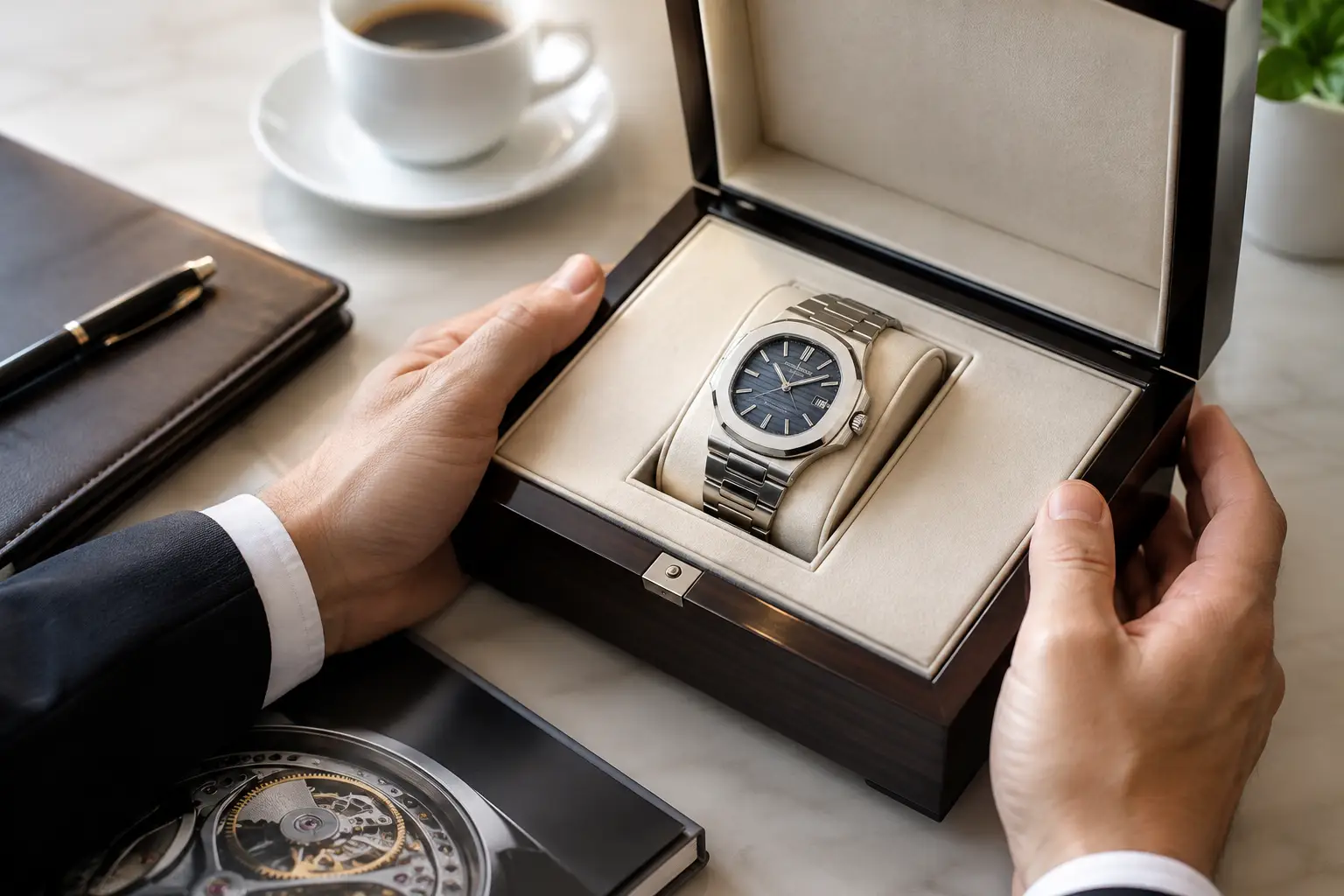
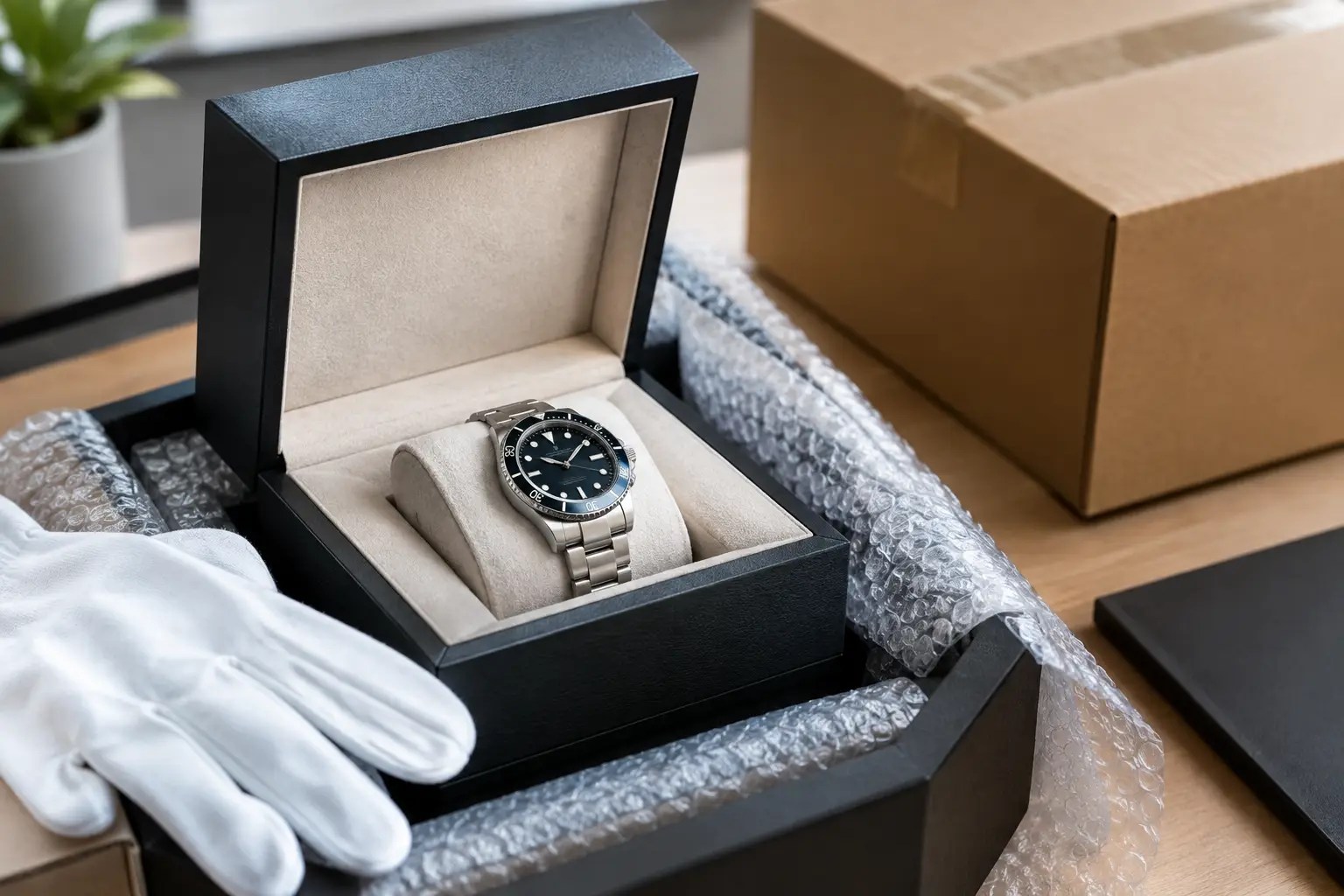
At this price level, the watch’s condition and provenance are as important as its model name. Original box and papers can support collector appeal, but a complete set is not a substitute for careful inspection. Review the condition of the case and bracelet, confirm that the movement is operating correctly, and understand any service or replacement-part history. For sports models, verify water resistance before treating a vintage or pre-owned watch as a daily swim watch.
A trusted specialist should be able to present a clear description, authenticate the timepiece, and stand behind its condition. At Lux-Watch, collector confidence begins with authenticated inventory, thorough inspection, original packaging where available, and warranty protection designed for high-value purchases.
The better choice is the watch you will be proud to wear, understand, and keep. Whether that means Patek Philippe’s defining collector status or Vacheron Constantin’s quietly exceptional character, buy the reference that makes the moment on your wrist feel personal.


Comments are closed