


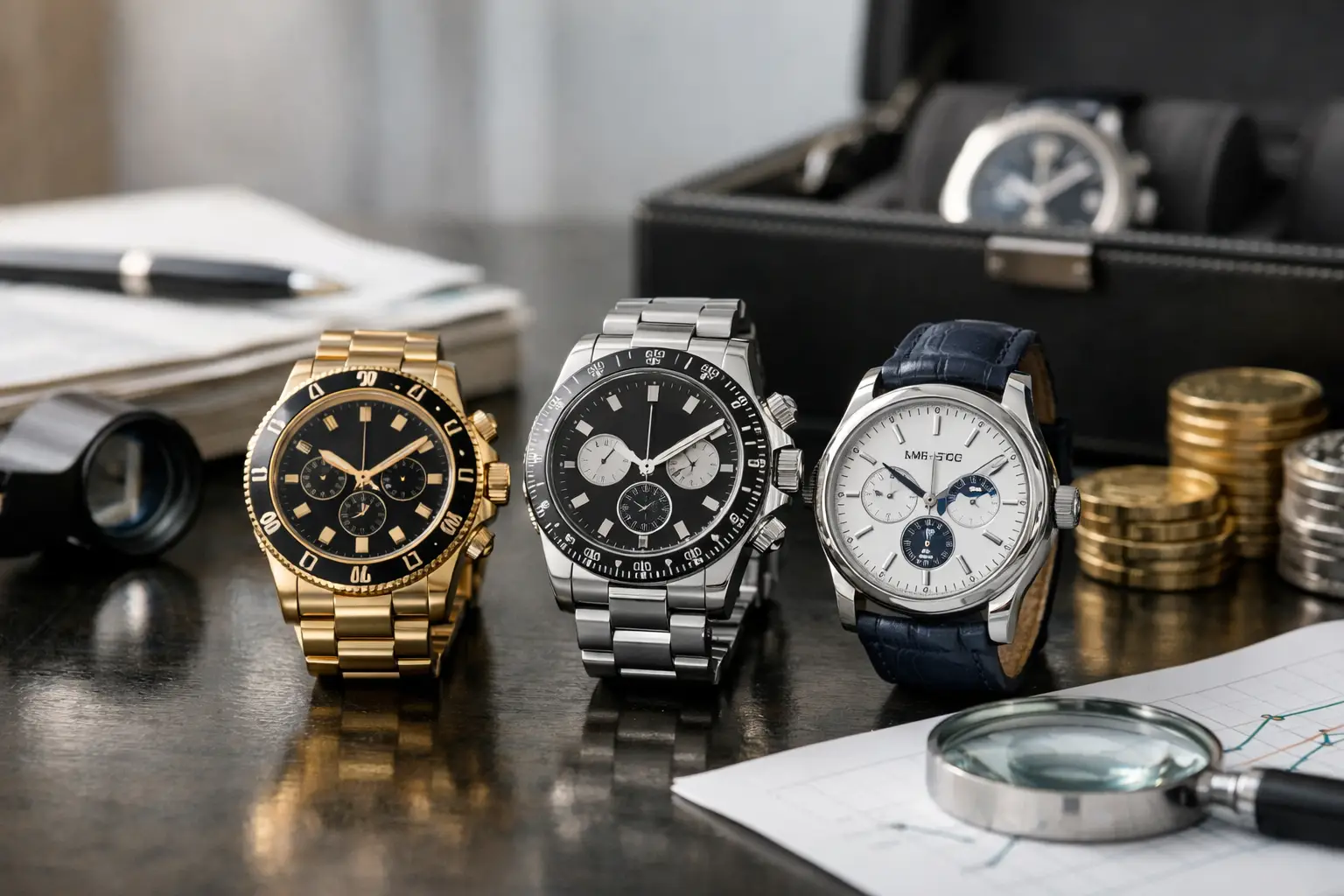
Guide to Luxury Watch Resale Value
A watch can look exceptional on the wrist and still perform very differently on the secondary market. That is why any serious guide to luxury watch resale value starts with a simple truth: resale is not driven by retail price alone. Brand strength, reference demand, condition, completeness, and market timing all matter, and small details can move value far more than most buyers expect.
For collectors, professionals, and gift buyers, resale value is not just about profit. It is about confidence. A watch with strong value retention can reduce long-term ownership risk, make future trades easier, and keep more of your capital in motion if your tastes change.
What actually drives luxury watch resale value
The resale market rewards desirability, not just craftsmanship. Plenty of beautifully made watches lose value because demand is soft, production is high, or the model lacks collector attention. On the other hand, certain references from Rolex, Patek Philippe, Audemars Piguet, and select Omega models maintain unusually strong pricing because buyers actively seek them out.
Brand reputation is the first filter. Rolex remains one of the strongest names for consistent resale performance because the market is broad, liquid, and globally recognized. Patek Philippe and Audemars Piguet can command even more dramatic premiums at the high end, but that strength often depends more heavily on specific collections, such as the Nautilus or Royal Oak. Omega, Cartier, Panerai, Breitling, and Hublot can also hold value well, though usually in a more model-specific way.
Scarcity matters, but not all scarcity is equal. A genuinely limited production run can support value. A watch that is simply uncommon because few people wanted it is a different story. The market tends to pay for proven demand first, rarity second.
A practical guide to luxury watch resale value by category
Sport models typically outperform dress watches in resale. That has been true for years, and the pattern remains strong. Steel sports watches from top-tier brands often attract the deepest buyer pools because they combine daily wearability, brand recognition, and collector appeal.
Dress watches can still retain value, especially from elite makers, but they usually appeal to a narrower audience. A precious metal Calatrava or Tank may be admired by experienced buyers yet move more slowly than a steel Submariner, Speedmaster, or Royal Oak Offshore. If resale flexibility is a priority, category matters almost as much as brand.
Limited editions are another area where expectations need discipline. Some limited watches become highly sought after. Many do not. The best performers usually combine a respected brand, a compelling design, low production, and a story the market continues to care about years later.
Condition is not cosmetic – it is financial
Condition affects resale value immediately because buyers in this segment are paying for confidence as much as appearance. Sharp case lines, a clean dial, original hands, and an unpolished or lightly polished finish can all influence price. Heavy refinishing, bracelet stretch, chipped crystal edges, moisture damage, or replacement parts can pull value down fast.
This is where watch buyers often make a costly mistake. They assume professional polishing always improves value because the watch looks fresher. Sometimes it does help saleability. But for collector-driven references, overpolishing can erase the very details that support stronger pricing. Thick lugs become thin. Crisp bevels disappear. The watch looks cleaner but less original.
Mechanical health also matters. A watch that runs accurately, passes pressure testing where appropriate, and shows no signs of movement neglect is easier to value and easier to sell. On a high-value piece, buyers want more than a good-looking case. They want proof that the watch has been properly maintained.
Box, papers, and service history can change the number
Complete sets usually command higher resale prices than watch-only examples. Original box, warranty card or papers, manuals, hang tags, booklets, service receipts, and even original sales accessories can strengthen value because they support authenticity, provenance, and buyer trust.
The gap between complete and incomplete varies by watch. For some modern pieces, missing papers may be manageable if the watch is desirable and condition is strong. For collectible references, especially from brands where provenance matters deeply, missing accessories can mean a more noticeable discount.
Service history is another factor that depends on context. A recent service from the brand or a respected specialist can improve buyer confidence. But not every service adds equal value. Collectors generally prefer correct parts, documented work, and no unnecessary cosmetic changes. A watch with service records and original packaging tells a cleaner ownership story, and cleaner stories tend to sell better.
The reference matters more than the brand name alone
A broad brand label is not enough to predict value. Within the same brand, one reference may be highly liquid while another struggles. Rolex is a good example. A Submariner, GMT-Master II, Daytona, or certain Datejust configurations can perform very differently from a less sought-after two-tone or diamond-set variation.
The same is true for Patek Philippe and Audemars Piguet. Buyers do not simply shop the brand. They shop the exact reference, dial, metal, bracelet, production period, and condition. A desirable blue dial on an in-demand integrated bracelet model can create a completely different resale profile from a less popular configuration in the same family.
This is why experienced buyers pay attention to reference-level pricing rather than headline brand prestige. Prestige opens the door. The reference determines the actual market.
Timing shapes resale, but it should not be overestimated
Market timing can affect resale value, especially during periods of rapid demand shifts. Certain models rise sharply when supply tightens and soften when speculative buying cools. However, timing is rarely the only story. Strong watches tend to remain strong even when the market corrects. Weaker references usually do not become excellent assets just because the broader market is hot.
Seasonality can play a role at the margins. Gift-buying periods and bonus seasons can increase activity. Major watch events and auction headlines can also move attention toward specific brands or references. Still, the best timing advantage usually comes from owning the right watch in the first place.
Buyers should also separate short-term hype from durable demand. A watch that spikes because of social media attention may not hold that level. A watch with years of stable collector demand has a stronger foundation.
How buyers can protect resale value from day one
If resale matters, buying discipline matters just as much. Start with authenticity and source. The cleaner the watch’s history, the better your position later. Counterfeit risk, undisclosed damage, aftermarket parts, or uncertain provenance can destroy resale confidence.
Buy the most complete example you can reasonably justify. Full set pieces generally give you more flexibility later. Prioritize condition over bargain pricing when the difference is meaningful. A cheaper watch with poor edges, missing papers, and questionable service history is not always the better deal.
It also helps to stay close to proven references. That does not mean every purchase should be purely conservative. But if your goal includes value retention, there is usually less risk in established models with broad demand than in trend-driven or heavily customized pieces.
For buyers entering the market online, trust standards matter. Authentication, warranty protection, accuracy inspection, condition transparency, water resistance checks where relevant, and a clean-history review are not extras in this category. They are part of the value equation. That is one reason reputable specialists such as Lux-Watch position assurance so prominently.
Common myths in any guide to luxury watch resale value
One of the biggest myths is that expensive always means investment-grade. It does not. Some high-retail watches lose value quickly because secondary demand never catches up to boutique pricing.
Another myth is that rare equals valuable. Rare can help, but only when buyers care. If a reference is obscure, difficult to service, awkwardly sized, or simply outside current tastes, rarity alone will not carry pricing.
The last myth is that resale value should be the only buying criterion. It should not. The best purchase is usually a watch you genuinely want to own, with resale strength acting as protection rather than the entire reason to buy. Markets move. Personal taste lasts longer.
A strong watch purchase balances emotion and discipline. Choose a model with real demand, insist on authenticity and documented condition, and respect how much details affect value at the high end. If you do that, resale becomes less of a gamble and more of a controlled advantage. The right watch should feel exceptional to own and reassuring to hold.

Comments are closed