


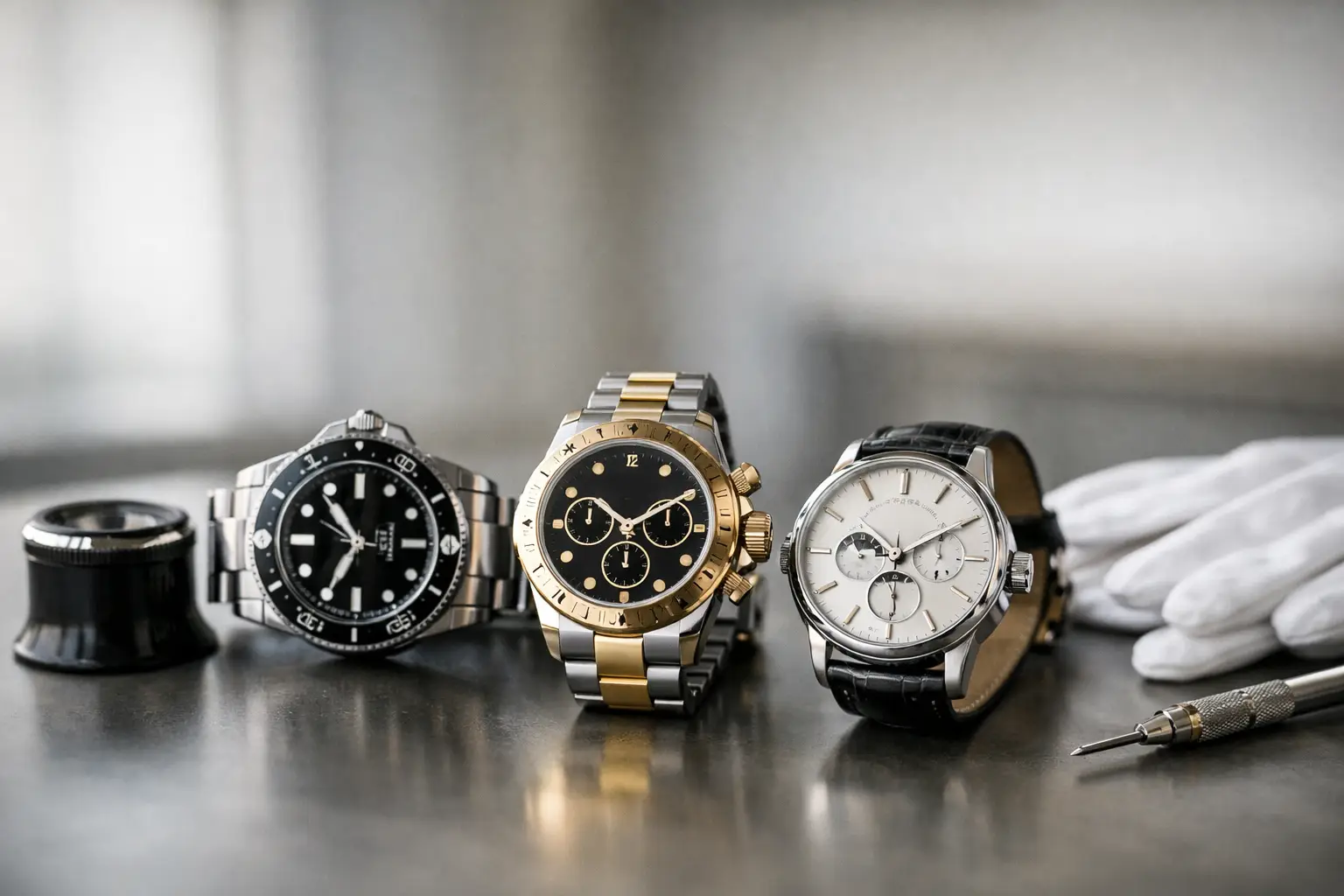
Luxury Watch Condition Grades Explained
A luxury watch can look flawless in photos and still tell a different story in person. On the secondary market, condition is one of the biggest drivers of value, collectibility, and buyer confidence. That is why luxury watch condition grades explained clearly matters before you commit to a Rolex, Patek Philippe, Omega, Cartier, or Audemars Piguet.
Condition grading is not just a cosmetic label. It is a practical shorthand for how well a watch has been preserved, how much originality remains, and whether prior wear or service may affect long-term appeal. For serious buyers, the grade helps answer a simple question: are you paying the right price for the watch actually in front of you?
Why condition grades matter so much
Two watches with the same reference number can carry very different market values. The reason is often condition. A crisp unpolished case, clean dial, tight bracelet, and complete set can push a watch into a more desirable tier. A heavily refinished case, replacement parts, deep scratches, or bracelet stretch can pull it down quickly.
This matters even more at the high end of the market. Buyers shopping for a Royal Oak Offshore, Nautilus, Speedmaster, or Luminor are not only paying for the brand and reference. They are paying for preservation, presentation, and confidence. Condition grades help narrow that risk, but only if you understand what the grade is really signaling.
Luxury watch condition grades explained by category
There is no single universal grading system across the luxury watch industry. That is the first thing to understand. One seller’s Excellent may be another seller’s Very Good. Still, most reputable dealers work within a familiar range, and the meaning is broadly consistent.
New or unworn
This grade typically refers to a watch that shows no signs of wear, or only the faintest handling marks from storage or inspection. In many cases, it will include original box, papers, tags, and factory accessories. For buyers who want the closest experience to buying retail, this is usually the top tier.
That said, unworn does not always mean freshly delivered from an authorized dealer. A watch may be older stock, previously owned but never worn, or removed from stickers. The distinction matters to some collectors, especially if they are seeking absolute factory-fresh presentation.
Excellent or mint
An Excellent or Mint grade usually describes a watch with very light signs of careful wear. You may see minor hairlines on polished surfaces or very faint marks on the clasp, but nothing that changes the overall impression. The case should retain strong lines, the dial and crystal should be clean, and the bracelet should feel solid.
For many buyers, this is the sweet spot. You get a watch that presents at a very high level without paying the premium that often comes with a true unworn example.
Very good
Very Good generally means the watch has been worn, but responsibly. Surface wear is visible on the case, bracelet, or clasp, and there may be signs of prior polishing or routine service. The watch should still look attractive on the wrist and perform as expected, but it is no longer close to like-new.
This grade can offer strong value, especially for buyers prioritizing ownership over investment optics. A Very Good example of a desirable reference can still be an excellent purchase if the price reflects the wear accurately.
Good
A Good grade signals more noticeable wear. This may include deeper scratches, softer case edges from polishing, bracelet stretch, bezel wear, or service history that has altered some originality. The watch is still functional and authentic, but presentation is more obviously pre-owned.
For daily wear, this category can make sense. For collectors focused on long-term value retention or originality, it often requires closer scrutiny.
Fair or well-worn
This is the lower end of the spectrum and usually applies to watches with substantial visible wear, cosmetic damage, or incomplete presentation. In some cases, the watch may need service, refinishing, or parts replacement. Pricing should reflect that.
This category tends to appeal more to project buyers or shoppers who want a lower entry point into a prestige reference and are comfortable with trade-offs.
What dealers are really assessing
When professionals grade condition, they are not just glancing at the dial and caseback. A proper evaluation looks at the watch as a whole.
The case is a major factor. Sharp lugs, clean bevels, and original geometry matter because overpolishing can permanently reduce collector appeal. On sport models from Rolex or Audemars Piguet, case integrity can make a meaningful difference in market value.
The bracelet matters just as much. Stretch, sag, clasp wear, and refinishing are all closely watched. A bracelet that feels loose or overworked can shift a watch down a grade even if the head itself looks strong.
The dial, hands, and bezel are also critical. Collectors pay close attention to originality, lume condition, discoloration, and whether any parts appear to have been replaced during service. For some references, service hands or a service dial are acceptable. For others, especially vintage or highly collectible pieces, they may reduce desirability.
Mechanical performance counts too. A luxury watch should not only look right – it should run right. Timekeeping, power reserve, chronograph function, date change, and water resistance all affect confidence. A watch with clean cosmetics but poor mechanical health is not truly top grade.
Luxury watch condition grades explained beyond cosmetics
The most expensive mistake buyers make is treating condition as purely visual. A polished case can photograph beautifully. A worn movement cannot. That is why condition grading should always be paired with inspection, testing, and verification.
A trusted seller should assess accuracy, general mechanical performance, and where applicable, water resistance. Clean history matters as well. Luxury buyers want reassurance that the watch has not been reported stolen, assembled from mismatched parts, or altered in a way that creates future problems.
Original packaging and papers do not change the physical condition of the watch itself, but they do affect the total package. On many modern luxury references, a complete set strengthens resale appeal and buyer confidence. It is not everything, but it is rarely nothing.
Why grading can vary from seller to seller
Condition grading has an unavoidable subjective side. One dealer may emphasize cosmetic sharpness. Another may focus more on wear consistency and mechanical readiness. A highly polished watch may still receive a better grade from a seller who prioritizes surface finish over original geometry.
That is why photos alone are not enough, and labels alone are not enough either. The best listings pair a condition grade with precise descriptions. Buyers should know whether marks are limited to the clasp, whether the crystal is clean, whether the bracelet has stretch, and whether the watch has been polished or serviced.
For a high-value purchase, trust is built in the details. Vague language is where uncertainty starts.
How to read a condition grade like a buyer, not a browser
Start by asking what the grade means in practical terms. Does Excellent mean unpolished with minimal wear, or simply attractive after refinishing? Does Very Good include a recent service, or does it only describe appearance? The wording should lead to specifics.
Next, look at the watch in context. Some brands and finishes show wear more easily than others. A polished Cartier case may pick up hairlines quickly. A brushed titanium Panerai may present wear differently than a steel Rolex bracelet. The same amount of use can look harsher or softer depending on material and design.
Then weigh your own priorities. If you are buying for daily wear, a lightly worn example with strong mechanics and full set may be the smarter value. If you are buying for long-term collectibility, originality and case definition may matter more than a recent polish that improves first impressions.
The grade should support confidence, not replace it
In luxury watch retail, condition grades are useful because they simplify comparison. But they should never be the only trust signal. Authentication, inspection standards, warranty protection, and transparent presentation are what turn a grade into a reliable buying tool.
That is where a serious retailer separates itself from a casual seller. Buyers at this level are not looking for guesswork. They want authenticity, proper evaluation, and a watch that arrives exactly as represented. Lux-Watch is built around that expectation because confidence is not a bonus in this category – it is the product.
A strong condition grade does not guarantee the right purchase, and a lower grade does not automatically mean poor value. The smart move is to match the grade to your purpose, your standards, and the level of assurance behind the listing. When those pieces align, buying pre-owned luxury becomes far more straightforward – and far more rewarding.

Comments are closed