


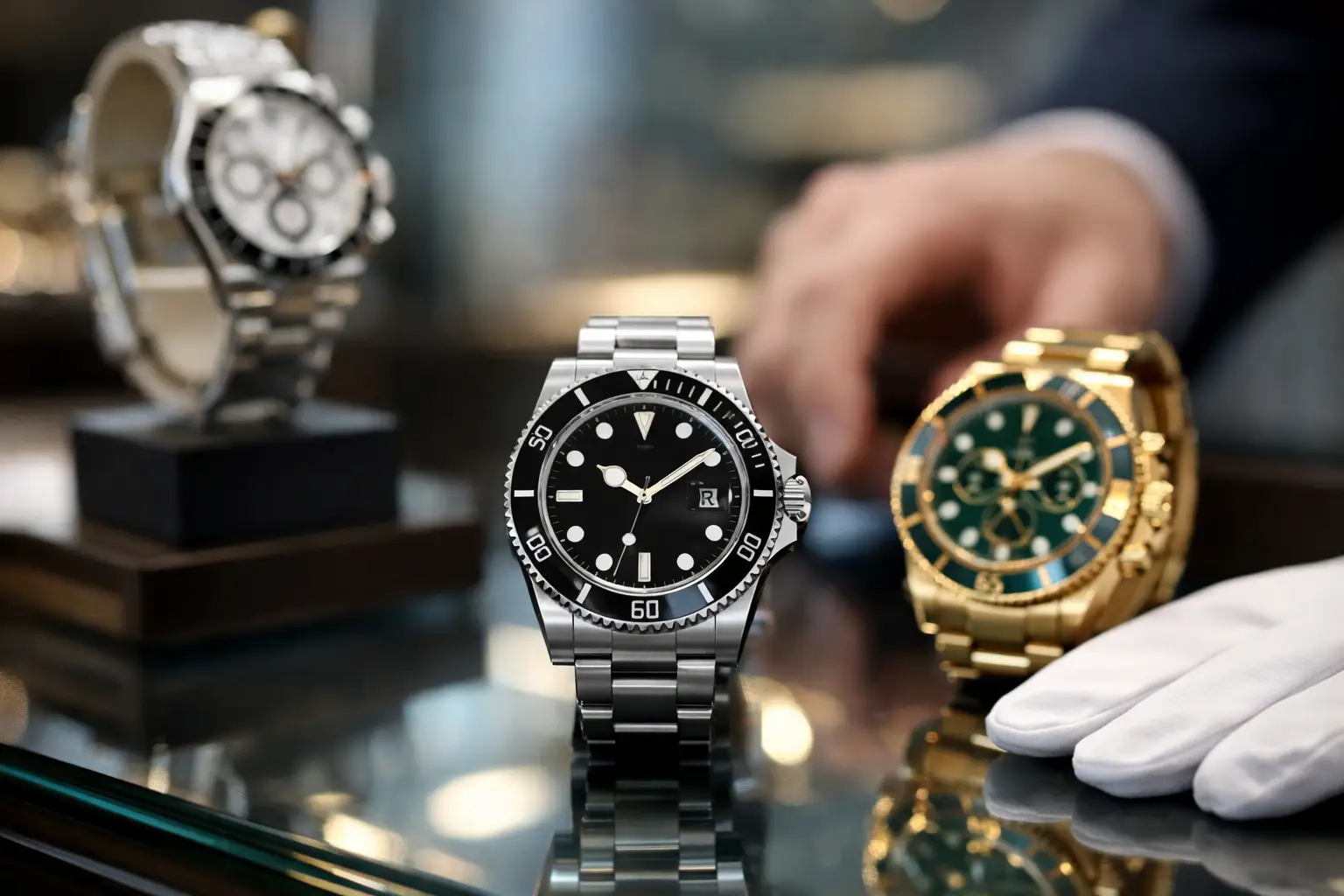
Why Do Rolex Watches Sell Out So Quickly?
A Rolex display case can look surprisingly quiet for a brand that produces more watches than many independent Swiss makers. That contrast prompts the question: why do Rolex watches sell out so quickly? The answer is not simply that Rolex is famous. It is a carefully managed combination of limited availability, exceptional global recognition, durable design, and demand that extends far beyond first-time buyers.
For collectors and buyers seeking a milestone watch, the practical result is clear: popular Rolex references rarely wait for a buyer at retail. Understanding why helps you approach the market with realistic expectations and greater confidence.
Why Do Rolex Watches Sell Out at Retail?
Rolex produces a substantial number of watches each year, but production is not the same as availability. Every Rolex is assembled to demanding standards, with strict quality control governing everything from movement performance to case finishing and water resistance. Scaling that process without compromising the product is not simple.
More importantly, Rolex does not release unlimited quantities of its most desired models. Stainless steel sport watches such as the Submariner, GMT-Master II, Daytona, and Explorer are allocated through authorized retailers in controlled numbers. High-demand configurations, including distinctive bezels, rare dial colors, and precious-metal executions, may arrive even less frequently.
Retailers then face far more requests than watches. A single store can have a long list of buyers interested in the same reference, while receiving only a small number of examples over the course of a year. This is why the phrase “waitlist” is common in Rolex buying, though a request for a watch is not always a guaranteed future allocation.
The scarcity is therefore relative. Rolex watches are not impossible to find, but the exact model, material, dial, and bracelet combination you want may be difficult to obtain at the official retail price.
Controlled Supply Protects the Rolex Standard
Rolex has spent generations building a reputation around precision, permanence, and recognizable design. A Submariner from decades ago is immediately connected to a modern Submariner. A Datejust remains one of the most recognizable dress-sport watches in the world. That continuity gives buyers confidence that they are purchasing more than a seasonal product.
Controlled distribution supports that position. If every sought-after Rolex were readily available in unlimited quantities, the brand would lose part of the exclusivity that makes ownership meaningful to many buyers. Rolex is not trying to serve every request instantly. It is protecting product standards, retail relationships, and long-term desirability.
That strategy also creates a trade-off. Buyers who want a specific new release at retail may need patience, purchase history with a retailer, or flexibility about the exact configuration. Buyers who place a higher value on immediate ownership often choose the authenticated secondary market instead.
Demand Comes From More Than Watch Collectors
Rolex demand is unusually broad. Serious enthusiasts appreciate the engineering, reference history, calibers, bracelet construction, and model evolution. Yet Rolex also attracts buyers who may never study a reference number but recognize the significance of the crown on the dial.
For professionals, a Rolex can mark a promotion, business milestone, retirement, or personal achievement. For gift buyers, it offers instant recognition and enduring value. For collectors, it can be a core piece that complements watches from Patek Philippe, Audemars Piguet, Omega, or Cartier.
This broad appeal matters because it means demand does not depend on one type of customer. When interest from collectors rises, Rolex already has strong aspirational demand from the wider luxury market. When new buyers enter the category, they often begin with Rolex because the brand is familiar, established, and easy to understand.
Certain models intensify that effect. The Daytona has a long racing association and a limited-production aura. The GMT-Master II carries travel and aviation heritage. The Submariner is one of the defining dive watches ever made. The Datejust appeals to buyers who want a watch suitable for business, formal occasions, and daily wear. Each has a distinct identity, but all benefit from the Rolex name.
The Most Popular References Are Not Equal
Not every Rolex sells out at the same speed. Availability varies significantly by model, material, dial, size, and regional demand.
Stainless steel sport watches tend to generate the most competition because they pair recognizable designs with versatile everyday wear. A steel Submariner can be worn with a suit, at the airport, or on a weekend. A GMT-Master II offers a similarly flexible profile with the added appeal of a second time zone. These watches are durable, iconic, and relatively accessible compared with precious-metal alternatives.
Dial variations can change demand overnight. A rare color, a discontinued configuration, or a newly introduced reference may become especially difficult to source. Collectors also watch for subtle changes such as bezel material, bracelet updates, movement revisions, and production transitions. What seems like a minor detail to a casual buyer can be central to a collector’s decision.
Conversely, a less requested configuration may be available sooner, even within the same model family. That does not make it less authentic or less expertly made. It simply reflects how the market values particular combinations at a particular time.
Why the Secondary Market Is So Important
When retail supply cannot meet demand, the secondary market becomes an essential route to ownership. It gives buyers access to discontinued references, current models that are difficult to obtain through authorized channels, and specific configurations that may not be available locally.
The benefit is choice and immediacy. Rather than waiting for an uncertain allocation, a buyer can evaluate a specific watch based on condition, year, scope of delivery, and price. The trade-off is that sought-after references may sell above their original retail price. That premium reflects market demand, rarity, condition, and the value buyers place on taking delivery now.
This is also where trust becomes non-negotiable. Luxury watches are high-value purchases, and Rolex is one of the most frequently counterfeited names in the world. A low price without a clear authentication process, accurate condition description, original packaging where applicable, and warranty support can create unnecessary risk.
A reputable seller should be able to present the watch clearly and stand behind its authenticity, performance, and history. Buyers should understand whether the watch includes its box and papers, whether it has been polished or serviced, and what warranty protection is provided. Those details influence both confidence at purchase and future collectibility.
Scarcity Does Not Mean Every Rolex Is an Investment
It is tempting to assume that any Rolex will rise in value because popular models sell out. The reality is more nuanced. Some references have performed exceptionally well in the resale market, especially scarce stainless steel sport models and discontinued collector favorites. Others may hold value steadily without producing a meaningful gain after taxes, service costs, insurance, and market changes.
A watch should first be chosen because you want to wear it. Market values can move in either direction, and pricing differs between a full-set, lightly worn example and a watch with replacement parts, heavy polishing, or incomplete documentation.
The strongest purchase is usually the one that fits your lifestyle and collecting goals. A Datejust may be the right choice for someone who wants refined daily versatility. A Submariner may suit an active buyer seeking a classic sport watch. A Daytona may appeal to the collector who values its design history and market demand. The best Rolex is not always the one with the loudest resale premium.
How to Buy With Confidence When Rolex Is Sold Out
Start by deciding what matters most: retail pricing, immediate availability, a specific reference, or a particular condition. These priorities will determine whether waiting through an authorized retailer or purchasing through a trusted luxury watch specialist makes more sense.
Be precise about the watch you want. Reference number, case size, bracelet, dial, bezel, year, and full-set status all affect availability and value. If you are open to more than one configuration, you may find an excellent alternative without compromising on the Rolex experience.
Then focus on verification rather than urgency. Confirm authentication standards, inspection practices, warranty coverage, and the seller’s approach to condition disclosure. At Lux-Watch, that confidence is supported by authenticated inventory, careful inspection, original packaging when included, and warranty protection designed for high-value purchases.
A Rolex sells out because it remains one of the few luxury purchases that combines heritage, everyday utility, global status, and lasting collector demand. The right watch may require patience or a premium, but buying from a source that protects authenticity and transparency ensures the experience feels as exceptional as the timepiece itself.



Comments are closed