


Cartier Versus Rolex Watches: Which Fits You?
You can learn a lot about a buyer from this choice. When someone is deciding between Cartier versus Rolex watches, they are usually not comparing good versus better. They are choosing between two different expressions of luxury, each with enormous recognition, strong resale appeal, and lasting prestige.
That distinction matters. A Rolex often signals performance, durability, and universal status. A Cartier tends to signal refinement, design literacy, and confidence that does not need to shout. Both are elite names. The better choice depends on how you want the watch to wear, what you expect from ownership, and what kind of presence feels right on your wrist.
Cartier versus Rolex watches: the real difference
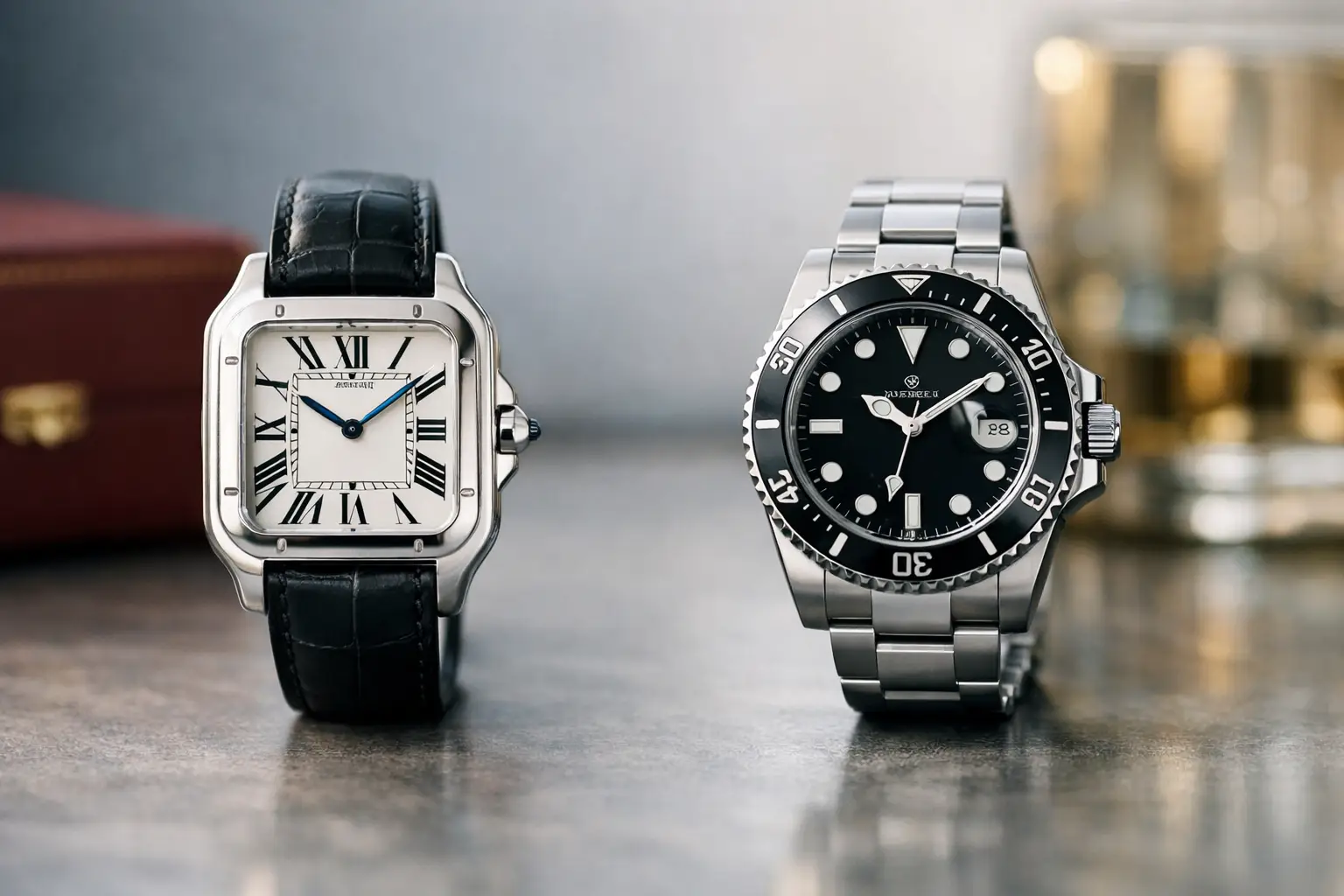
The simplest way to frame Cartier versus Rolex watches is this: Rolex is usually bought as a watch first, while Cartier is often bought as both a watch and a design object. That is not a criticism of either brand. It is the reason buyers are drawn to them for different occasions and different reasons.
Rolex built its reputation on precision, toughness, and highly recognizable icons. Submariner, Datejust, GMT-Master II, Daytona, and Day-Date are not just successful models. They are category-defining references that have shaped how people think about sport and luxury watches.
Cartier comes from a different tradition. It is one of the great names in luxury design, with watchmaking credibility tied to shape, elegance, and visual identity. Tanks, Santos models, Ballon Bleu pieces, and Panthere watches are immediately recognizable even from across a room. Cartier watches often appeal to buyers who care as much about line, proportion, and styling as they do about movement specifications.
If your priority is a watch with a more rugged, all-purpose identity, Rolex usually leads. If your priority is a watch that feels more tailored, artistic, and dress-forward, Cartier often has the edge.
Brand prestige and how each one is perceived
Both names carry global prestige, but they communicate it differently.
Rolex is one of the most recognized luxury brands in the world, not only in watches. That level of visibility is a major reason people buy it. A Rolex is understood instantly by seasoned collectors and casual observers alike. For many buyers, that recognition is part of the value proposition.
Cartier operates with a slightly different kind of authority. It has broad luxury recognition through jewelry and design, and that gives its watches a distinct social appeal. A Cartier can feel more discreet in one sense, but also more sophisticated in another. It suggests taste rather than pure visibility.
This is where preference becomes personal. Some clients want the universal signaling power of Rolex. Others prefer the quiet confidence of Cartier, especially when the watch needs to complement tailoring, formalwear, or a more design-conscious wardrobe.
Which brand feels more exclusive?
That depends on what you mean by exclusive. Rolex is harder to access at retail in many cases, especially for in-demand steel sports models. That scarcity drives demand and keeps certain references highly sought after. Cartier is often more available across a wider range of styles, but that accessibility should not be confused with lower prestige. In many circles, a well-chosen Cartier reads as more selective because it is less obvious.
Design language and daily wear
This is often the deciding factor.
Rolex leans into round cases, strong proportions, and a sport-luxury balance that wears well in almost any setting. Even dressier Rolex references maintain a certain solidity. The bracelets are part of the experience, and the overall impression is substantial, confident, and built for frequent wear.
Cartier is more willing to depart from standard watch shapes. Rectangular and square cases are central to its identity, and that makes the brand stand apart. A Tank or Santos does not try to look like everything else in the market. It has its own visual grammar, and buyers who respond to that usually know it immediately.
For everyday use, Rolex may feel more versatile if your wardrobe is casual, business casual, or travel-heavy. Cartier can still work daily, especially Santos and Ballon Bleu models, but it often feels more intentional. That is a benefit for many buyers, not a drawback.
Cartier versus Rolex watches for men and women
Both brands serve men and women well, but Cartier has a particular strength in this area. Its catalog has long excelled at elegant sizing, jewelry-adjacent styling, and watches that sit naturally in both formal and fashion-driven contexts. Rolex offers excellent options across sizes too, but its design language tends to remain more utilitarian and performance-oriented.
For gift buyers, this difference matters. Cartier often feels especially strong when the goal is something romantic, iconic, and visually refined. Rolex often feels strongest when the goal is a landmark piece with broad status recognition and long-term ownership appeal.
Craftsmanship, movements, and reliability
Rolex has a formidable reputation for movement quality, consistency, and durability. Its watches are known for being dependable over years of regular wear, and that reliability is a major part of the brand’s appeal. For buyers who want one luxury watch to do almost everything, Rolex has a compelling case.
Cartier has made serious progress in movement quality and manufacturing over time, particularly in higher-end and in-house offerings. Still, most buyers are not choosing Cartier over Rolex because they believe it wins on raw technical ruggedness. They are choosing Cartier because it offers a different luxury experience, one where aesthetics and heritage carry equal weight.
That trade-off is worth understanding. If your buying criteria are dominated by technical durability, Rolex usually feels like the safer choice. If you value strong watchmaking paired with exceptional design distinction, Cartier becomes very persuasive.
Value retention and secondary market appeal
For many luxury buyers, resale matters even if they do not plan to sell.
Rolex has a stronger general reputation for value retention, especially among sport models with proven demand. Certain references consistently perform well because they are liquid, widely recognized, and always wanted. That does not mean every Rolex behaves the same way, but the brand’s market strength is difficult to ignore.
Cartier performs differently. Some Cartier models hold value very well, especially iconic lines with enduring demand, but the brand is usually less discussed in purely investment-focused terms. That can actually create opportunity for buyers who want exceptional design and heritage without chasing the most overheated market segment.
A watch should not be treated like a guaranteed financial asset. Still, if resale confidence is near the top of your list, Rolex generally offers more predictability. If you are buying for style, heritage, and wearability first, Cartier can represent excellent value in a different way.
Which buyer should choose Rolex?
Rolex makes the strongest case for buyers who want broad recognition, daily durability, and a watch with proven demand. It suits collectors building around classics, professionals who want a high-status all-rounder, and first-time luxury buyers looking for a confident entry point.
It also suits clients who care about bracelet comfort, water resistance, sport-luxury versatility, and a brand name that is understood in every room. If you want one watch that travels well, dresses up reasonably well, and feels solid every day, Rolex is often the straightforward answer.
Which buyer should choose Cartier?
Cartier is often right for buyers who are less interested in following the most obvious path. It suits people who want elegance over bulk, design over convention, and a watch that brings character to formalwear and daily style alike.
It is also a strong choice for collectors who already own sport watches and want something with a different silhouette and mood. A Cartier can sharpen a collection because it adds visual contrast and historic design credibility. It can also be the better first purchase for someone whose taste leans tailored, understated, and culturally aware.
The purchase decision comes down to trust
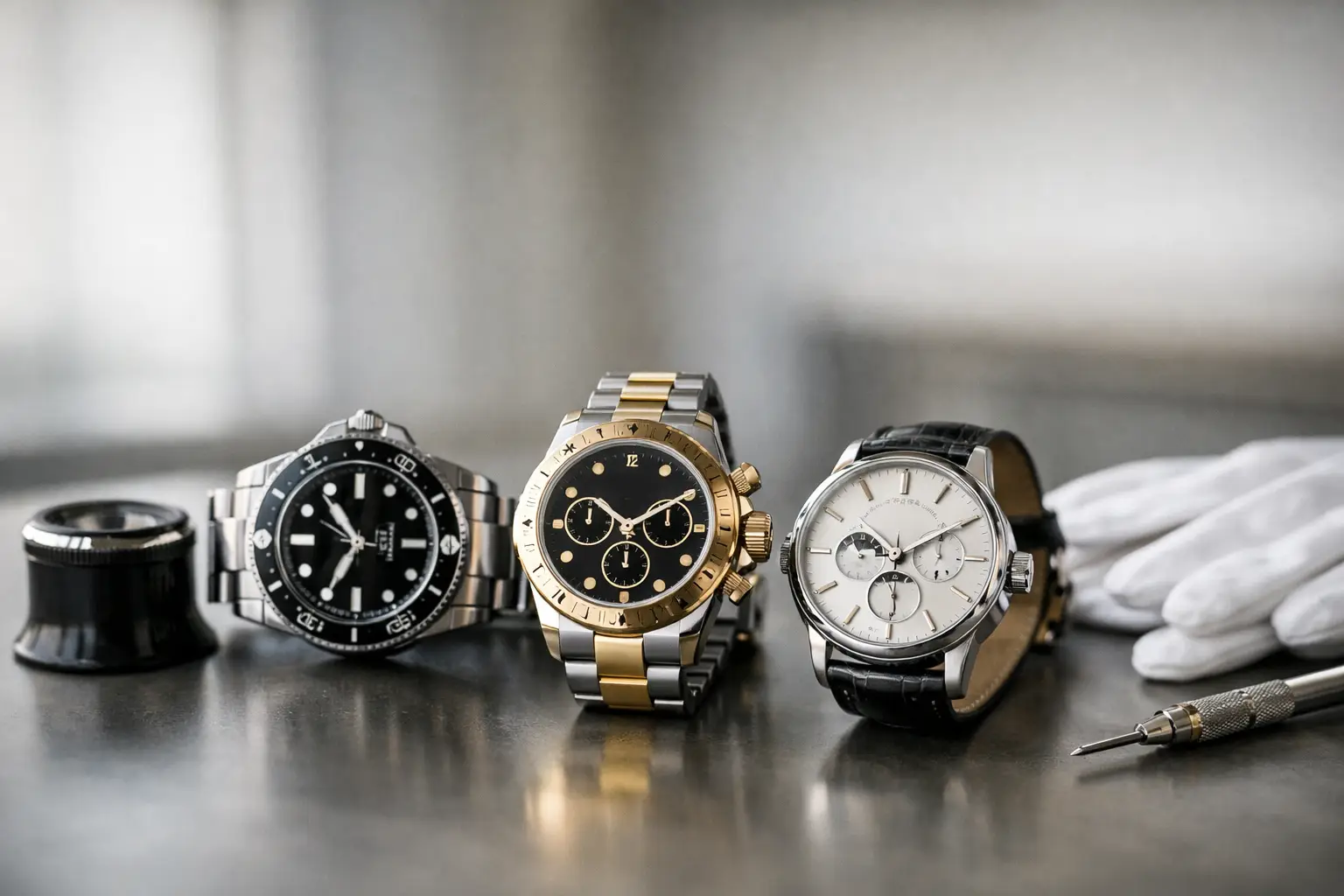
At this level, the brand is only part of the equation. Condition, authenticity, service history, and inspection standards matter just as much as the name on the dial. Whether you are choosing a Rolex icon or a Cartier classic, confidence in the watch itself should come first.
That is especially true in the secondary luxury market, where presentation and verification can dramatically shape the ownership experience. Buyers spending serious money want more than a beautiful watch. They want clean history, confirmed authenticity, accurate condition grading, and the reassurance that the piece has been properly evaluated before it ever reaches their wrist.
Lux-Watch serves that need by focusing on authenticated luxury inventory, original packaging where available, warranty support, and inspection standards designed for high-value purchases. For clients choosing between two of the world’s most recognizable names, that level of assurance is not a bonus. It is part of buying well.
If you are still weighing Cartier versus Rolex watches, the right answer is usually the one that matches your life more honestly. Buy Rolex if you want enduring performance wrapped in unmistakable status. Buy Cartier if you want elegance with a point of view. The best luxury watch is not the one that wins every argument. It is the one you keep reaching for without hesitation.


Comments are closed